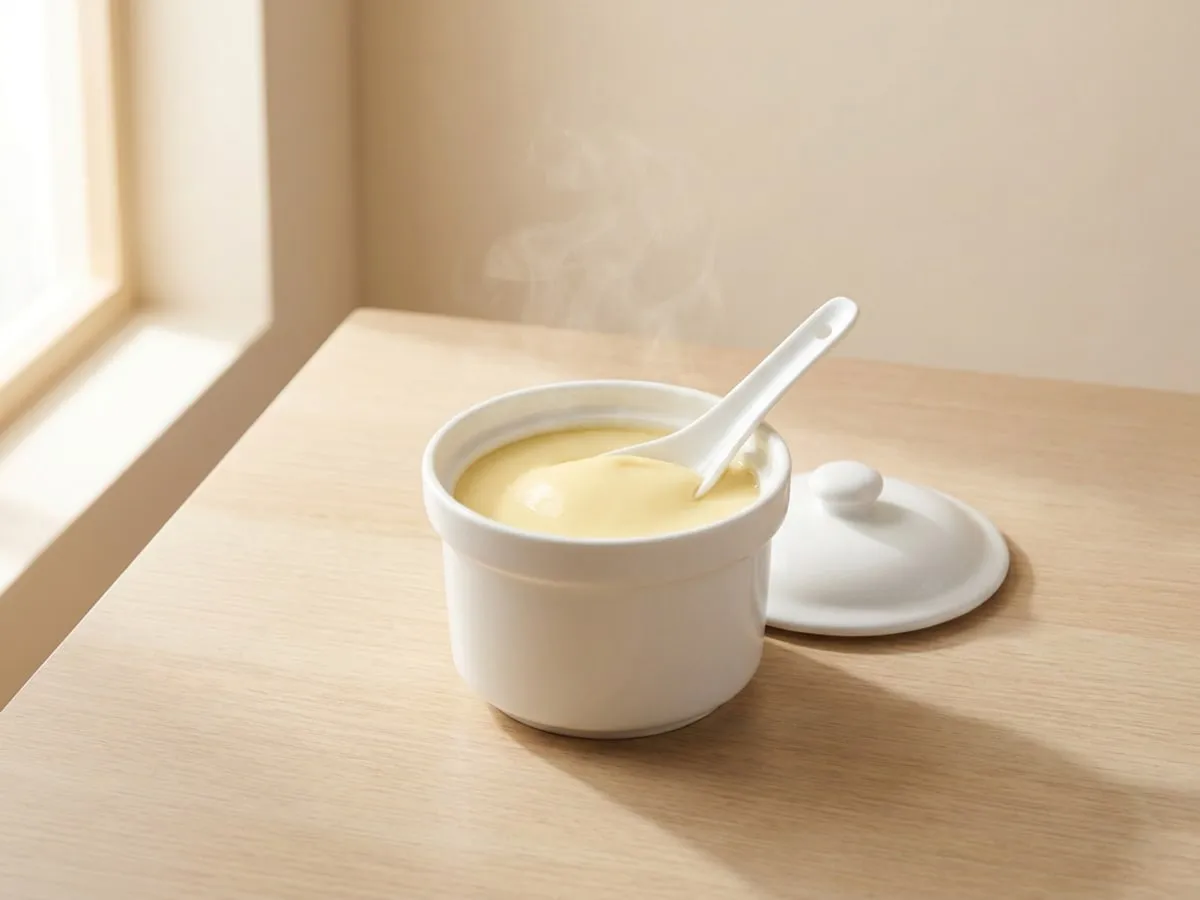
Steamed egg custard, ginger or milk
燉蛋
“Keep the flame low and the custard stays smooth.”
Ingredientsserves 4
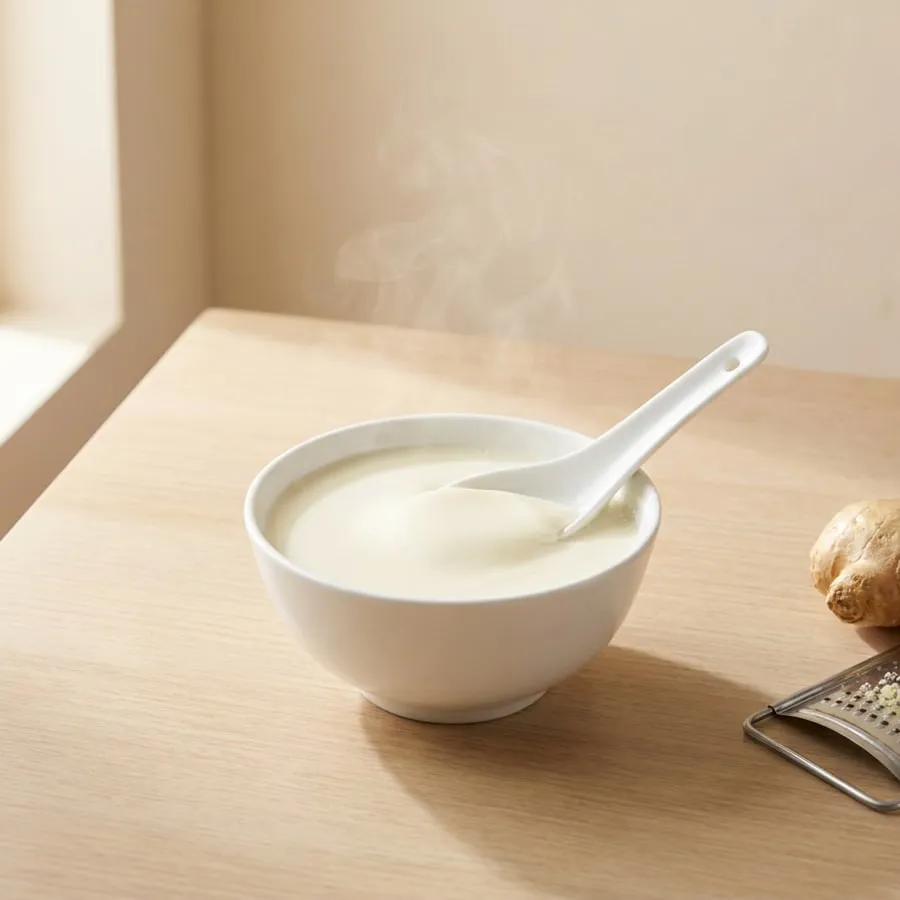
街市Fresh ginger· ginger version only: mature ginger, grated and squeezed to about 4 tbsp juice; not for the milk version40 g
Method
- Warm the milk (or water, for the ginger version) with the sugar over low heat only until the sugar dissolves, then take it off and let it cool to hand-warm. Milk that is hotter than that cooks the egg on contact and the custard splits into curds and whey.
- Beat the eggs gently with chopsticks, not a whisk: you want them mixed, not foamed. A foamed egg steams into a skin of bubbles.
- Stir the warm milk into the egg (and the ginger juice, for that version), pour the mixture through a fine sieve into four bowls and skim any bubbles off the surface with a spoon. The ratio is one part egg to two parts liquid; more egg than that weeps.
- Cover each bowl tightly with cling film or foil. Condensation dripping off the lid pocks the surface with holes; covering the bowl is what makes the custard smooth, and every Hong Kong kitchen says the same thing.
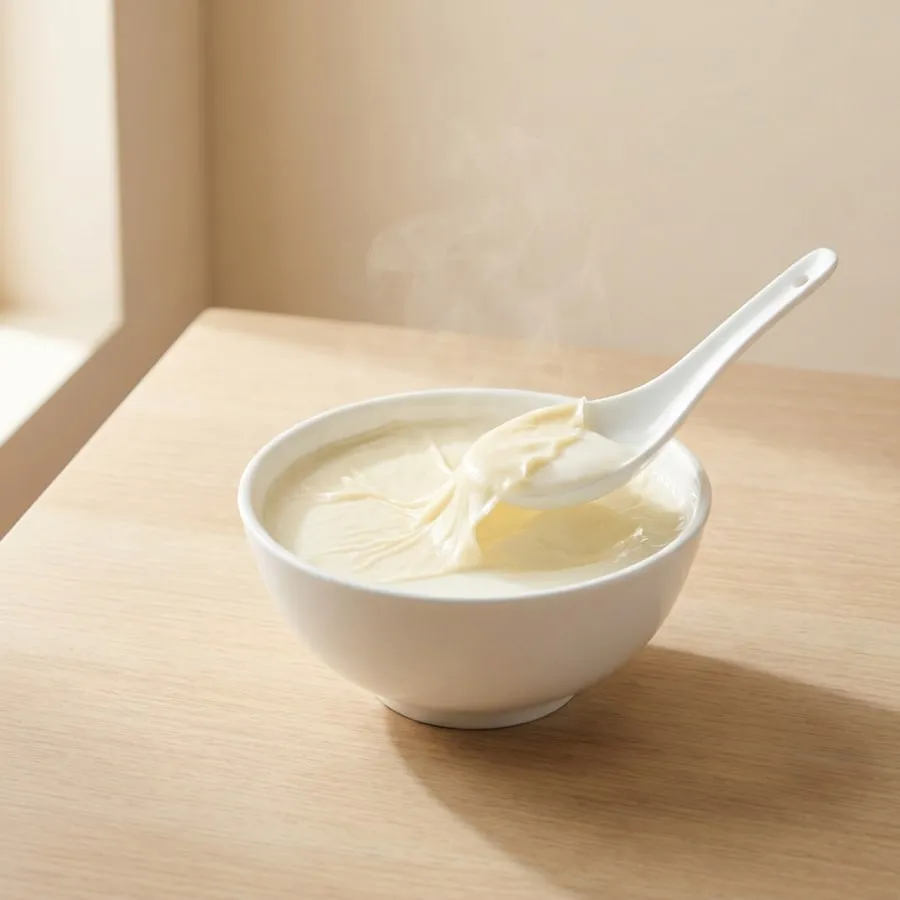
- Bring the water in the wok to a full boil before the bowls go in, then steam over medium-low heat for ten to twelve minutes. Too high a flame gives holes and a honeycomb texture, and so does steaming too long. It is done when the surface is set and the centre still trembles when the bowl is nudged.
- Turn off the heat and leave it covered two minutes before lifting the lid. Eat it warm; in summer, cool it and chill it and it is a cold pudding.
Take care
- Contains egg and milk. The custard is cooked through at ten to twelve minutes; a trembling centre is set egg, not raw egg, but for pregnancy or the very young steam it two minutes longer.
The story
燉蛋 is the dessert Hong Kong parents make for a child who will not eat dinner, and the 茶餐廳 dessert of the 1960s, sold warm in the bowl it was steamed in. 冰花燉蛋, egg and rock-sugar water only, is the older Cantonese form; the milk version came with the dairy of the colonial era and stayed.
Same wall
Lo Fo Tong is cultural food-heritage reference, not medical advice. If you are pregnant, unwell or on medication, talk to your doctor or registered practitioner before changing what is in the pot.