All home cooking › Steamed
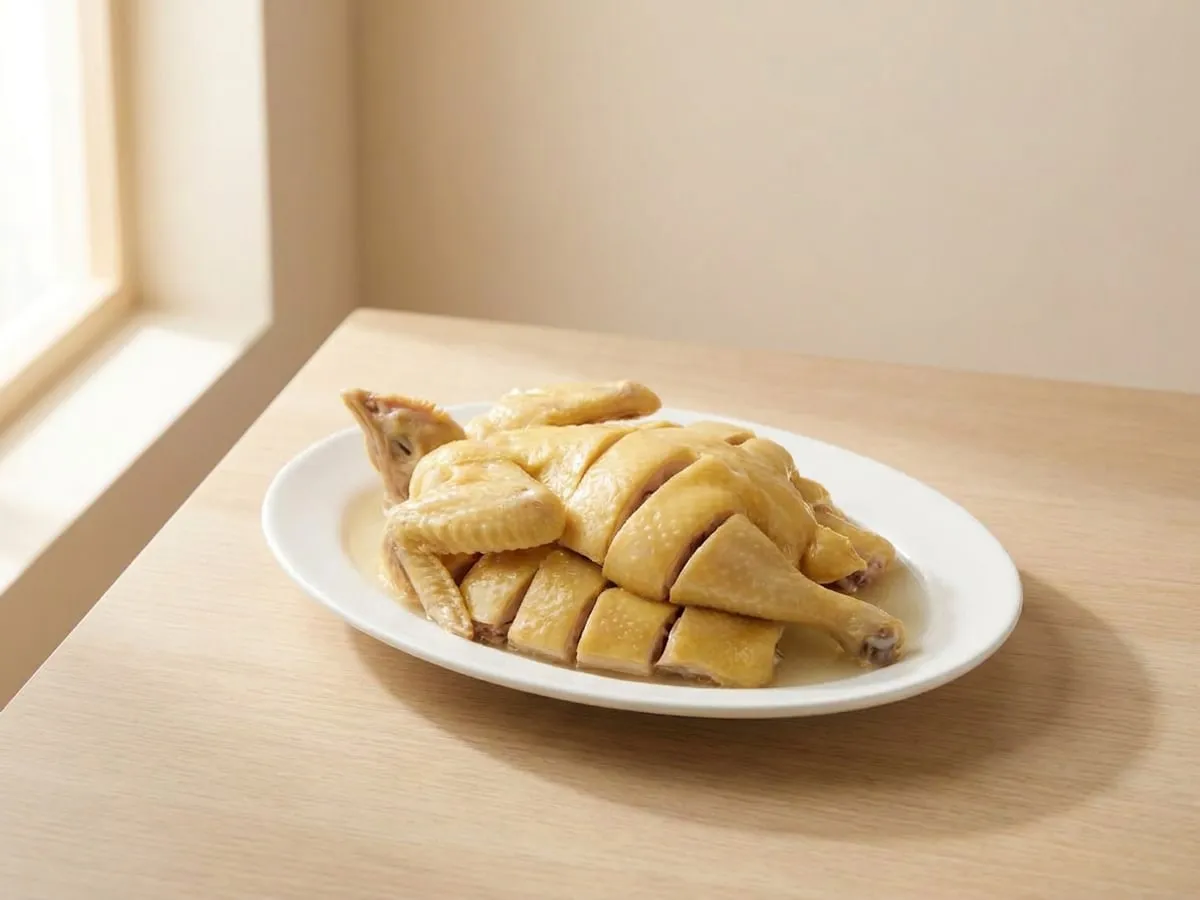
Steamed salt-cured chicken
“Ready when the rice is. Nothing simpler.”
Ingredientsserves 4
Method
- Thaw a frozen bird in the fridge, never on the bench. Rinse it, pull out the fat inside the cavity, and dry the skin and cavity very well with paper towel. Use a separate board for the raw bird, and wash your hands and the plate afterwards.
- Brush the skin and cavity with the wine, then rub the salt, white pepper and the 40 g of grated ginger with its juice all over the skin and inside the cavity; ease the skin away from the thighs with a finger and rub a little underneath, so the seasoning reaches the meat. The salt is about 1% of the bird's weight, about two teaspoons for a 1.2 kg bird; no more.
- Set the bird on a rack over a tray and leave it uncovered on the bottom shelf of the fridge overnight, 8 to 24 hours, so the skin dries; a covered container works too. Keep the raw bird below any cooked food.
- Next day, brush off the ginger on the skin; clumps of it turn the juices bitter as they steam. Put the ginger slices and one spring onion in the cavity and lay the rest on a deep plate, with the bird on top, breast up. Leave it out of the fridge for about 30 minutes while the water heats.
- The wok must hold the whole bird on its deep plate with the lid on. Only put the plate in once the water is at a full boil, cover, and steam on high: about 30 minutes for a 1.2 kg bird, 35 to 40 for 1.5 kg. Keep a kettle hot and top up with boiling water when the level drops.
- Push a chopstick into the thickest part of the thigh next to the bone: the juices should run clear, with no pink; with a probe thermometer, 75 °C next to the bone. If it is not done, steam five minutes more. Turn off the heat and leave it under the lid for 10 to 15 minutes.
- Lift the bird out, tipping the juices in the cavity onto the plate. Let it cool until it can be handled, then chop it through the bone and arrange the pieces on a plate in the shape of the bird. Pour the plate juices through a fine sieve, taste them, add no more salt, and pour them over the chicken.
- For the ginger dip (optional): put the tablespoon of grated ginger, the chopped spring onion and a pinch of salt in a deep heatproof bowl, pour over the oil heated until it smokes, stir, and serve beside the chicken. Refrigerate any chicken not eaten within two hours.
Take care
- The plain dish has no listed allergens; soy sauce added to the dip contains soy and wheat.
- The salt and ginger are seasoning, not a preservative: after a night in the cure it is still raw chicken, so keep it on the bottom shelf of the fridge below cooked food, use a separate board, and wash your hands and the plate after handling it. A whole bird looks done outside long before the thigh joint is; it needs 75 °C next to the bone, with clear juices and no pink. Refrigerate chicken not eaten within two hours.
The story
Steamed salt-cured chicken is a whole bird rubbed with salt and ginger, left overnight, steamed the next day, cooled, chopped, and dressed with its own strained steaming juices, which matter as much as the meat. It belongs to the same family as the Hakka salt-baked chicken but has no salt crust and is never buried in hot salt: it is the Hakka salted bird brought down to a home cure and a steamer. Some families add sand ginger powder to the cure, or cure half a bird or bone-in legs the same way and steam them for less time.
Same technique
Lo Fo Tong is cultural food-heritage reference, not medical advice. If you are pregnant, unwell or on medication, talk to your doctor or registered practitioner before changing what is in the pot.