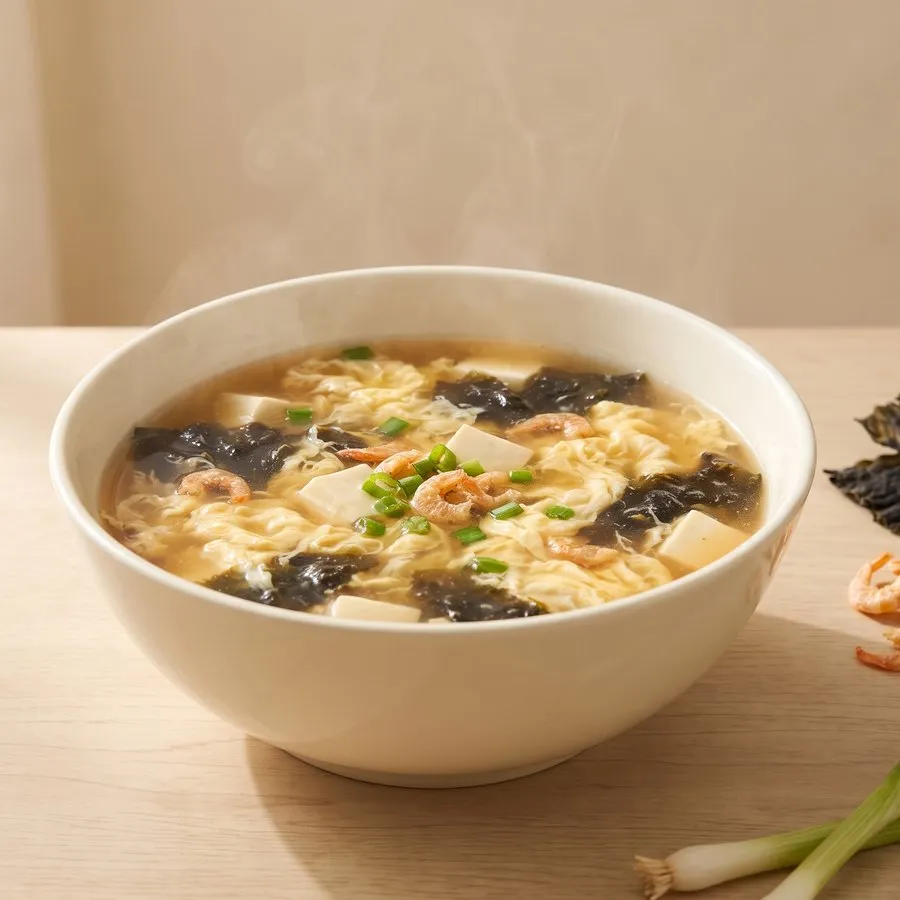
Dried laver (nori)
A dried red seaweed (laver, the same family as nori), pressed into round purple-black discs or cakes for soup use. Rinsed or briefly toasted to shed sand, it dissolves into silky ribbons the moment it hits boiling soup. It brings a clean marine savour to quick egg, tofu or dried-shrimp soups at almost no cost.
TCM properties
Nature · cold Flavour · sweet、salty Meridians · lung
Traditional food therapy
In Cantonese food therapy it is used to clear heat, promote water metabolism and traditionally to transform phlegm and soften hardness; it is also noted as rich in iodine and calcium yet low in calories.
Cautions: read first
- People with thyroid conditions should watch their iodine intake
- Those with a weak, cold spleen and stomach should drink it sparingly
- Before it goes into the soup, toast it in a dry wok (白鑊) or rinse it once to wash out the sand and grit
Preparation
Rinse to wash out the sand, or toast it lightly; it breaks apart the moment it hits the boiling soup.
Origin
Fujian, where Xiapu tan laver (壇紫菜) is famous, and the Chaoshan coast of Guangdong. Soup laver is common in Australian retail, with sand-free Chinese brands at grocers
Availability in Australia
Easy to find