All Sunday dishes › The counter at home
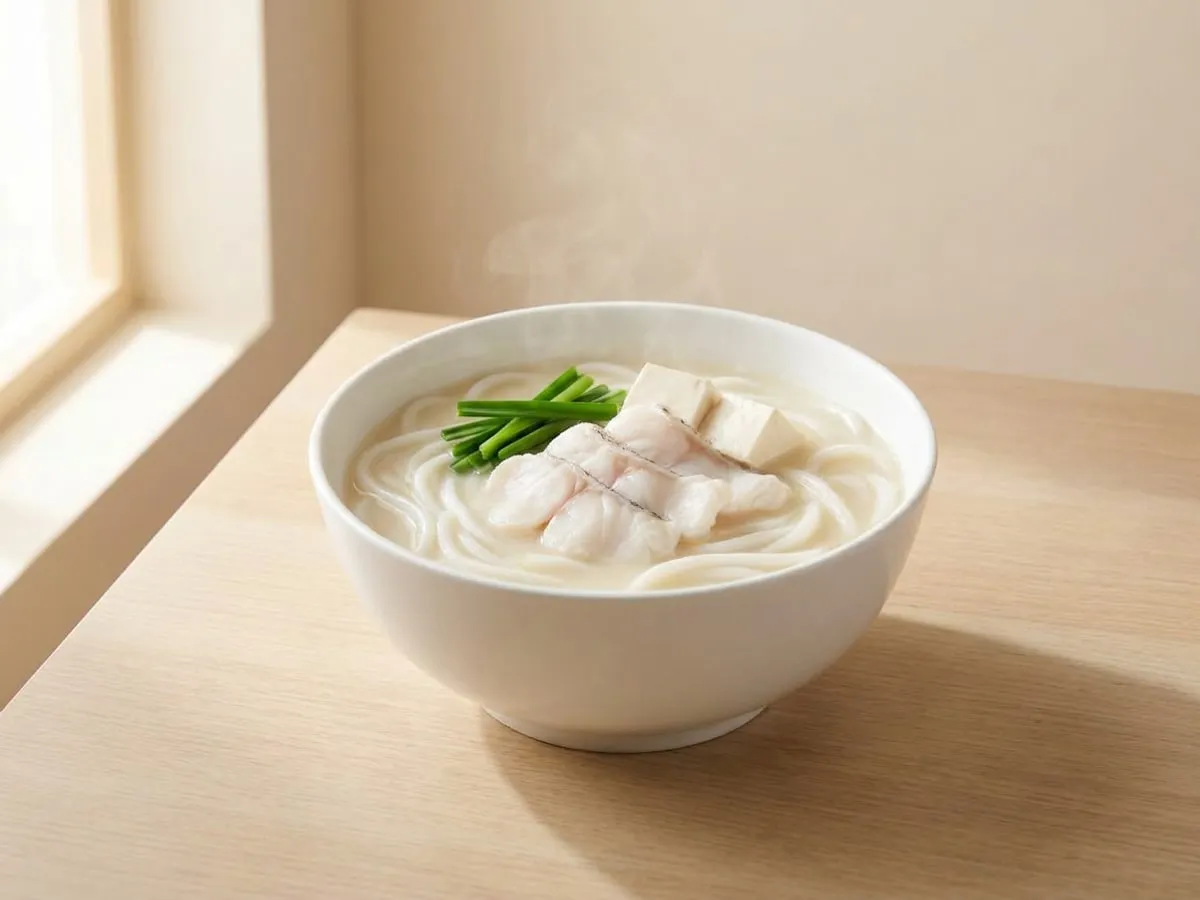
Rice noodles in fish stock
魚湯米線
“Congee wants its full time on the boil before the rice opens.”
Ask Ah Ma
Ingredientsserves 2
Barramundi· ask the fishmonger for barramundi or snapper frames and heads; slice the fillet thinly600 to 900 g frames and heads, plus 150 g fillet
Fresh ginger4 slices
Cooking oil2 to 3 tbsp
Salt½ tsp, to taste
Equipment
- A wok or wide frying pan for the fish, and a large pot of water at the boil on another burner, ready to pour in.
- A fine sieve for the stock; a pot for the noodles; a fish slice or tongs.
How the time splits
- 15 minBoil the rice noodles; meanwhile clean and dry the bones and slice the fillethands on
- 10 minNoodles resting off the heat; fry the bones with ginger until deep goldenhands on
- 20 minBoiling water in, a hard boil under the lidhands off
- 5 minStrain and season; rinse the noodleshands on
- 5 minFish slices and tofu in, build the bowlshands on
Method
- The noodles take longest, so start them first: drop the dried rice noodles into boiling water for fifteen minutes, then turn off the heat and leave them covered for ten, rinse them in cold water, drain, and divide them between two bowls. Or soak them in cold water for four hours or overnight and give them forty-five seconds in boiling water when you need them. Cooked noodles keep a day or two in the fridge.
- Rinse the fish bones and heads, scrape away any blood and the black lining of the belly, then dry them thoroughly with kitchen paper. Slice the fillet thinly. Put a large pot with 1.5 to 1.75 litres of water on to boil.
- Heat the wok until it smokes, add the oil and the ginger, then lay in the bones and heads and leave them alone, three to five minutes a side, until deep golden. This step decides whether the stock turns white: fish that is wet or only half fried gives a thin, clear, fishy stock, and blood left in it adds to the fishiness.
- Splash in the wine and pour in the water, which must already be boiling. Cover and keep it at a hard rolling boil for ten to twenty minutes, skimming off any foam. A gentle simmer will not turn it milky; but do not boil it past an hour, or the fish flavour suffers.
- Strain the stock through a fine sieve, pressing gently, and discard all the bones and heads. Fish frames have fine bones, so check the stock before it goes to children. Season with salt and white pepper.
- Bring the stock back to the boil, slide in the tofu and fish slices for one to two minutes, until the fish is opaque all through and just flakes, then add the chives. Dip the noodles briefly in the stock to heat them and return them to the bowls.
- Lay the fish slices, tofu and chives over each bowl of noodles, ladle in the hot milky stock to cover, and serve at once.
Take care
- Fish, soy (tofu), wheat (Shaoxing wine, often on the label). Fish frames have fine bones: strain the stock through a fine sieve and check it before it goes to children. Buy the frames the day you use them and keep them in the fridge until then. Cool leftover stock to room temperature within two hours and into the fridge within a further four.
The story
Hong Kong's rice noodle shops come from Yunnan's small-pot and crossing-bridge noodles, turned in Hong Kong into a bowl where you choose your own soup and toppings, with less oil and more local toppings. The noodle is round, made from rice alone, thicker and chewier than rice vermicelli. Milky fish stock is one of the shop soups; at home it comes from frying the fish through and then boiling it hard in boiling water.
Same kind
Lo Fo Tong is cultural food-heritage reference, not medical advice. If you are pregnant, unwell or on medication, talk to your doctor or registered practitioner before changing what is in the pot.