All Sunday dishes › Jars and sauces
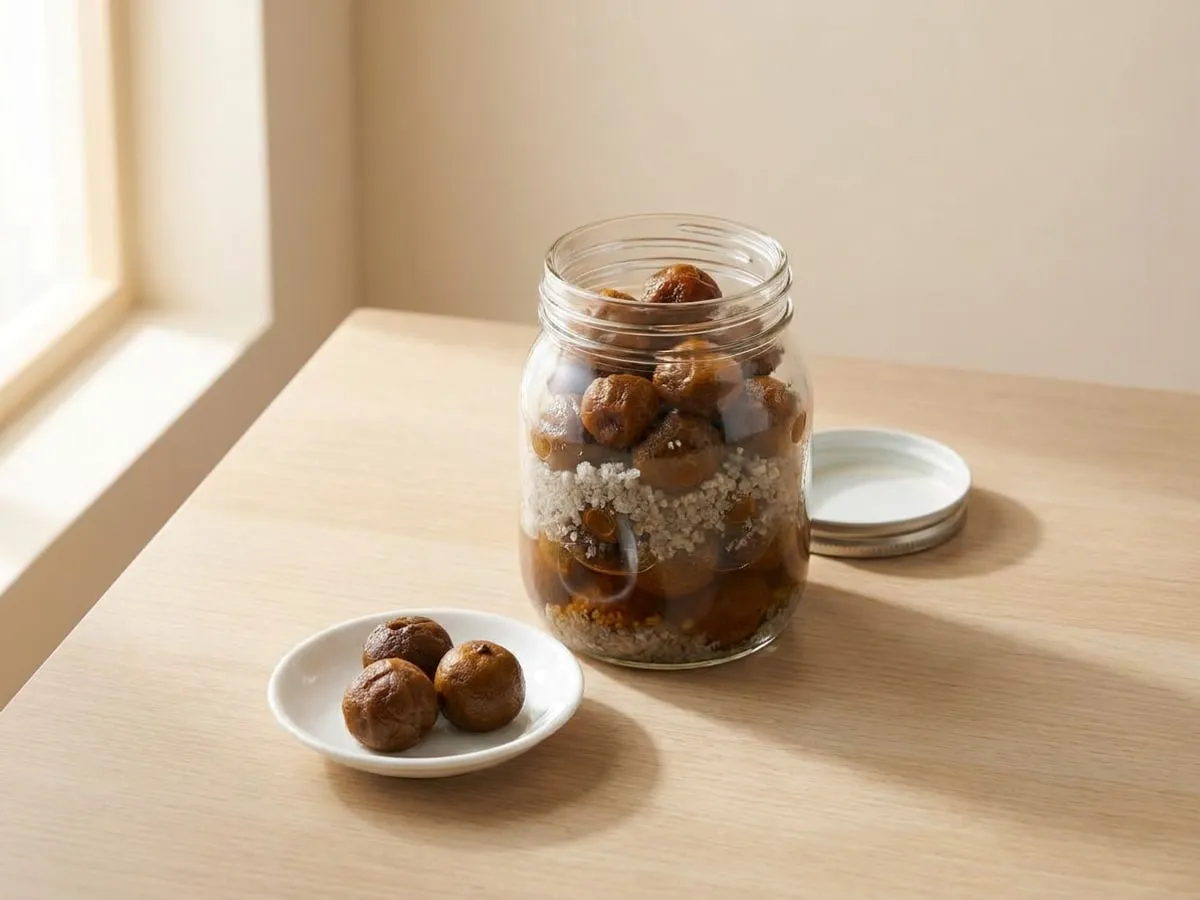
Salt-cured cumquats
Also called Salt-cured calamondins, Salt-cured cumquats (another name)
“Make a jar and put it away. It will carry whatever you cook next.”
Ingredientsserves 4
Equipment
- A glass jar with a tight lid, washed in hot soapy water and left upside down until completely dry
- A clean tea towel or a rack to dry the fruit on
- A marker, for the date on the jar
- A clean, dry spoon kept for taking the fruit out
How the time splits
- 10 minWash the fruit and the jarhands on
- 24 hrDrying, until the fruit and the jar are completely dryhands off
- 15 minSalt and fruit in layers, a thick layer of salt on top, the date on the jarhands on
- 180 daysCuring somewhere cool for at least six months, checking now and then that no fruit is showinghands off
Method
- Choose the fruit first. The cumquat proper has a sweet skin and can be eaten whole; the calamondin is a cross between it and a mandarin, looks almost the same, and is sour in skin and flesh. The tree in a pot at Hong Kong New Year is usually a calamondin. Either can go in the jar, and in Australia both are sold as cumquats. Use fruit sold as food, or picked from a tree you have grown that has not been sprayed. Do not use the fruit of a potted tree bought from a nursery as a decoration: it may have been sprayed with products that are not meant for food.
- Wash the fruit one by one, gently, and leave out any that are bruised or soft. Dry them with a clean tea towel, then spread them on the towel or a rack for one to two days, until the skins are completely dry; on a fine day a few hours in the sun does it. Wash the jar and leave it upside down until it is completely dry. Water left on the fruit or in the jar is what turns the jar mouldy later.
- Spread a layer of coarse salt over the bottom of the jar, add a layer of fruit stem end up, and fill the gaps with salt. Keep going, salt and fruit, until the jar is full, and finish with a thick layer of salt that covers every fruit. No water goes in: the salt slowly draws the juice out of the fruit.
- Close the jar, write the date on it, and keep it somewhere cool and out of the sun. Turn the jar gently now and then for the first few weeks.
- Over the months the fruit shrinks, wrinkles and turns dark brown, and the salt slowly becomes a dark brine. Keep the fruit buried in salt or under the brine; if any fruit shows, cover it with more salt, because exposed fruit is where mould starts.
- Wait at least six months before using it. Older is better, and a jar keeps for years. Take the fruit out with a clean, dry spoon every time, never a wet one.
- To drink: put one fruit in a cup with a small spoonful of the brine, press it with a spoon, and top with hot water, with honey if you like. Or press one into a glass of cold lemonade with ice, made the same way as 鹹檸七. It is very salty, and one fruit to a cup is plenty.
Take care
- No common allergens. Very salty: one fruit to a cup, and only small amounts for children.
- Do not use fruit from a potted tree bought from a nursery as a decoration: nursery plants may have been sprayed with products not meant for food. Use fruit sold as food, or from a home-grown tree that has not been sprayed.
- The fruit and the jar must be completely dry, and the fruit must stay buried in salt or brine. If fuzzy mould grows on the fruit or the brine, or the jar smells off, throw the whole jar out. Use a dry spoon every time.
The story
Salt-cured cumquats, 鹹柑桔 to most Hong Kong families, are an old jar kept in many kitchens: ripe little citrus buried in coarse salt, turning dark brown and shrivelled over the months, better with age, and kept for years. They are made from fruit sold as food or from a tree in the back garden, not from the pot bought to decorate the New Year. In Australia the trees fruit in late winter and spring, so this jar is made once the year has turned cool, well after New Year, and is ready to open by the next one.
Same kind
Lo Fo Tong is cultural food-heritage reference, not medical advice. If you are pregnant, unwell or on medication, talk to your doctor or registered practitioner before changing what is in the pot.