All Sunday dishes › The Sunday dishes
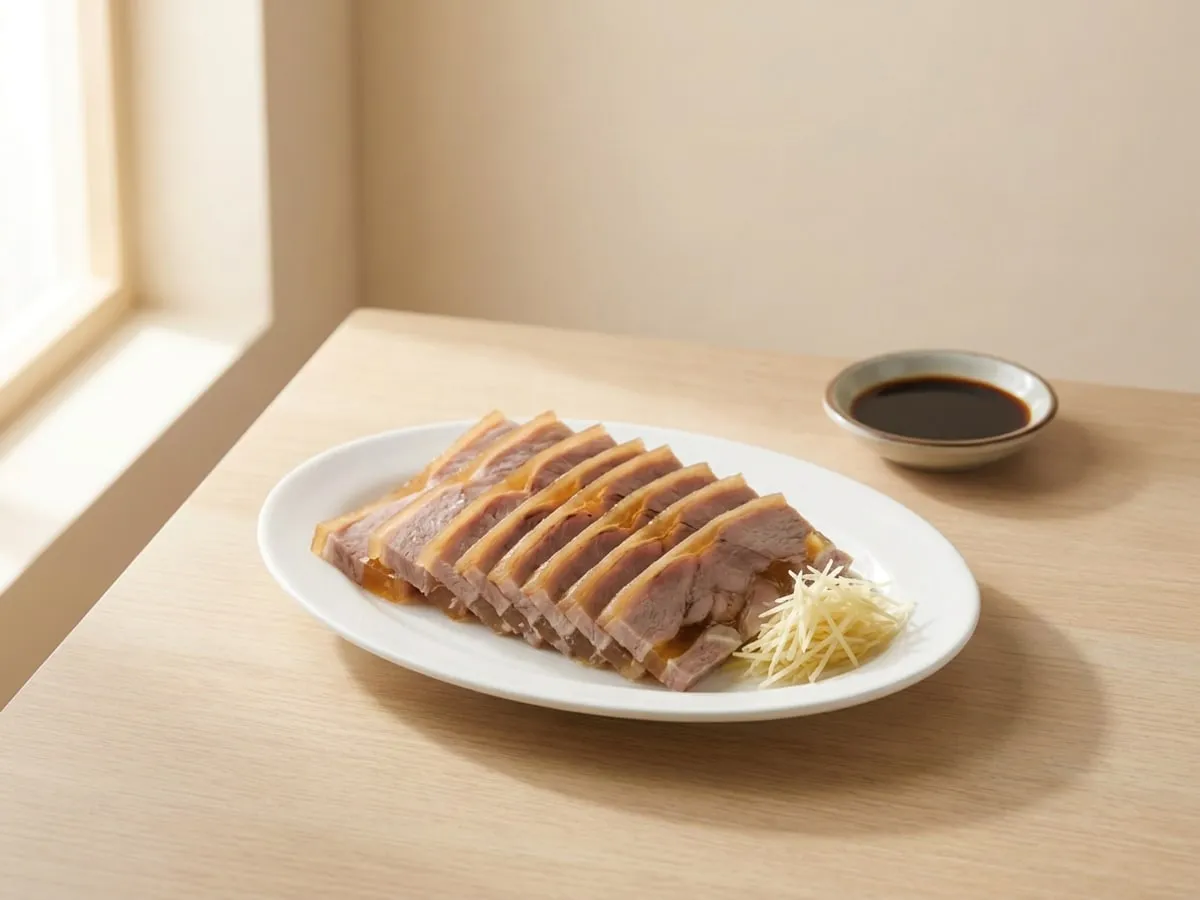
Zhenjiang pressed pork in aspic
“This one cannot be hurried. Only start it if the day is yours.”
Ingredientsserves 8
Equipment
- A loaf tin or a rectangular glass dish, and a second one the same size to sit on top with two tins inside it as the weight
- A heavy pot, and a damp cloth or a fine sieve to strain the stock clear
- Room in the fridge for three days. This dish's work is days, not gear, and a Sydney flat lacks nothing it needs
How the time splits
- 20 minBone the hock and rub in the salt and Sichuan pepperhands on
- 3 daysCuring in the fridge for three days, turned once a dayhands off
- 2 hrRinsed and soaked for two hourshands off
- 3 hrThe aromatics simmer, then the hock at a shiverhands off
- 25 minPack the tin, strain, reduce, test the set and pourhands on
- 45 minCooling, no more than an hourhands off
- 12 hrOvernight in the fridge under a weighthands off
- 5 minTurn out and slicehands on
Method
- Bone the hock and lay it flat, skin down. Toast the salt and 1 tsp of Sichuan pepper in a dry pan, let it cool, and rub it into the meat and the skin. Wrap it and cure it on the bottom shelf of the fridge for three days, turning it once a day. This page uses salt and Sichuan pepper only, so the meat comes out grey-pink rather than the restaurant red: the red comes from a curing salt, and a home kitchen does not use it.
- Rinse it, soak it in cold water for two hours with one change of water, and rinse again. Soaked too little it is too salty; cured too long it goes grey and hard.
- Put the spring onion, sliced ginger, garlic, star anise, the rest of the Sichuan pepper, the soy, wine and sugar in the pot with about 400 ml of water, bring it to the boil and simmer thirty minutes. Lower in the hock skin down; the water should just cover it, so add more if it does not.
- Keep the surface barely trembling, never boiling, for two to three hours, until a chopstick goes straight in. Let it boil and the stock clouds, and what sets is not crystal but a murky jelly.
- Lay the hock skin down in the tin, flatten it and press it in. Strain the stock twice through a damp cloth or a fine sieve and measure it: if there is more than 500 ml, bring it back to the boil, skim it and reduce it to about 500 ml. The traditional dish uses no gelatine; the jelly comes from the hock’s own skin. Test before you pour: put a teaspoon of stock on a cold saucer in the freezer for five minutes. If it sets firm, add nothing. Only if it thickens without setting, sprinkle 2 tsp of gelatine over 2 tbsp of cold water, let it swell, and stir it into the hot stock. Then pour it in until the tin is four-fifths full.
- Let it cool until it is no longer hot to touch, and no more than an hour on the bench. Sit the second tin on top with two tins of food in it and put the whole thing in the fridge overnight.
- Turn it out, trim the edges and cut 5 mm slices. Serve cold, with shredded ginger and a dish of Zhenjiang vinegar.
Take care
- Pork, soy, wheat (in the soy and the vinegar), alcohol; most gelatine is made from pork or beef. Set meat must be chilled fast: into the fridge within an hour of cooking, kept at 4°C or below, and eaten within three days, and not left on a platter at room temperature for more than two hours. The red of restaurant 肴肉 comes from a curing salt measured to fractions of a gram, where a little too much is poisonous and a kitchen scale cannot weigh it safely, so this page does not teach it and asks you not to add it. The home version is grey-pink; it slices the same, and misses only the faint cured-ham note the curing salt gives.
The story
A Zhenjiang cold plate about three hundred years old. The story goes that a small shop curing trotters used the saltpetre meant for firecrackers in place of salt, and the meat came out red and firm and the customers liked it better. Since the 1950s it has been on the menu of every Shanghainese restaurant in Hong Kong, and on the New Year cold platter beside the smoked fish and the drunken chicken. It is on this wall because it is almost entirely waiting: three days of salt, a night under a weight, and one cut.
Same kind
Lo Fo Tong is cultural food-heritage reference, not medical advice. If you are pregnant, unwell or on medication, talk to your doctor or registered practitioner before changing what is in the pot.