All café dishes › Soup noodles
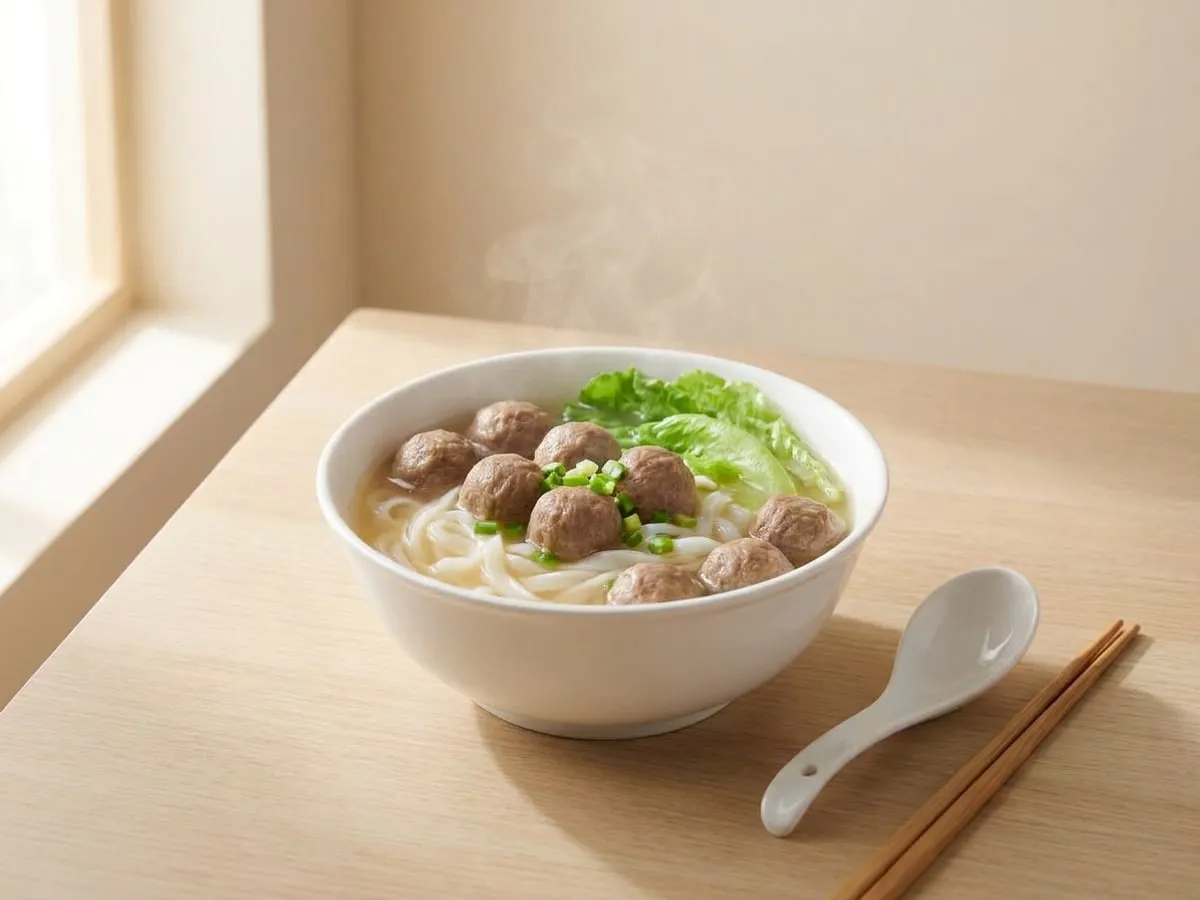
Beef ball flat rice noodles in clear soup
牛丸湯河
“Give the soup its time. The noodles get their own pot.”
Ask Ah Ma
Ingredientsserves 2
Star anise1 star
Rock sugar1 small lump (about 10 g)
Fresh ginger3–4 slices
Chinese lettucea few leaves
Light soy saucea few drops
Sesame oila few drops
Method
- The clear soup: put three cups of chicken stock and a cup of water in a pot with the star anise, bay leaves, white peppercorns, rock sugar, three slices of ginger and the crushed garlic; bring to the boil, turn to the lowest heat with the lid ajar and simmer twenty minutes until the soup tastes of the spices, then lift them out. Chicken stock keeps the soup lighter and clearer than beef stock.
- With time for a beef-bone soup: blanch the bones from cold water for ten minutes and rinse; add 3 litres of water, four slices of ginger, the star anise, bay leaves, a teaspoon of white peppercorns and the rock sugar, and simmer at the lowest heat for three hours with the lid ajar, skimming now and then; strain and salt it at the end. The pot makes six bowls; cool the rest into the fridge or freezer within two hours.
- Simmer the beef balls in the soup about five minutes until they float and are hot through; frozen ones need no thawing, and cutting one open shows whether the centre is hot.
- Dip the rice noodles twenty to thirty seconds in their own pot of boiling water and drain them into the bowls; thick egg noodles are boiled as the packet says and rinsed cold. Blanch the lettuce in the same water. Never cook the noodles in the soup.
- Salt the soup to taste. If there is 腩汁 in the house from the 牛筋腩湯米 braise, stir a tablespoon into each bowl for a darker, deeper soup.
- Build the bowls: beef balls and lettuce on the noodles, the hot soup, spring onion, and a few drops of soy and sesame oil. Sha cha or chilli oil goes on the table for dipping the balls.
- For home-made beef balls, follow the hotpot page 手打牛丸. The Chaoshan masters beat the beef with iron bars and pick out the sinew as they go; that springiness cannot be reached with a food processor, and home-made balls are denser.
Take care
- Bought beef balls usually contain soy and wheat, and many contain fish sauce (fish), so read the pack; light soy contains soy and wheat; sesame oil contains sesame; sha cha contains fish and shrimp (crustacean), so check the jar; thick egg noodles contain wheat and usually egg. Beef balls must be hot to the centre. Cool beef-bone soup into the fridge within two hours and bring it back to a full boil to serve.
The story
Chaoshan beef balls began as a way to make old plough-ox beef good to eat, by beating it for a long time rather than chopping it, the beater picking out sinew as he worked. Hong Kong's Chiu Chow noodle shops brought the ball with them, and the shops that still beat by hand, like 群記, a family shop in Fanling for forty years, are the ones people queue at.
Same counter
Lo Fo Tong is cultural food-heritage reference, not medical advice. If you are pregnant, unwell or on medication, talk to your doctor or registered practitioner before changing what is in the pot.