All café dishes › Soup noodles
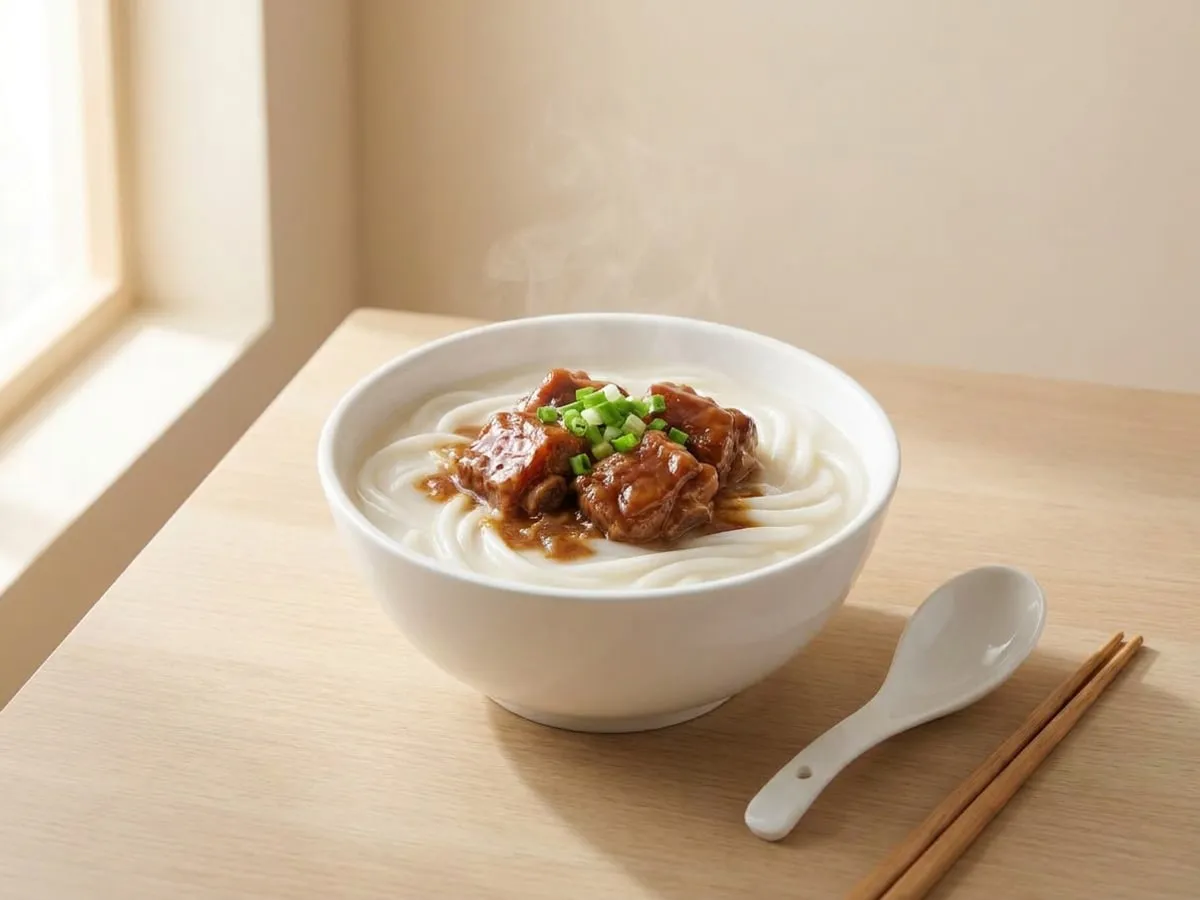
Pork soft bone in fish soup with rice noodles
魚湯豬軟骨米線
“Give the soup its time. The noodles get their own pot.”
Ask Ah Ma
Ingredientsserves 2
Peppercorn, chiefly white· white peppercorns, cracked, for the soup; plus a pinch of ground white pepper to finish1 tsp
Light soy sauce2 tbsp
Dark soy sauce1 tsp
Black vinegar1 tbsp
Slab sugar⅓ slab (about 20 g)
Method
- The soft bone takes longest, so braise it first: blanch it in boiling water for five minutes, lift out and rinse.
- Heat a tablespoon of oil in the wok, fry three slices of ginger and the garlic until fragrant, add the soft bone and toss, then the light and dark soy, the vinegar, the slab sugar and the star anise, with water just to cover. Cover and braise on low heat for an hour and a half, until the meat is tender and the cartilage gives under the teeth but still holds its shape.
- While the soft bone braises, make the fish soup; it is enough for four bowls, half for this meal and half for the next. Rinse the heads and frames, scrape the blood from along the spine and any black lining from the belly, split the heads and pull out the gills; if you are using leatherjacket, rub both sides with a little salt and white pepper. Pat everything completely dry with kitchen paper: wet skin sticks to the pan and will not brown.
- Bring 2.5 litres of water to the boil in a large pot and keep it boiling. If you are using the pork, blanch and rinse it; toast the dried flounder in a dry pan until fragrant and take it out at once, as it scorches quickly.
- Heat the wok until it smokes, then add the oil and half the ginger; when the ginger sizzles, lay in the fish. Leave it for three to five minutes without moving it, until the underside is deep gold and the fish lifts on its own, then turn it and brown the other side. Under-fried fish makes a grey, fishy soup, and the browning is where the sweetness comes from.
- Move the fish to the stockpot with the rest of the ginger, the cracked peppercorns, the pork and the flounder, and pour on the boiling water, standing back because it spits. Cover and boil hard on high heat for ten minutes, skimming off the foam, then keep it bubbling for another thirty to forty-five minutes. Do not let it drop to a simmer: the movement is what turns it white, and a quiet pot stays clear.
- Strain through a fine sieve, pressing gently, and discard all the bones; they are fine, so check the soup again before it goes to children. Season with salt only now, then white pepper. Put the half for the next meal in a shallow container, into the fridge within the hour, and use it within one to two days.
- While the soup boils, cook the noodles in their own pot: dried rice noodles into boiling water at a medium boil for fifteen minutes, then off the heat, covered, for ten, then rinsed under cold water and drained. Never cook them in the soup, which turns it cloudy.
- When the soft bone is done, uncover and reduce over medium heat until the sauce coats it. Bring three cups of the soup to a full boil, dip the noodles in it to heat them, lift them into two bowls and pour over the soup; top with the soft bone, a spoonful of its sauce and the spring onion. Cool the leftover soft bone into the fridge, eat it within three days, and reheat it until hot through.
Take care
- Contains soy and wheat (light and dark soy sauce) and fish (the soup). Soft bone has small bone pieces and hard cartilage edges: cut it small for children. Cool the braised soft bone into the fridge, eat it within three days, and reheat until hot through. Fish frames have fine bones: strain the soup through a fine sieve and check it before it goes to children. Cool leftover soup fast, in a shallow container and into the fridge within the hour, and bring it back to a full boil. If you use dried flounder, check its pack for wheat or soy.
The story
OpenRice reviewers recommend the soft-bone fish soup noodles for soft bone that has taken the sauce without going tough. HK01's rice-noodle map shows how the shops do it: 樂林 in Quarry Bay braises its soft bone in Zhenjiang vinegar, sweet and sour, and stops before it goes soft.
Same counter
Lo Fo Tong is cultural food-heritage reference, not medical advice. If you are pregnant, unwell or on medication, talk to your doctor or registered practitioner before changing what is in the pot.