All café dishes › Soup noodles
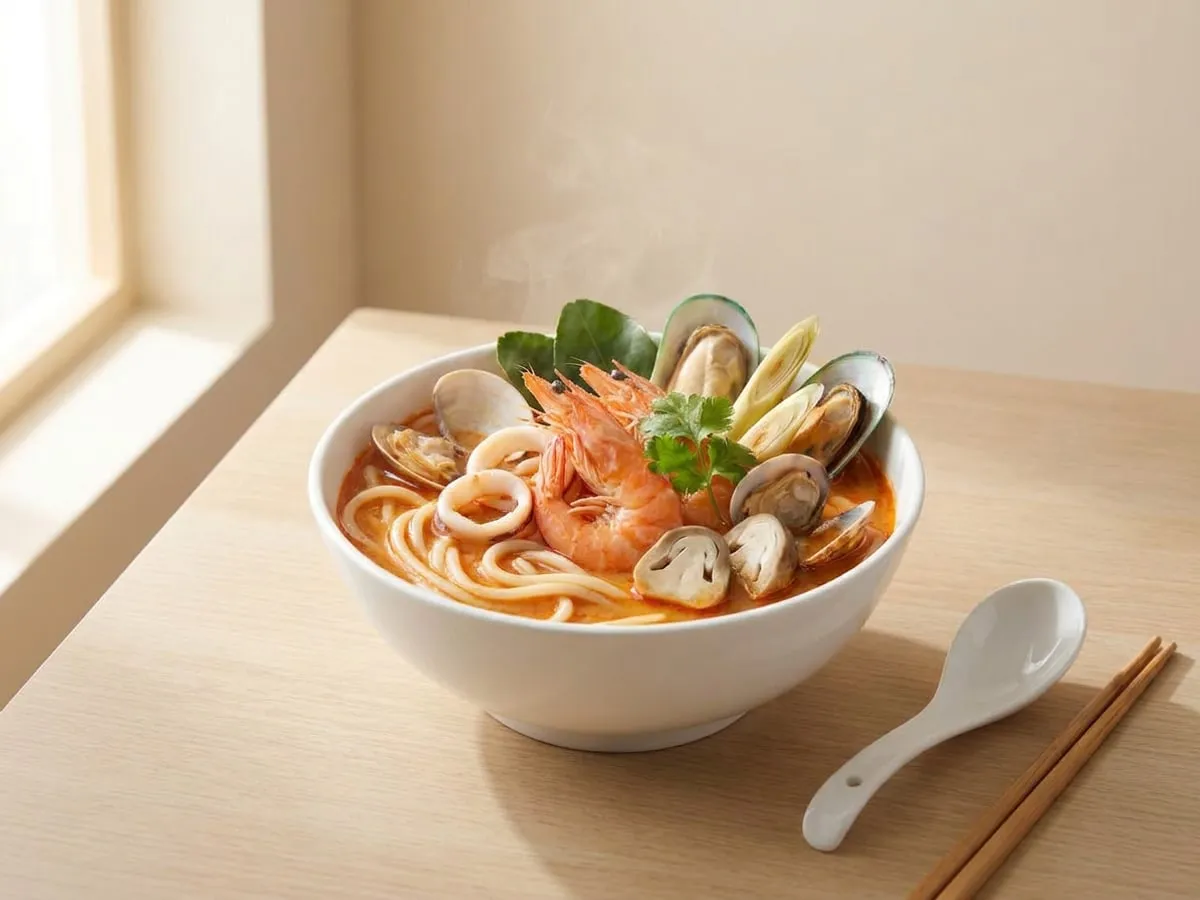
Tom yum seafood rice noodles
冬陰功海鮮米線
“Give the soup its time. The noodles get their own pot.”
Ask Ah Ma
Ingredientsserves 2
Method
- Purge the clams in lightly salted water. Throw away any clam or mussel that is open before cooking and does not close when tapped.
- Peel and devein the prawns and keep the meat in the fridge; fry the heads and shells in a little oil until red.
- Add the stock, lemongrass, galangal, lime leaves and a tablespoon of the tom yum paste, simmer fifteen minutes, and lift out the shells.
- Boil the noodles in a large separate pot for 8 to 15 minutes depending on thickness (the packet is the guide), turn off the heat and leave covered 5 to 10 minutes, rinse under cold water, drain and divide between the bowls; thin rice vermicelli needs only a minute or two until soft. Never cook the noodles in the soup.
- Add the mushrooms to the soup, then the squid and clams (and mussels), for about three minutes until the shells open; then the prawn meat for the last one to two minutes, until pink and curled. Throw away any shell that stays shut.
- Off the boil, add the coconut milk, fish sauce and lime juice: boiled lime turns bitter and coconut milk boiled hard splits. Taste for salt before adding the fish sauce.
- The paste is the only heat: a tablespoon for two bowls is mild for most adults, and more can be stirred into a bowl at the end. With children eating, use half a tablespoon in the whole pot and more coconut milk; bird's-eye chillies go in whole or not at all.
- Pour the soup and seafood over the noodles, scatter the coriander and eat at once; do not keep the seafood to reheat.
Take care
- Contains crustacean (prawns; most tom yum pastes contain shrimp), mollusc (squid, clams, mussels) and fish (fish sauce, and most pastes). Throw away clams and mussels that are open before cooking and do not close when tapped, and any that stay shut after cooking. Cook prawns until pink and curled and squid until opaque; the seafood goes in last, is eaten at once and is not reheated.
The story
Thai cooking has long been part of how Hong Kong eats, and the coconut-enriched, prawn-heavy tom yum is the Hong Kong Thai-restaurant style. It reached the rice-noodle shop as one more soup on the board, sold by heat level like mala; the 冬蔭公公 chain, now closed, sold its tom yum rice noodles the same way, though at the noodle shop it was never the main event.
Same counter
Lo Fo Tong is cultural food-heritage reference, not medical advice. If you are pregnant, unwell or on medication, talk to your doctor or registered practitioner before changing what is in the pot.