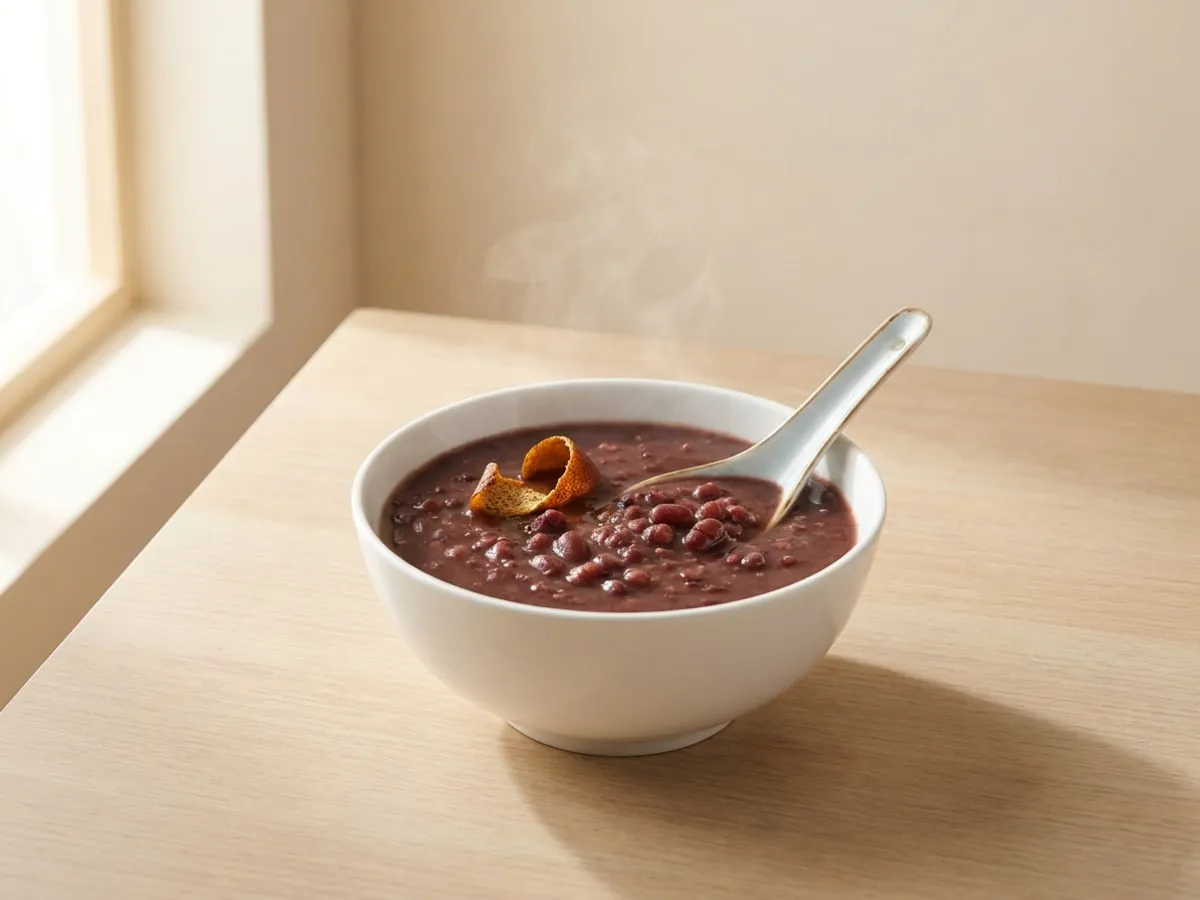
Red bean sweet soup
“A bowl of sweet soup after dinner, and the meal is complete.”
Ingredientsserves 4
Equipment
- A heavy-based pot
- A sieve, for pressing the beans through
Method
- Pick over the beans and wash them. Either soak them two hours, or do what Hong Kong families do to hurry the sand: cover the washed beans with water and put them in the freezer overnight (five hours is enough); the ice splits the skins so they burst quickly in the pot.
- Soak the dried peel twenty minutes until soft and scrape the white pith off with a spoon, or the whole pot is bitter.
- Bring eight cups of water (about 2 litres) to a rolling boil in the pot, add the beans and the peel, lid on, and boil hard ten minutes. If you are adding lotus seeds, soaked and cored, they go in now and come out soft and whole.
- Turn to low and simmer about an hour and a half, stirring every twenty minutes so nothing catches, until the beans have burst and the liquid is thick and sandy.
- To bring the sand out: lift a ladle of beans into a sieve held over the pot, press them through with the back of the ladle so the sand goes back in and the skins stay behind, and discard the skins. 鼎爺's rule: boiling may not get you there, pressing always will. Beans that stay whole in thin water are usually old beans (a packet a year on the shelf will not burst) or sugar that went in too early.
- Only now add the rock sugar and let it dissolve, ten minutes more. Sugar early and the beans never soften.
- Finish with a small pinch of salt to lift the sweetness; do not be greedy or it turns into a salt soup. Hot in winter; in summer cool it and eat it cold from the fridge. It keeps three days in the fridge and reheats.
Take care
- None of the declared allergens. A thick bean sand holds its heat far longer than a clear syrup and scalds; let a child's bowl cool first.
The story
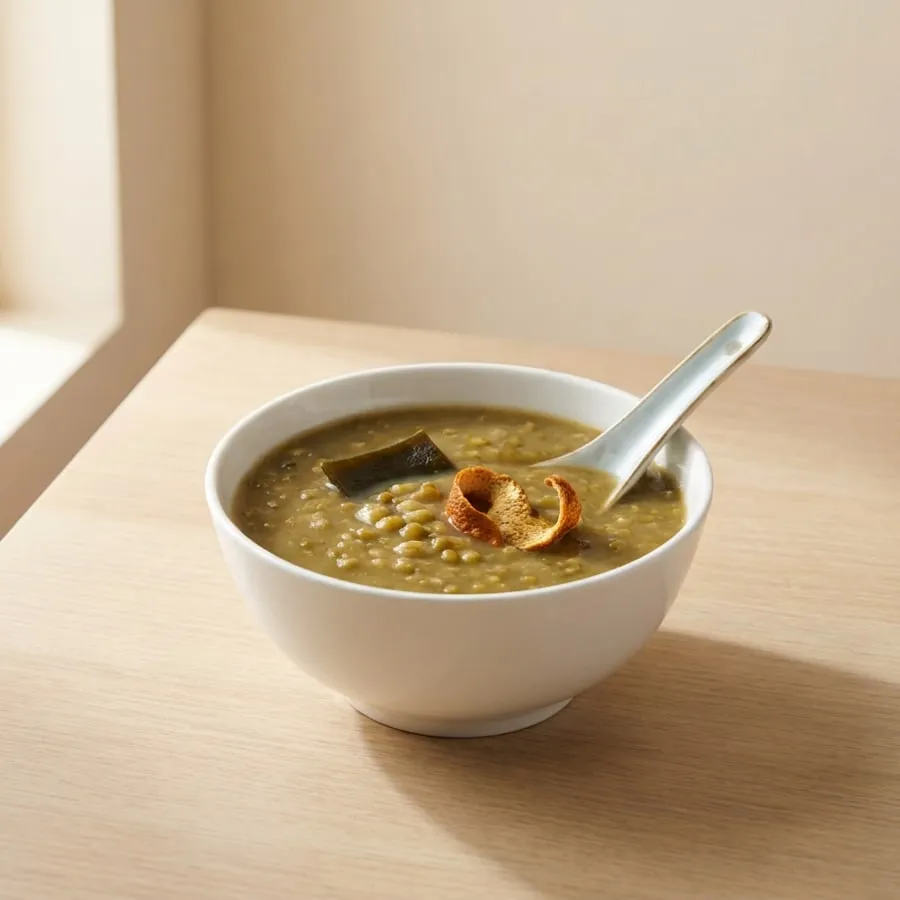
Red bean sweet soup is the end of the banquet: the restaurant sends it out as the last course of a wedding dinner, and it is the bowl every Hong Kong child had put in front of them on a cold night. The dried tangerine peel is what makes it Cantonese, and the older the peel the better the pot, which is why Ah Ma keeps a tin of it that nobody is allowed to touch. With mung bean soup it makes the 二沙, the two sands at the head of every dessert-shop menu: red hot in winter, green cold in summer, the pair every Hong Kong family knows.
Same wall
Lo Fo Tong is cultural food-heritage reference, not medical advice. If you are pregnant, unwell or on medication, talk to your doctor or registered practitioner before changing what is in the pot.