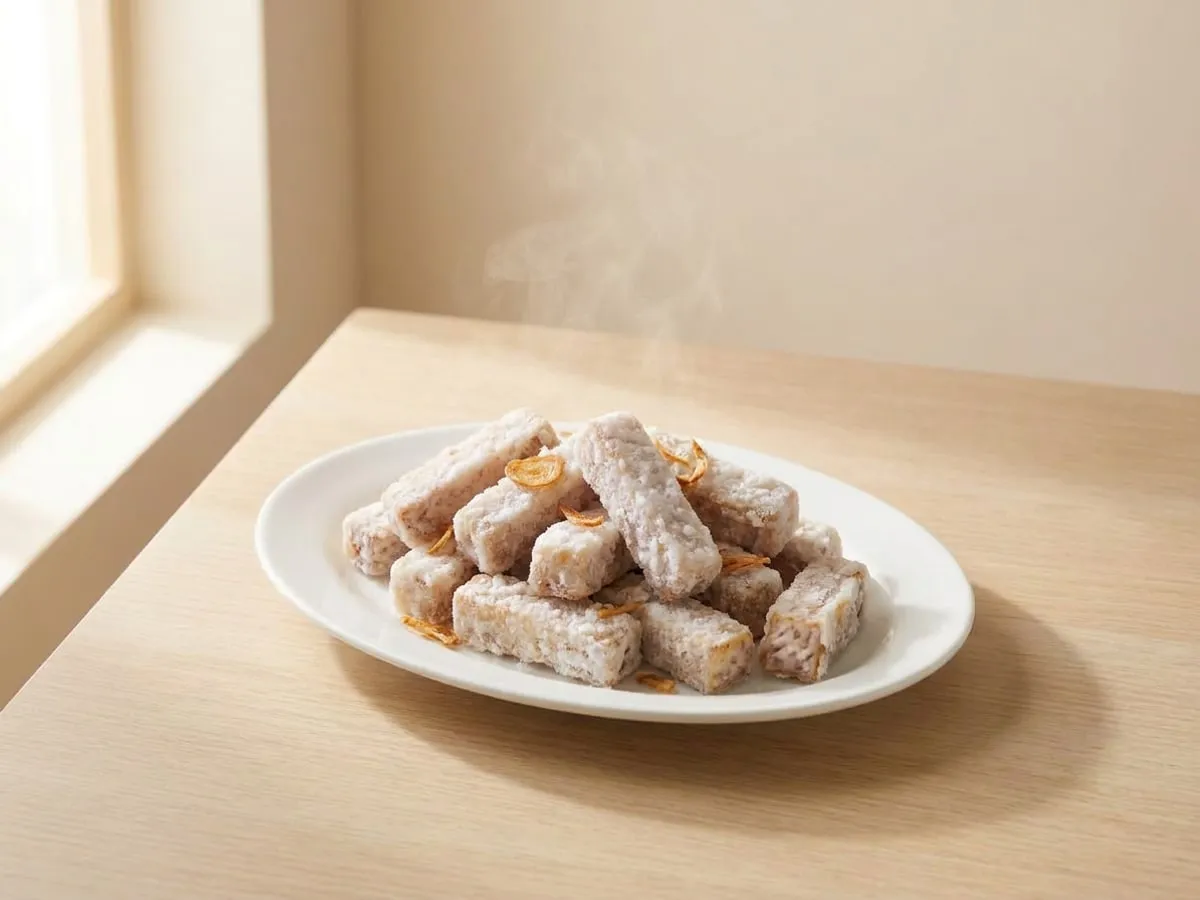
Sugar-frosted taro
反沙芋頭
“A New Year cake, shared around the family.”
Ask Ah Ma
Ingredientsserves 4
Sugar200 g
Equipment
- Two woks or pans: one to fry the taro, and a clean one with no oil in it for the syrup
- A slotted spoon and a heatproof spatula; a thermometer helps with both the oil and the syrup
- Gloves for handling the raw taro
Method
- Wearing gloves, peel the taro and cut it into even fingers 1 cm thick and 7 cm long; uneven pieces cook unevenly. Dust them lightly with cornflour if you like.
- Fill the wok no more than a third with oil and heat it to about 160°C. Fry the taro over medium heat for about 8 minutes, until a chopstick slides easily into the middle, then lift out and drain well. If using shallots, slice them, fry them golden in the same oil and lift them out.
- In a second, clean wok with no oil in it, bring the sugar and a third of a cup (about 80 ml) of water to the boil over medium heat. The big bubbles slowly shrink; when only small, close bubbles are left and the syrup is as thick as maltose but not yet coloured, it is ready, which is 112 to 118°C on a thermometer.
- Tip in the taro and toss for about 30 seconds to coat every piece, then turn off the heat and keep tossing for about a minute while the syrup turns to a white sugar frost on every finger.
- If the syrup stays clear and sticky and will not frost, it was not cooked far enough: put it back on low heat and keep tossing to drive off the water. If it frosts too thickly too soon, add a splash of water, melt it and toss again. Syrup that turns brown and hard was boiled too long.
- Toss in the fried shallots if using, pile the whole fingers on a plate, uncut, and eat them warm the same day; by the next day the frost draws damp and turns sticky.
Take care
- No declared allergens in the basic version; wheat if the cornflour is wheaten; peanut if fried in peanut oil. Raw taro sap makes skin itch, so wear gloves, and the taro must be cooked through before it meets the syrup. Syrup at this stage is far hotter than boiling water and sticks to skin: keep children back from the stove and do not taste from the spatula. Deep-frying at home: fill the wok no more than a third, keep a lid within reach and never leave the hob; an oil fire is smothered with the lid, never with water.
The story
Sugar-frosted taro is a Chiuchow dish, and a common one at New Year in Hong Kong. 反沙, turning back to sand, is what the sugar does: boiled to a syrup, then tossed in the wok until it crystallises again into a white, sandy frost on every finger of fried taro. There are only three steps, frying, boiling the sugar and tossing, and the whole skill is the one minute when the sugar frosts.
Same wall
Lo Fo Tong is cultural food-heritage reference, not medical advice. If you are pregnant, unwell or on medication, talk to your doctor or registered practitioner before changing what is in the pot.