All home cooking › Stir-fried
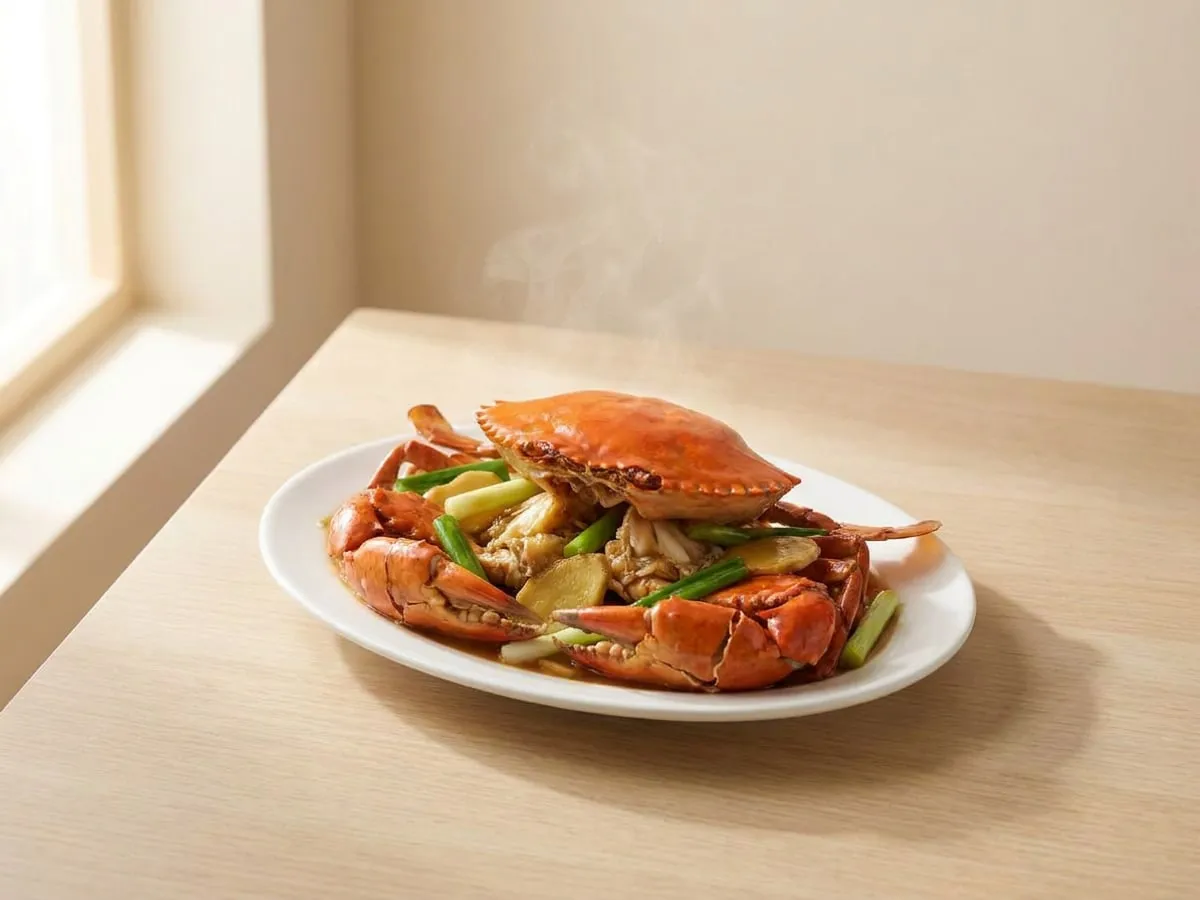
Crab with ginger and spring onion
Also called Singapore ginger and spring onion crab with rice vermicelli
“High heat, a quick toss. Eat it while it is hot.”
Ingredientsserves 4
Method
- Buy the crab alive and cook it the same day. Choose one that feels heavy for its size, with all its legs and claws, and no slosh of water when gently shaken; a watery crab is usually a thin one. At home keep it under a damp cloth somewhere cool, with the claws still tied: they grip hard enough to injure a hand. Never buy or cook a mud crab that died uncooked. Blue swimmers are never sold live in Australia, only whole and raw: if you are using them, keep them in the fridge, cook them the day you buy them and start at step 3; with a crab the fishmonger has killed and cleaned, start at step 5.
- Put the crab in the freezer for 30 to 45 minutes, until it no longer moves when touched but is not frozen. Kill it the moment it comes out, without leaving it longer, because chilling may not make a crab fully insensible. Turn it on its back and, with a sharp pointed knife or an awl, spike it twice from the underside: once into the shallow dip near the front and once into the rear half, so that both nerve centres are pierced. Or split it in half down the centre line with one firm cut of a heavy cleaver. Untie the claws only once it is completely still.
- Scrub the shell, legs and claws with a stiff brush under cold running water. Lift the top shell off from the back and keep it. Pull off the feathery grey gills on each side and the flap underneath, and scoop out the stomach sac behind the eyes with its liquid, which is bitter. Keep any orange roe.
- Cut the body in half, then each half into 2 to 4 pieces with legs attached. Twist off the claws and crack them with the back of the cleaver so the sauce can get in, and snip off the sharp leg tips. Rinse, then dry every piece with kitchen paper; wet crab spits in hot oil.
- Dust the body pieces lightly with cornflour; the claws go in bare. Mix the oyster sauce, light soy, sugar, dark soy, pepper and stock into a sauce, and stir 1 teaspoon of cornflour into 1 tablespoon of water for a slurry.
- Heat the oil, about 1 cm deep, in the wok and fry the crab in batches, laying the pieces in away from you and standing back, until the shells turn red and the cut faces are golden. Drain. This is for colour only, not to cook it through: if the first fry cooks it all the way, the second stage leaves the meat dry, stringy and stuck to the shell.
- Pour off all but 1 to 2 tablespoons of oil. Fry the ginger until it shrinks and its edges turn golden, then the garlic and spring onion whites until fragrant, without letting them darken; burnt garlic makes the whole dish bitter.
- Return the crab and the top shell to the wok, splash the wine down the hot side, pour in the sauce, toss, cover and cook on medium heat for 3 to 5 minutes. Check the thickest part of a claw: the meat should have turned from translucent to white and firm. If it is still grey and glassy, cover it for another minute.
- Lift out the top shell and toss in the spring onion greens. Thicken with a little slurry only if the sauce is thin, then add the sesame oil. Arrange the pieces back in the shape of the crab on the plate with the shell on top. The sauce thickens as it stands; loosen it with a spoonful of water.
- Singapore ginger and spring onion crab with rice vermicelli: the crab laid over noodles that have taken up its stock. You also need 200 to 300 g thin dried rice vermicelli, soaked in warm water for 15 to 20 minutes while you prepare the crab, then drained; 3 to 4 shallots, sliced; 2 to 3 stalks of Chinese celery in 3 cm lengths; and 2 to 3 more spring onions in lengths. Fry the shallots with the ginger in step 7. Once the crab is cooked in step 8, lift out the pieces and the top shell and keep them warm on the plate, leaving the sauce and aromatics in the wok. Add 375 to 500 ml chicken stock, bring it to the boil, put in the noodles and turn them for two to three minutes until the stock is almost all absorbed. Turn the heat to high, add the celery, the spring onion, a tablespoon of oyster sauce and a little light soy, and toss until the noodles are dry and just catching. Plate the noodles, arrange the crab in its shape on top and cover it with the shell. Do not leave the crab in the wok while the noodles cook, or the meat goes dry and stringy.
Take care
- Contains crustacean (crab); oyster sauce contains mollusc (oyster); the soy and oyster sauces contain soy and wheat; sesame oil contains sesame. Buy a mud crab alive and cook it the same day, and never cook one that died uncooked; keep raw blue swimmers in the fridge and cook them the day they are bought; do not recook a cooked crab. The meat is done when it has turned from translucent to white and firm. Tied claws can still nip, so untie them only once the crab is completely still. Dry the pieces before they go into hot oil, and stand back. The shell edges and leg tips are sharp.
The story
Ginger and spring onion is the old Cantonese way with crab: plenty of ginger and spring onion fried until fragrant, the crab tossed through, so their scent wraps the sweetness of the meat. Restaurants pass the pieces through a great deal of hot oil; at home a centimetre of oil is enough, which keeps more of the crab's own taste and stops the sauce going thin. Hong Kong cooks mostly use the male mud crab, with the roe-filled female as the richer choice, and some lay the whole plate over yi mein so the noodles take up the sauce.
Same technique
Lo Fo Tong is cultural food-heritage reference, not medical advice. If you are pregnant, unwell or on medication, talk to your doctor or registered practitioner before changing what is in the pot.