All home cooking › Stir-fried
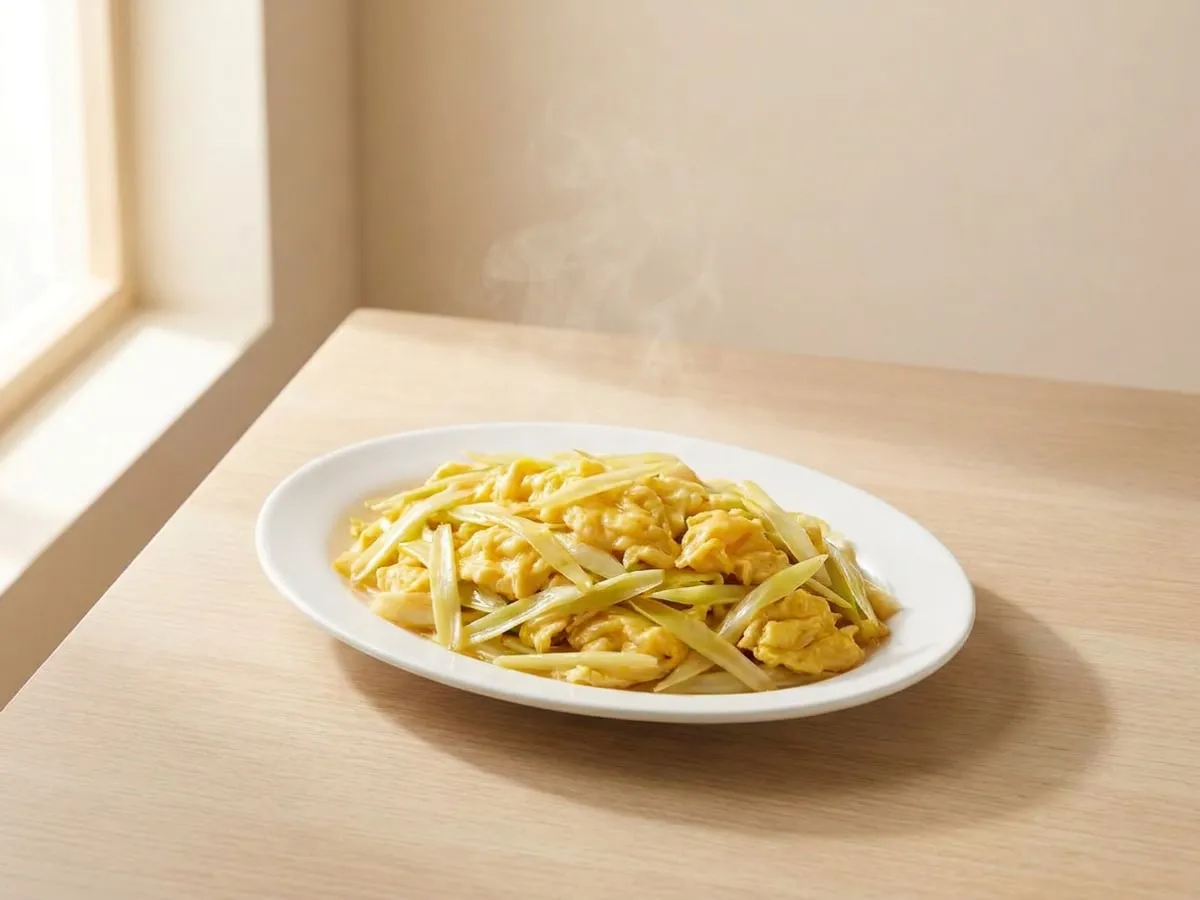
Eggs with yellow chives
韭黃炒蛋
“High heat, a quick toss. Eat it while it is hot.”
Ask Ah Ma
Ingredientsserves 4
Salt½ tsp
Cooking oil2 tbsp
Method
- Rinse the chives a small bunch at a time under the tap; the white base is where the grit hides, so rinse each bunch well. Snip off any bruised or slimy ends, cut into 4 to 5 cm lengths and drain thoroughly.
- Beat the eggs with the salt and a pinch of sugar until the white and yolk are just even; do not whip them to a foam. Add a teaspoon of water if you like. Have the serving plate ready beside the stove.
- Heat the wok until very hot, add half a tablespoon of oil and toss the chives for under a minute, just until glossy and starting to soften. Do not overcook them, or they turn chewy and run water into the egg.
- Turn the heat to medium, add another tablespoon and a half of oil around the edge of the wok and pour the egg over the chives. Leave it until the base sets, then push the set layer from the edge towards the middle with the spatula, letting the runny egg flow into the gap.
- Plate while the egg is about three-quarters set, still soft and glossy; it finishes cooking on the plate. If your family likes it firm, cook until the egg is fully set before plating.
Take care
- Contains egg. The eggs are served soft; for young children, the elderly and in pregnancy, cook until no liquid egg remains.
The story
Yellow chives are garlic chives grown in the dark: pale yellow, fragrant without the bite. Hong Kong cooks put them in spring roll filling and fried noodles, and scramble them with egg. This is the quickest dish on the table: the chives have only seconds in the wok, and the eggs leave it at three-quarters set and finish on the plate, soft and scented with the chives.
Same technique
Lo Fo Tong is cultural food-heritage reference, not medical advice. If you are pregnant, unwell or on medication, talk to your doctor or registered practitioner before changing what is in the pot.