All home cooking › Blanched
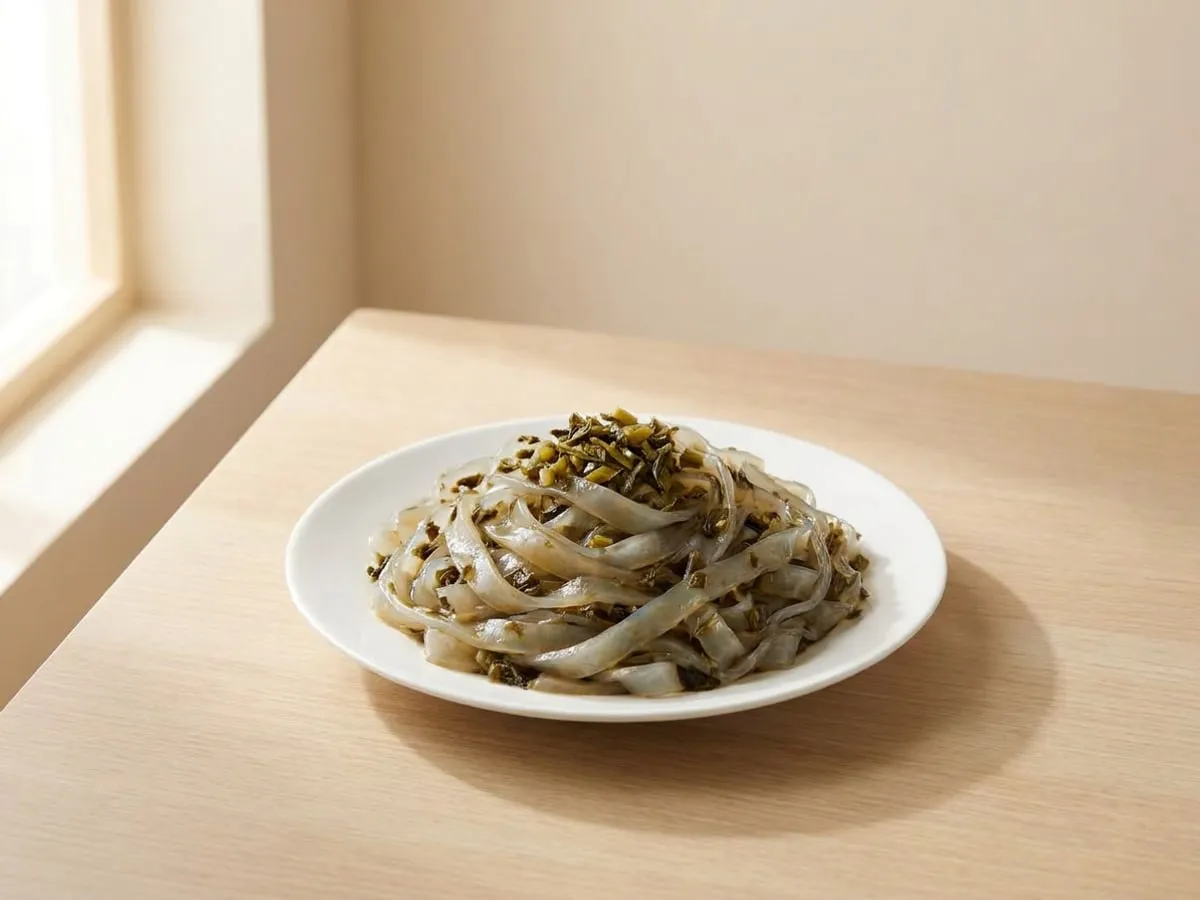
Mung bean sheets with snow cabbage
“Blanched, a pour of soy. Clean and simple.”
Ingredientsserves 4
Method
- Soak dried sheets in hot or just-boiled water for twenty to thirty minutes until pliable. Fresh sheets need no soak.
- Bring a pot of water to the boil and cook the soaked sheets about five minutes, until clear all through with no white core and springy; fresh sheets need only a minute in boiling water. Lift them straight out and rinse under cold water.
- Cut the sheets into strips about 1 cm wide and keep them in cold water until they are dressed, so they do not stick into a slab.
- Rinse the snow cabbage, squeeze it dry and chop leaves and stalks fine. For more fragrance, dry-fry it in a hot wok for a minute or two without a lid, which would turn it yellow; let it cool.
- Drain the sheets well and toss with the snow cabbage, sugar and sesame oil, and a little soy and black vinegar if you like. Taste: the snow cabbage is salty, so salt is often not needed.
- Chill for fifteen to thirty minutes. Pile the strips on a plate with the snow cabbage tossed through and a little more scattered on top.
Take care
- Some snow cabbage is pickled with soy sauce and contains soy and wheat, so read the pack; soy sauce, if added, contains soy and wheat. Contains sesame (sesame oil). Snow cabbage is salty, so taste before salting. This is a cooked food eaten cold: refrigerate it within two hours of cooking and eat it within a day. Once opened, keep dried sheets sealed and dry and use them within about a week.
The story
Fun pei are thin sheets made from mung bean starch, the best known from Tianjin and Shandong, and in the north they are mostly eaten cold. This is a Shanghai-style cold plate: the sheets cooked until clear, cut into strips, tossed with snow cabbage, sugar and sesame oil, and chilled. In Hong Kong, too, the sheets are mostly eaten cold and dressed, as a starter or with drinks. There is also a hot version, with the snow cabbage fried first and the soaked sheets stir-fried in with a little water.
Same technique
Lo Fo Tong is cultural food-heritage reference, not medical advice. If you are pregnant, unwell or on medication, talk to your doctor or registered practitioner before changing what is in the pot.