All hotpot › The sauce table
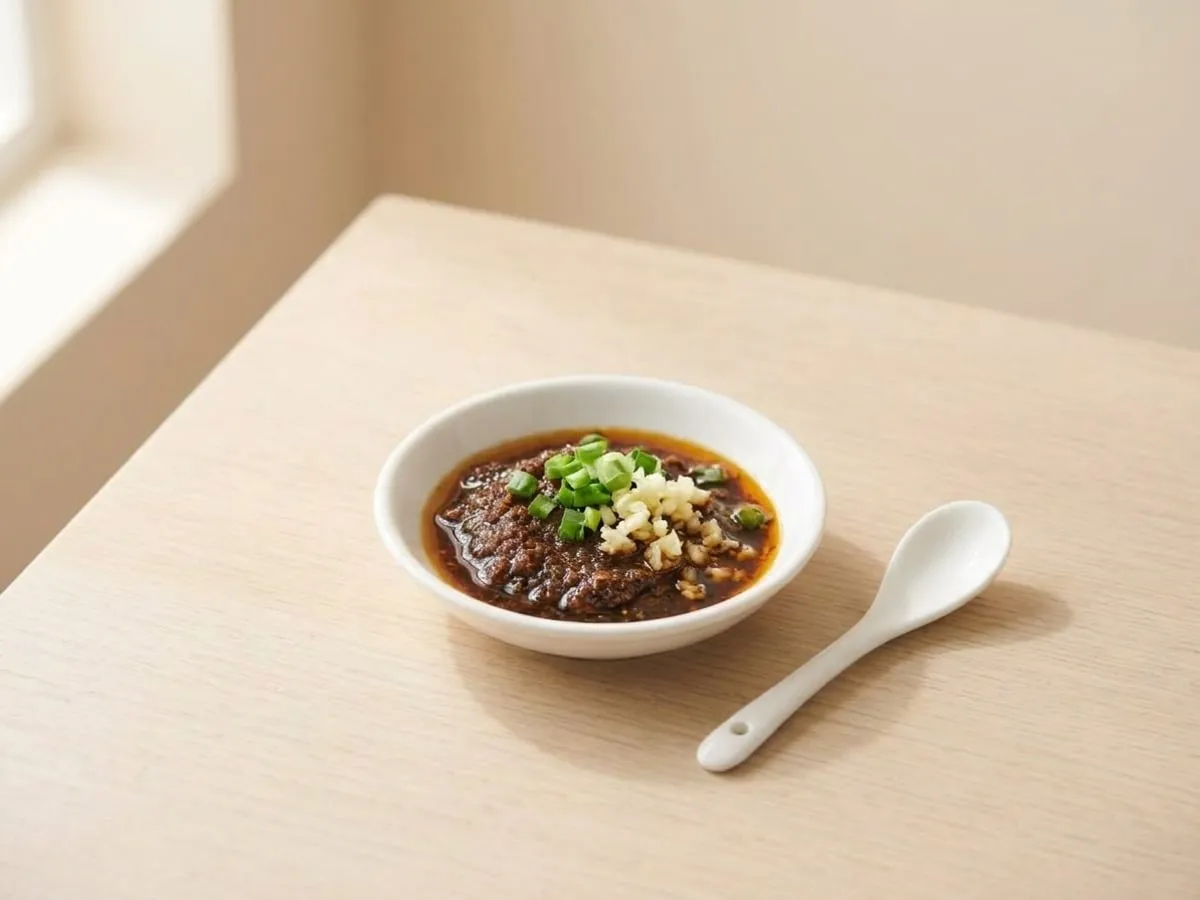
Sha cha and soy
沙茶豉油
“Mix your own saucer. It is only right when it suits you.”
Ingredientsserves 1
Method
- Open the sha cha jar and stir the layer of oil on top back in with a clean spoon, then spoon one or two tablespoons into your own saucer.
- Add a tablespoon of light soy and half a teaspoon of chopped garlic and stir it into a loose sauce, then add the spring onion and a few drops of sesame oil. Roughly two parts sha cha to one of soy.
- This is the beef saucer: shaved beef dipped the moment it comes out of the pot, then beef slices, lamb, pork slices and beef balls.
- Too thick, add a spoonful of clear broth; too salty, more sha cha and less soy. For more kick, a little chilli oil.
- Only a clean, dry spoon goes into the sha cha jar, and the jar goes back in the fridge with its lid on. The saucer has raw garlic in it, so whatever is left is thrown away.
Take care
- Sha cha contains fish, shrimp (a crustacean), soy and sesame, and some brands contain peanut, so anyone allergic to peanut should read the jar; light soy contains soy and wheat (gluten); sesame oil contains sesame.
- Raw garlic is used on the night and leftovers are thrown away. A sauce does not make undercooked food safe.
The story
Sha cha is the Chaoshan and Taiwanese paste of dried fish and dried shrimp, and at the Hong Kong hotpot it became the sauce for shaved beef. Hong Kong keeps the two apart: satay is the peanut paste of the noodle shops, sha cha the dried-fish-and-shrimp jar of the hotpot. The Chaozhou kind has a little peanut, far less than satay.
Same kind
Lo Fo Tong is cultural food-heritage reference, not medical advice. If you are pregnant, unwell or on medication, talk to your doctor or registered practitioner before changing what is in the pot.