Fish tail
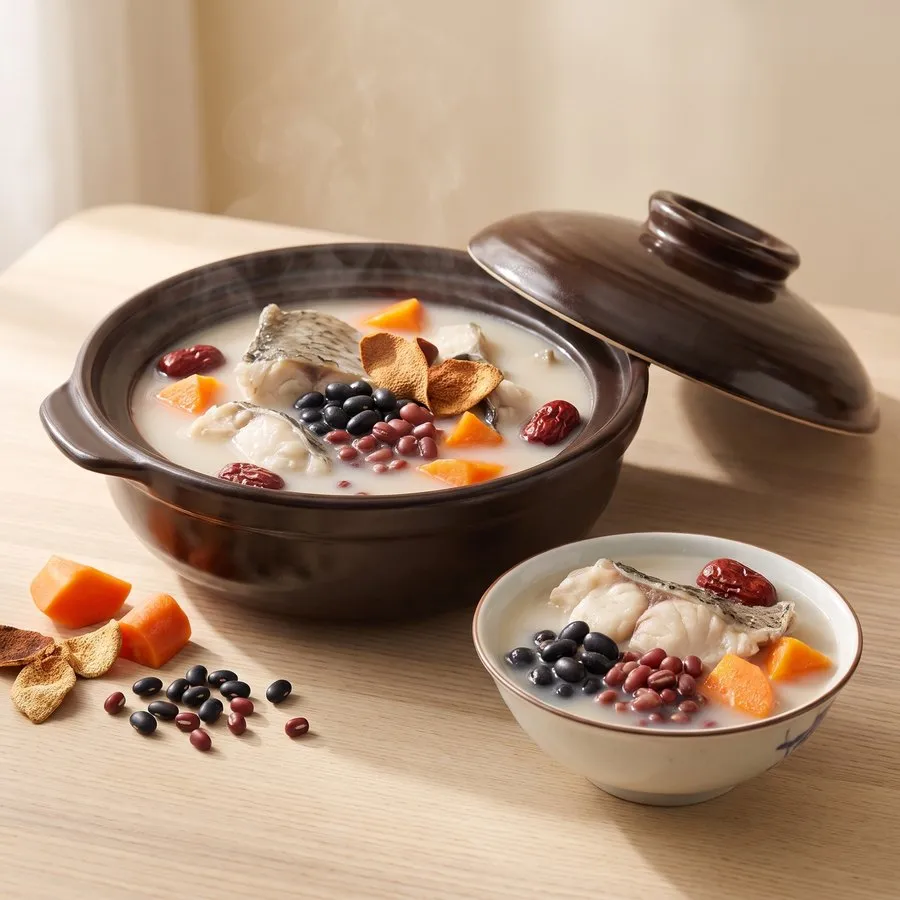
The tail cut of a large fish with skin, fin muscle and gelatin-rich connective tissue. Hong Kong uses grass or bighead carp; in Australia, where neither is sold, a barramundi tail does the same job. Dried well, fried with ginger until golden and then boiled hard, it turns the soup milky white and subtly sweet. The classic engine of papaya-and-peanut nursing soups.
TCM properties
Nature · neutral Flavour · sweet Meridians · spleen、stomach
Traditional food therapy
In Cantonese food therapy fish tail is used to strengthen the spleen and nourish without heatiness, and tradition favours it in soups for nursing mothers.
Cautions: read first
- Take care if you have gout
- Watch out for the bones
Preparation
Rinse it, pat it dry and sear both sides until fragrant before boiling; the soup comes out milky white.
Origin
The pond-fish farming areas of the Pearl River Delta (around Shunde). Grass and bighead carp are not retailed in Australia. A barramundi tail is the stand-in: barramundi is carried whole and in portions by the supermarket seafood counters and by every Asian fishmonger, farmed and wild, and a counter will cut a tail off a large one. A salmon tail is cheaper and everywhere, but it is oilier and it tints the broth
Availability in Australia
Easy to find