All Sunday dishes › Jars and sauces
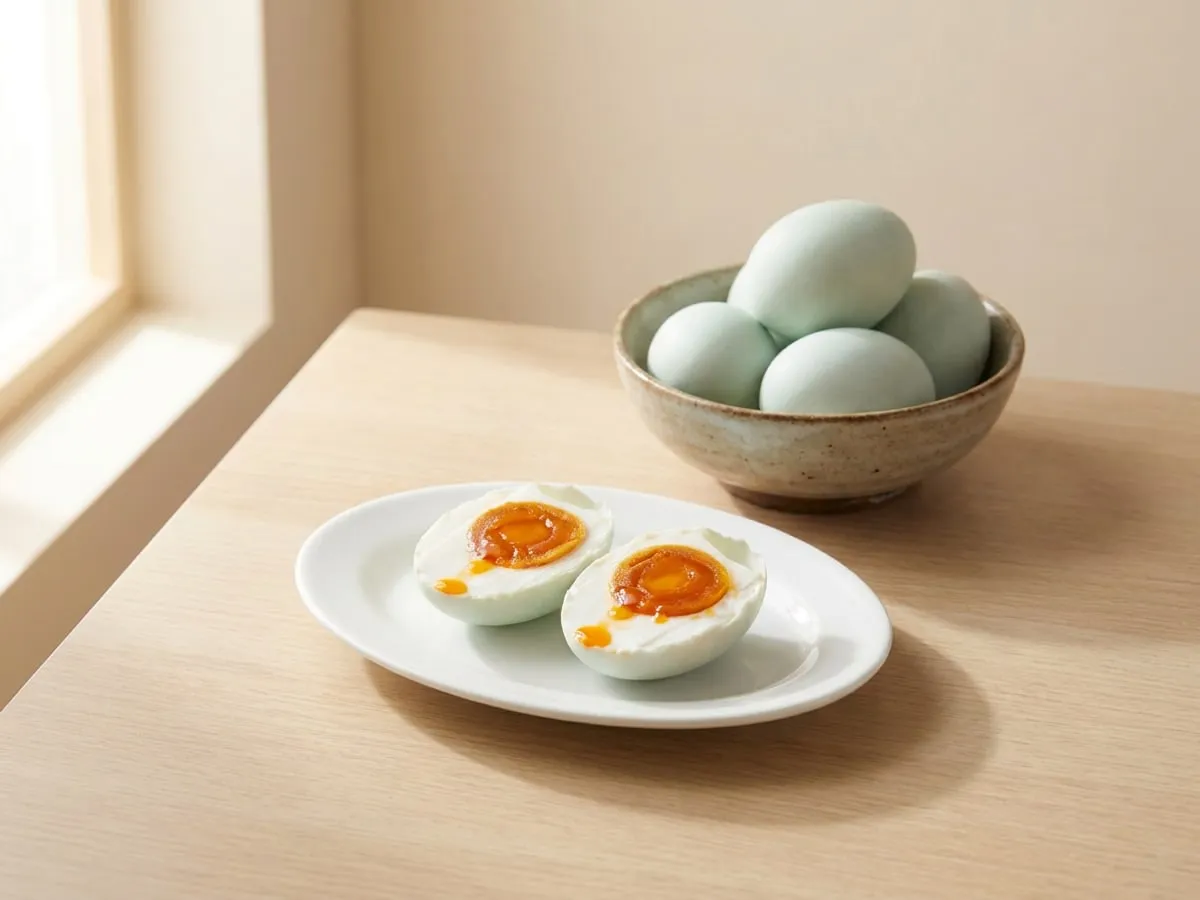
Home-cured salted duck eggs
“Make a jar and put it away. It will carry whatever you cook next.”
Ingredientsserves 4
Equipment
- A lidded glass jar of about 3 litres, big enough for twelve eggs under the brine
- A small saucer, or a zip bag filled with brine, to hold the eggs under
- A pot for the brine
- A marker, for the date on the jar
How the time splits
- 15 minBoil the brine until the salt dissolveshands on
- 2 hrThe brine cools completelyhands off
- 5 minEggs in the jar, brine over, weighted, datedhands on
- 14 daysThe cure: 14 days in the strong brine; 30 to 40 days in the lighter onehands off
- 5 minOut, rinsed, dried, into the fridgehands on
Method
- Choose your route first. Both are Hong Kong household methods, and they do not mix. The strong brine is 300 g of coarse salt to each litre of water, for 14 days; the lighter brine is 250 g to each litre, for 30 to 40 days. Take the salt of the strong one with the days of the lighter one and the eggs are too salty to eat; do it the other way round and the yolks never set.
- Bring 2 litres of water to the boil with the salt and stir until it has all dissolved. For the strong brine add the two tea bags; for the lighter one, the Sichuan pepper and star anise. Take it off the heat and let it go completely cold, lift out the tea bags or spices, and only then add the wine to the lighter brine. The brine must be cold: a warm brine spoils the membrane inside the shell, and the whole jar goes wrong.
- Check every egg once more and leave out any with a crack, because one cracked egg can spoil the jar. Lower the eggs into the jar, pour the brine over to cover them, and hold down any that float with a saucer or a bag of brine. Put the lid on and write the date on the jar.
- Keep it somewhere cool and out of the sun. If your kitchen is hot in summer, put the whole jar in the fridge and allow a few more days.
- When the day comes, take one egg out to test. Shake it first: a set yolk knocks gently against the shell. Then boil it and cut it open; an orange-red, firm yolk means the jar is ready. If it has not set, give the lighter brine another ten days; give the strong brine only a few more, and no longer.
- Once they are cured, take them all out, rinse and dry them, and keep them in the fridge for up to three weeks. Left in the brine they only get saltier. Pour the brine away; it is not reused.
- A salted egg is still a raw egg, and it is always cooked before it is eaten: into cold water in the shell, then ten minutes once the water boils; or cracked raw into a dish and steamed through with it. To keep yolks for later, separate the raw yolks and whites and freeze them, and use them within three months.
Take care
- Egg. A cured egg is still a raw egg and is always cooked before eating; for children and anyone pregnant, cook it until the yolk is set right through. No cracked egg goes in the jar. If the brine turns cloudy or smells bad, throw the whole jar out. The brine is never reused.
The story
Many Hong Kong kitchens once had this jar on the floor: half a month's wait, and then the salty depth on top of a plate of steamed pork. The older generation still remember packing duck eggs in straw ash mixed with salt. The site's 三色蛋, 上湯莧菜 and 上湯娃娃菜 want raw salted eggs and 八寶鴨 wants the yolks, and all of them can come from this jar. It is the easiest jar on the wall, with two things to remember: write the date on it, and cook the eggs before you eat them.
Same kind
Lo Fo Tong is cultural food-heritage reference, not medical advice. If you are pregnant, unwell or on medication, talk to your doctor or registered practitioner before changing what is in the pot.