All Sunday dishes › Jars and sauces
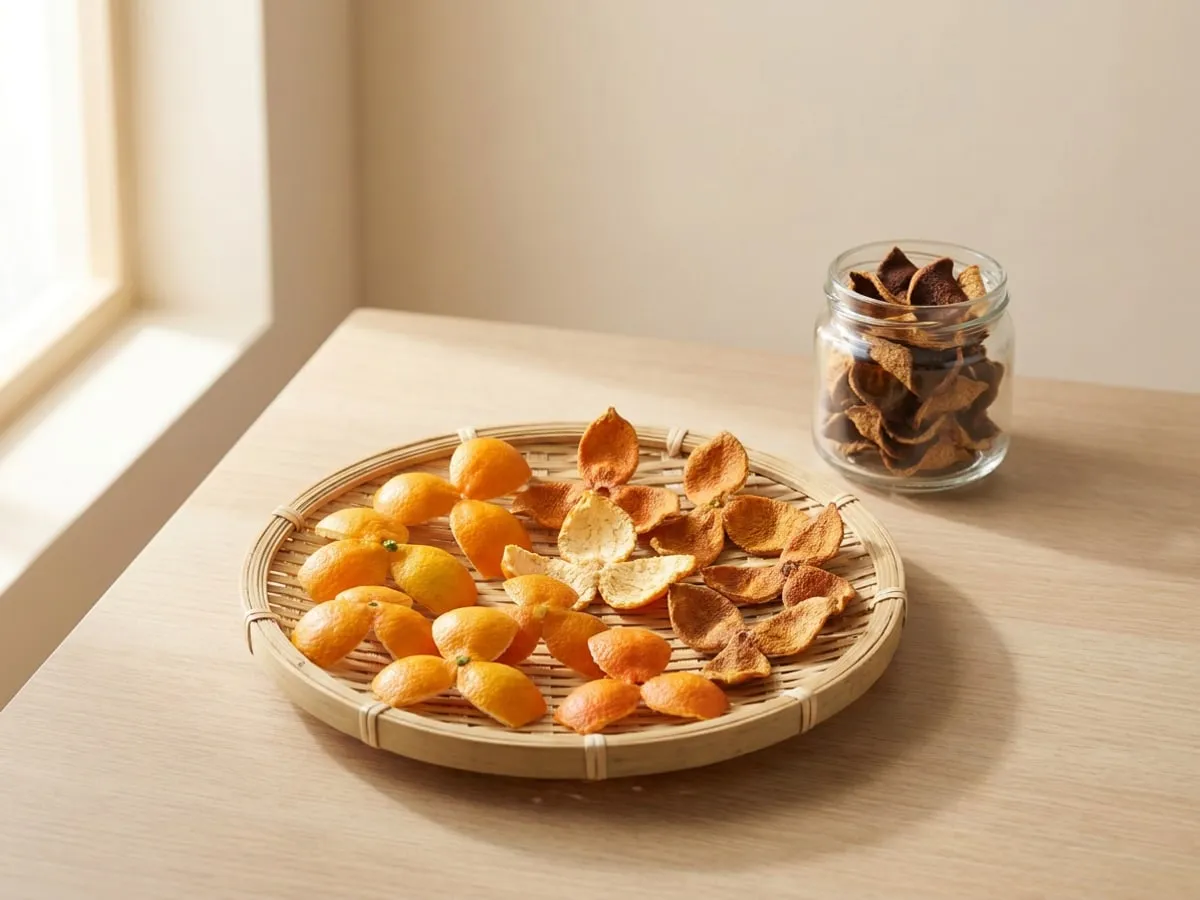
Home-dried mandarin peel
“Make a jar and put it away. It will carry whatever you cook next.”
Ingredientsserves 4
Equipment
- A rack or a clean flyscreen, and a sunny sill or balcony
- A glass jar that seals
- A small knife
- For a wet week: the oven on its lowest setting with the door ajar, until the peel is dry
How the time splits
- 20 minWash the mandarins and peel them in threehands on
- 3 hrSkin side up until it softens, before it is turnedhands off
- 4 daysPith side up in the sun for three or four days, in at nighthands off
- 365 daysA year in the jar before it is ready to use; three before it counts as 陳皮hands off
Method
- Wash the mandarins in warm water. Some supermarket fruit is waxed, so give each one a scrub with a soft brush, then dry it.
- With a small knife, score the peel three times from the top down towards the stalk, through the skin only and not into the fruit, leaving the three pieces joined at the base. Then ease the whole peel off in one piece. Keeping the knife out of the fruit keeps the juice off the peel.
- Lay the peel skin side up on the rack for two or three hours, until it softens, and only then turn it pith side up. Turn it straight after peeling and it cracks into bits.
- Dry it in sun and wind for three or four days, bringing it in each evening and putting it out again the next morning. If rain comes, finish it in the oven on its lowest setting with the door open a crack.
- How to tell it is dry: it is hard and light, and when you bend it, it snaps with a crack instead of bending. If it still bends it is not dry, so give it more sun. Peel that goes into the jar before it is dry will mould.
- Put it in a sealed glass jar somewhere cool, dry and dark. Open it once a week for the first month and look; after that, once a year, pick a dry sunny day and give it another day in the sun. If one piece grows fuzzy mould, throw that piece out and re-dry the rest; if there is mould on several, throw out the whole jar.
- It is ready to use after a year, and it darkens and grows more fragrant the longer it keeps. By the trade's reckoning nothing under three years is 陳皮, so until then call it 柑皮. To use it, soak it soft and scrape the white pith off with a knife before you shred it; the pith left on makes a dish bitter.
Take care
- Some supermarket mandarins are waxed, so wash them before peeling. The peel must be completely dry before it goes in the jar or it will mould, and mouldy peel is thrown out, never used. This is peel for the pot, not medicine.
The story
There was always a jar on top of the wardrobe at home: peel from the New Year mandarins, dried and put away, turning years later into the aged note in a bowl of 綠豆沙 or a steamed fish. It is the thing this volume most wants a child growing up in Sydney to do: eat the mandarin, keep the peel. The site's 綠豆沙, 紅豆沙, 紅豆冰, 蘿蔔炆牛腩, 枝竹羊腩煲 and 煎鯪魚餅, and more than twenty of its soups, all use it. 阿媽 will call it 柑皮, and tell you it will be 陳皮 by the time you are in high school. It closes the wall because it is the only recipe on the site that takes years.
Same kind
Lo Fo Tong is cultural food-heritage reference, not medical advice. If you are pregnant, unwell or on medication, talk to your doctor or registered practitioner before changing what is in the pot.