All Sunday dishes › Jars and sauces
Tea eggs
“Make a jar and put it away. It will carry whatever you cook next.”
Ingredientsserves 6
Equipment
- A pot that holds the eggs in one layer under the liquid
- A second pot for the liquid
- A teaspoon for cracking and a slotted spoon for lifting
- Tea bags, or a muslin bag for loose leaves, so no leaves cling to the shells
- A lidded container, or the pot itself, that fits in the fridge with the eggs under the liquid
How the time splits
- 30 minThe eggs come out of the fridge to lose their chill, so they crack less in the pothands off
- 12 minBoil the eggs; simmer the tea and soy liquid in a second pot at the same timehands on
- 10 minThe eggs cool in cold waterhands off
- 5 minCrack each shell all over with the back of a teaspoonhands on
- 20 minThe eggs simmer in the liquid, lid onhands off
- 1 hrOff the heat, lid on, cooling to room temperature within two hourshands off
- 12 hrOvernight in the fridge, under the liquidhands off
Method
- Take the eggs out of the fridge half an hour ahead; they are less likely to crack in the pot. Leave out any egg with a cracked shell.
- Put the eggs in a pot, cover them with cold water, bring to the boil on high, then cook on medium-low for 8 to 10 minutes more, until the yolks are fully set. Meanwhile put about 1 litre of water in a second pot with the tea (in bags or a muslin bag), light and dark soy, rock sugar, salt, star anise and cassia, and the peel, Sichuan pepper and bay leaves if using. Bring it to the boil and simmer on low for 10 minutes.
- Lift the eggs into cold water and leave them until you can handle them.
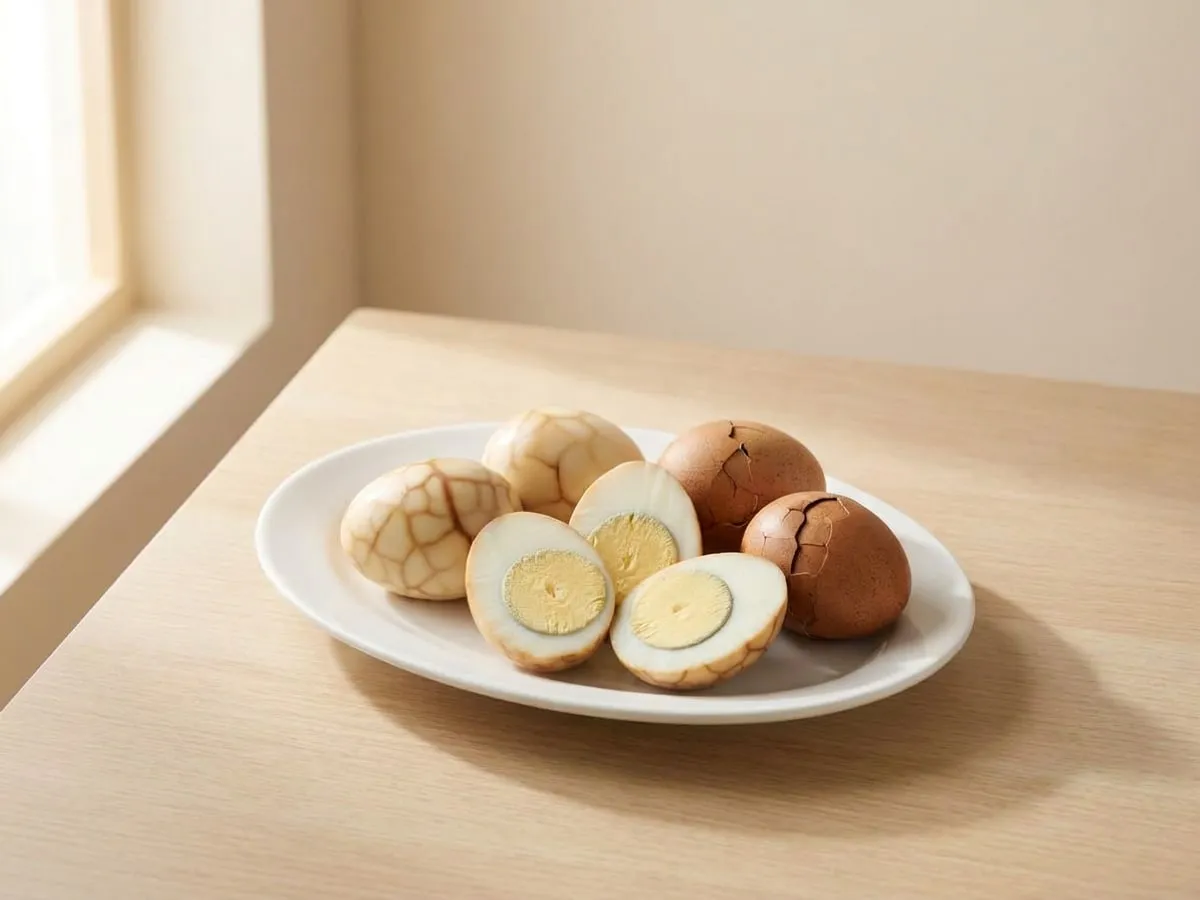
- Tap each shell all over with the back of a teaspoon so it is crazed with fine cracks but still clings to the white. Do not peel it. The more cracks, and the closer together, the more pattern; tap too hard and the white splits.
- Lower the eggs into the liquid, fully covered, put the lid on and simmer on low for 15 to 20 minutes. Lift out the tea bags: tea left in too long turns the liquid bitter.
- Turn off the heat and let the pot cool with the lid on; it must be at room temperature within two hours. Move the eggs and their liquid to a lidded container, or keep them in the pot, with the eggs under the liquid, and steep them in the fridge overnight, up to a day. Do not leave them on the bench overnight.
- Taste one. When the colour and flavour are right, lift all the eggs out of the liquid and keep them covered in the fridge, and eat them within 3 to 4 days. Left in the liquid they keep getting saltier and tougher. Pale eggs with no pattern usually mean the shells were cracked too timidly or the eggs did not steep for long enough.
- Eat them cold, or warm them gently in a little of the liquid. Peel them as you serve, and set them on the plate whole or halved lengthways, the brown marbling on the white facing up; a couple can be left in the shell at the side of the plate.
Take care
- Contains egg; soy and wheat (gluten) (light and dark soy).
- Cool the liquid to room temperature within two hours, then steep the eggs in it in the fridge, never on the bench overnight. Once steeped, keep them covered in the fridge and eat them within 3 to 4 days. Use only uncracked eggs that have been kept in the fridge.
The story
Tea eggs are an everyday snack wherever Chinese people live, often kept steeping in a pot at snack stalls and small shops. At home they are about the easiest thing on this wall, and the best moment is the peeling: the white comes out covered in brown cracks, like marble. Some families simmer a piece of pork belly in the liquid before the eggs go in, for a meatier taste, and a household with leftover master stock can steep the eggs in that with a tea bag added.
Same kind
Lo Fo Tong is cultural food-heritage reference, not medical advice. If you are pregnant, unwell or on medication, talk to your doctor or registered practitioner before changing what is in the pot.