All café dishes › Soup noodles
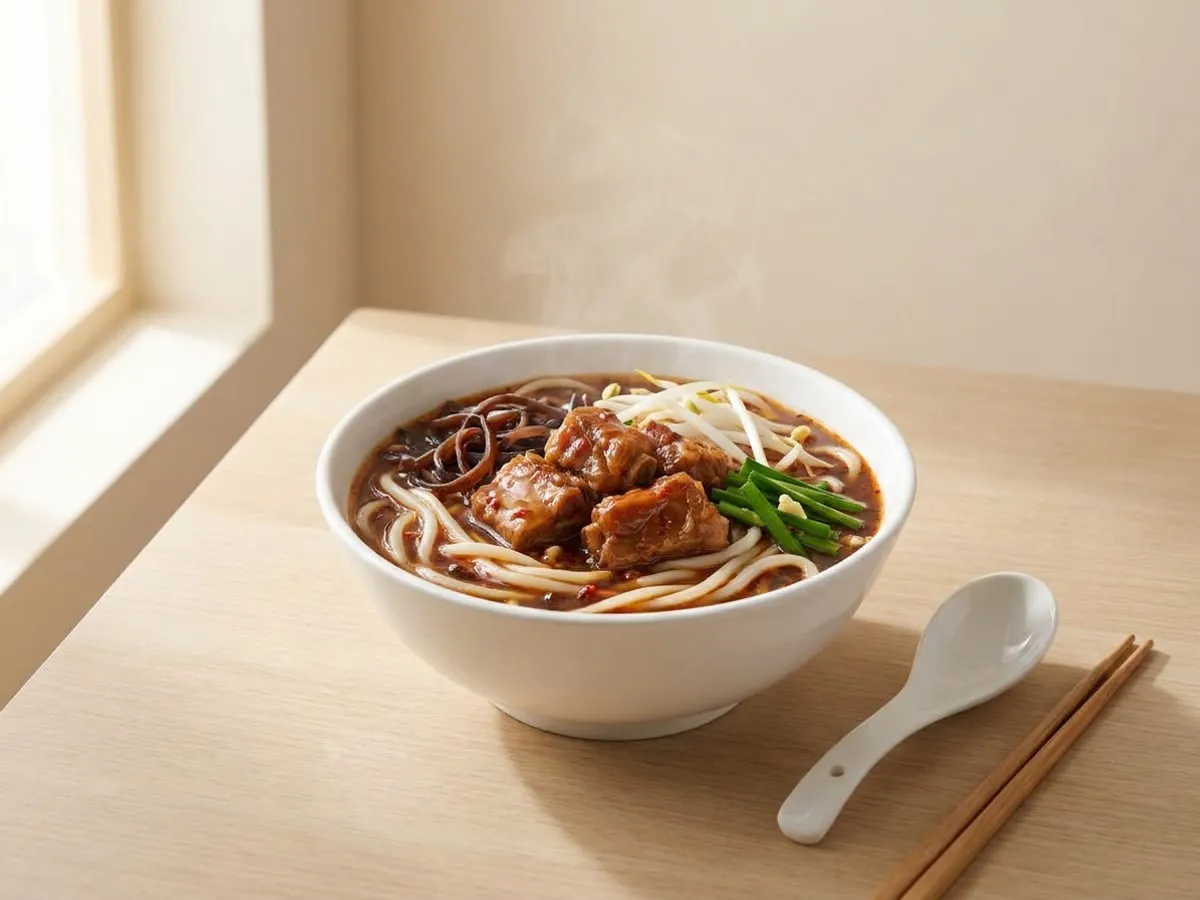
Sour-hot pork soft-bone rice noodles
酸辣豬軟骨米線
“Give the soup its time. The noodles get their own pot.”
Ask Ah Ma
Ingredientsserves 2
Fresh ginger3 slices
Star anise1 star
Light soy sauce2 tbsp
Dark soy sauce1 tsp
Rock sugar10 g
Rice wine (cooking wine)1 tbsp
Sugar2 tsp
Evaporated milk2 tbsp
Bean sproutsa handful
Method
- Put the soft bones in cold water, bring to the boil, boil five minutes to blanch, and rinse.
- Braise them: add the ginger, star anise, light and dark soy, rock sugar and rice wine, cover with water, bring to the boil and simmer an hour to an hour and a half, until a fingernail presses in; a pressure cooker takes about thirty minutes. Cut short, the cartilage stays hard, which is the usual failure.
- Soak the wood ear twenty minutes and blanch it.
- Boil the noodles in a large separate pot for 8 to 15 minutes depending on thickness (the packet is the guide), turn off the heat and leave covered 5 to 10 minutes, rinse under cold water, drain and divide between the bowls. Never cook the noodles in the soup.
- The soup: bring the chicken stock and 500 ml of water to the boil, add the sugar, then the chicken powder and salt a little at a time, tasting, and stir in the evaporated milk; add the vinegar just before the heat goes off, since boiled vinegar goes flat.
- Heat and numbing are two separate dials. 多酸少辣, more sour and less heat, is a real shop order and the right one for children: ladle the child's bowl out first, then stir the chilli powder into the pot. Add the Sichuan pepper oil bowl by bowl, and leave it out for anyone who dislikes the numbing.
- Cook the bean sprouts and chives in the soup for thirty seconds.
- Top the noodles with half the soft bones and a spoon of their braising liquid, the wood ear and the vegetables, and pour over the soup. Cool the rest of the bones and refrigerate; eat within three days, reheated in the soup until steaming.
Take care
- Cool the braised soft bones quickly and refrigerate; they keep three days, reheated until steaming. Contains soy and wheat (soy sauces) and milk (evaporated milk); chicken powder and boxed stock may contain wheat, so check the labels.
The story
Pork soft bone is one of the toppings that set the Hong Kong rice-noodle shop apart from Yunnan: one shop's set bowl comes loaded with soft bone, kidney, intestine and pork jowl together. The braise is the part a home cook can do better than a shop, because at home it can take its time.
Same counter
Lo Fo Tong is cultural food-heritage reference, not medical advice. If you are pregnant, unwell or on medication, talk to your doctor or registered practitioner before changing what is in the pot.