All home cooking › Stir-fried
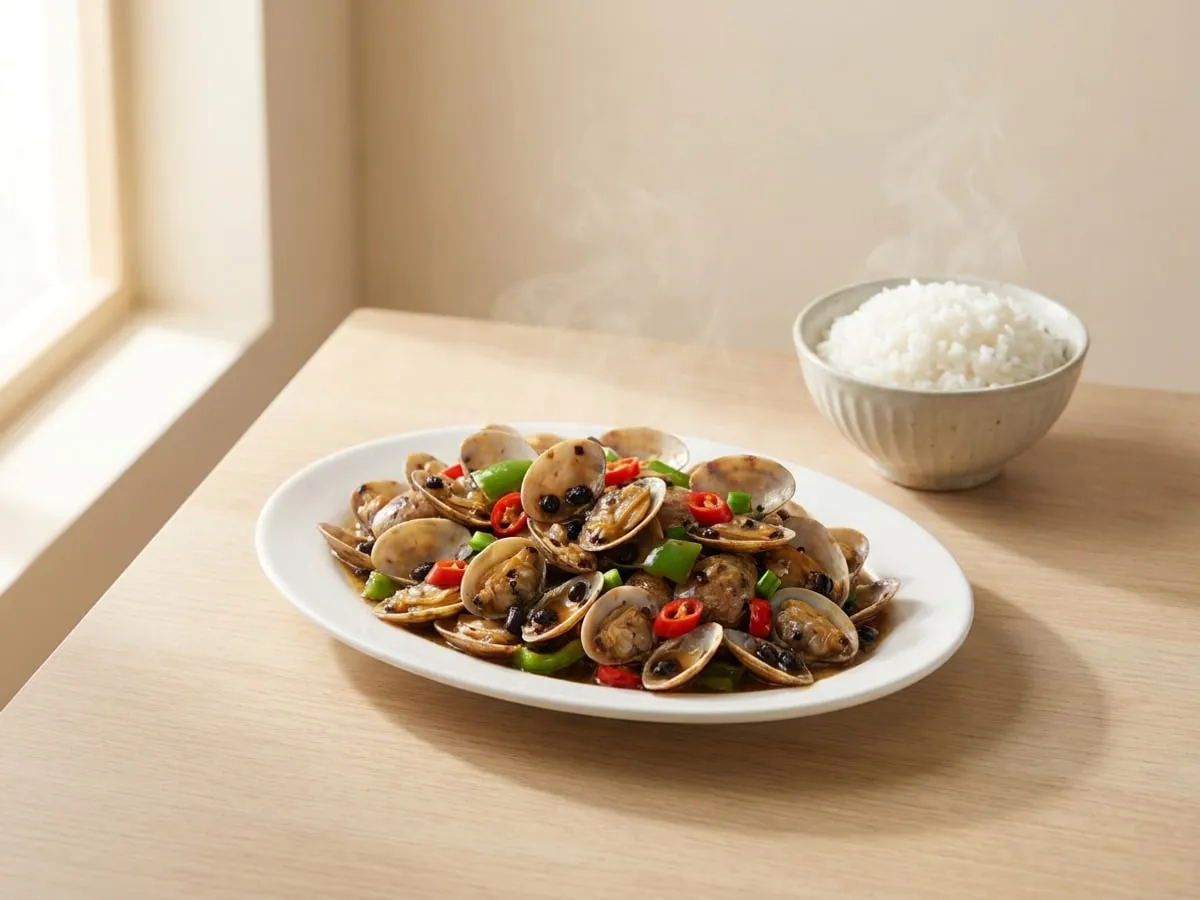
Clams in black bean and chilli
Also called Razor clams in black bean sauce
“High heat, a quick toss. Eat it while it is hot.”
Ingredientsserves 4
Method
- Purge the clams in lightly salted cold water for half an hour to two hours, changing the water once, so they spit out their sand; then scrub the shells and discard any that stay open when tapped.
- Rinse the black beans, chop roughly and mix with the garlic; stir the oyster sauce, dark soy, sugar, cornflour and four tablespoons of water into a sauce.
- Heat the wok hard, add the oil and fry the ginger, shallot, garlic and black beans about twenty seconds until fragrant, then the chilli.
- Drain the clams, tip them in on full heat and toss, splash the wine down the side of the wok, then cover for one to two minutes.
- When most of the shells have opened, pour in the sauce and toss until it thickens and coats the shells; add the spring onion, toss twice and plate. Discard any clam still shut after cooking; do not prise it open to eat.
- Serve at once, with the sauce spooned over rice; use a deep plate, there is a lot of shell and juice.
Take care
- Contains mollusc (clams) and soy and wheat (black beans, oyster sauce, dark soy); the oyster sauce is also a mollusc (oyster). Buy the clams live, keep them cold and cook them the same day, until the shells open fully; discard any that stay shut after cooking.
The story
Clams in black bean and chilli began as a dai pai dong and typhoon-shelter dish and moved into the home once clams were cheap at the wet market; Made With Lau calls it an iconic Cantonese alley-restaurant dish and Christine’s Recipes files it under neighbourhood food. It is one of the few home stir-fries eaten with the fingers, shell by shell, with rice to catch the sauce. The same method does razor clams, 豉汁炒蟶子: purge them in lightly salted water, split them and rinse out the grit, blanch them briefly and toss them through the sauce only long enough to coat, as they toughen if cooked longer. Razor clams are an occasional find in Australia, imported, at a few Sydney fish shops.
Same technique
Lo Fo Tong is cultural food-heritage reference, not medical advice. If you are pregnant, unwell or on medication, talk to your doctor or registered practitioner before changing what is in the pot.