All home cooking › Claypot
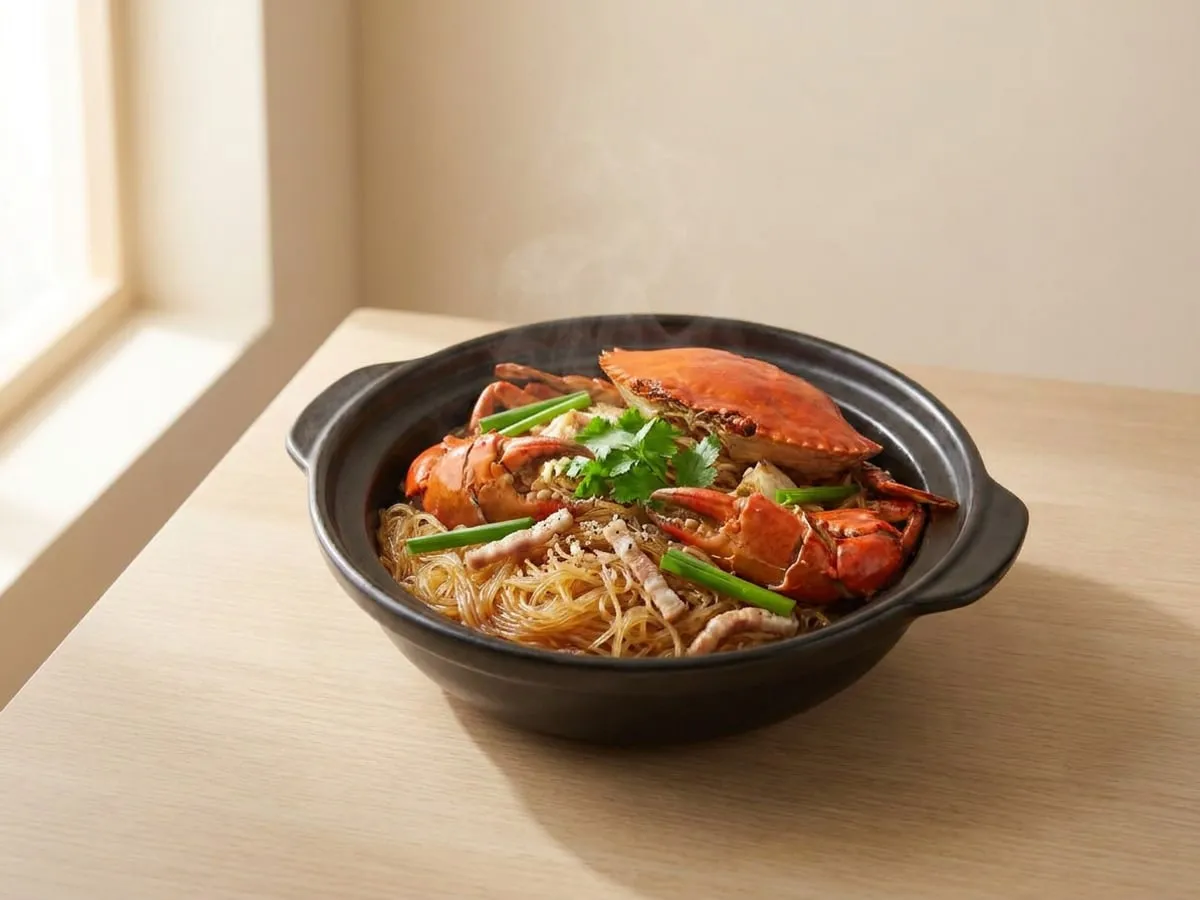
Crab and vermicelli pot
Also called Crab and vermicelli pot (another name)
“One pot does the whole dinner. The crust is yours.”
Ingredientsserves 4
Method
- Use raw crab cooked the day it is bought; never recook a cooked crab. Blue swimmers are sold in Australia only whole and raw: keep them in the fridge, or ask the fishmonger to clean and cut them. To clean them yourself, lift off the top shell, pull off the gills on each side and the flap underneath, and scoop out the stomach sac behind the eyes; cut the body in half and each half into two or three pieces with legs attached, crack the claws with the back of the cleaver and snip off the leg tips. For a live mud crab, chill it in the freezer for 30 to 45 minutes until still, then kill it the moment it comes out by spiking it from the underside or splitting it with one cut, as for crab with ginger and spring onion. Pat the pieces dry.
- Soak the noodles in cold water for 10 to 30 minutes until soft, drain and cut them once. Mix the oyster sauce, light and dark soy, sugar, wine, sesame oil, stock and fish sauce, and toss the noodles in it so they start to take up the flavour.
- Lightly crush the coriander roots, garlic and white peppercorns in a mortar or with the flat of a cleaver.
- Warm the claypot slowly over low heat, add the pork strips and cook them over medium-low until the fat runs and the edges begin to crisp.
- Add the coriander roots, garlic, pepper, ginger, spring onion whites and Sichuan pepper and fry gently until fragrant, without letting the garlic burn.
- Lay the crab over the aromatics, claws at the bottom, cover and cook over medium heat for five minutes.
- Spread the noodles and all their liquid over the crab, cover and cook five to eight minutes more; halfway, lift and turn the noodles and crab once so the noodles take colour from the bottom and nothing sticks. If the pot is drying fast, add a spoonful or two of water down the side.
- It is done when every piece of shell is red, the meat at the thickest part of a claw has turned from translucent to white and firm, and the noodles have drunk the liquid; if the claw meat is still grey and glassy, cover it for another minute.
- Turn off the heat, bring a few pieces of crab up onto the noodles, scatter over the spring onion greens and coriander leaves, add a grind of white pepper and take it to the table in the pot. The noodles keep drinking the sauce, so eat at once.
Take care
- Contains crustacean (crab); oyster sauce contains mollusc (oyster); fish sauce, if used, contains fish; the soy and oyster sauces contain soy and wheat; sesame oil contains sesame; contains pork. Use raw crab cooked the day it is bought, never a mud crab that died uncooked, and never recook a cooked crab; the meat is done when it has turned from translucent to white and firm. Cook the pork through as it renders. Warm the claypot gradually and never pour cold liquid into a hot one, or it can crack. Shell edges and leg tips are sharp.
The story
This pot comes from the Thai dish of crab baked with glass noodles: pork fat rendered in the pot, coriander root, garlic and white peppercorns fried in it, raw crab laid on top and seasoned noodles over the crab, all cooked together under the lid. It differs from the prawn and vermicelli claypot on this site, which is the Cantonese wok version, with the prawns half-fried and finished on top of the noodles for two minutes, black pepper and Chinese celery. Here the Thai base is the main line, and the crab cooks under the noodles for well over ten minutes, so its juices run into them.
Same technique
Lo Fo Tong is cultural food-heritage reference, not medical advice. If you are pregnant, unwell or on medication, talk to your doctor or registered practitioner before changing what is in the pot.