All home cooking › Braised
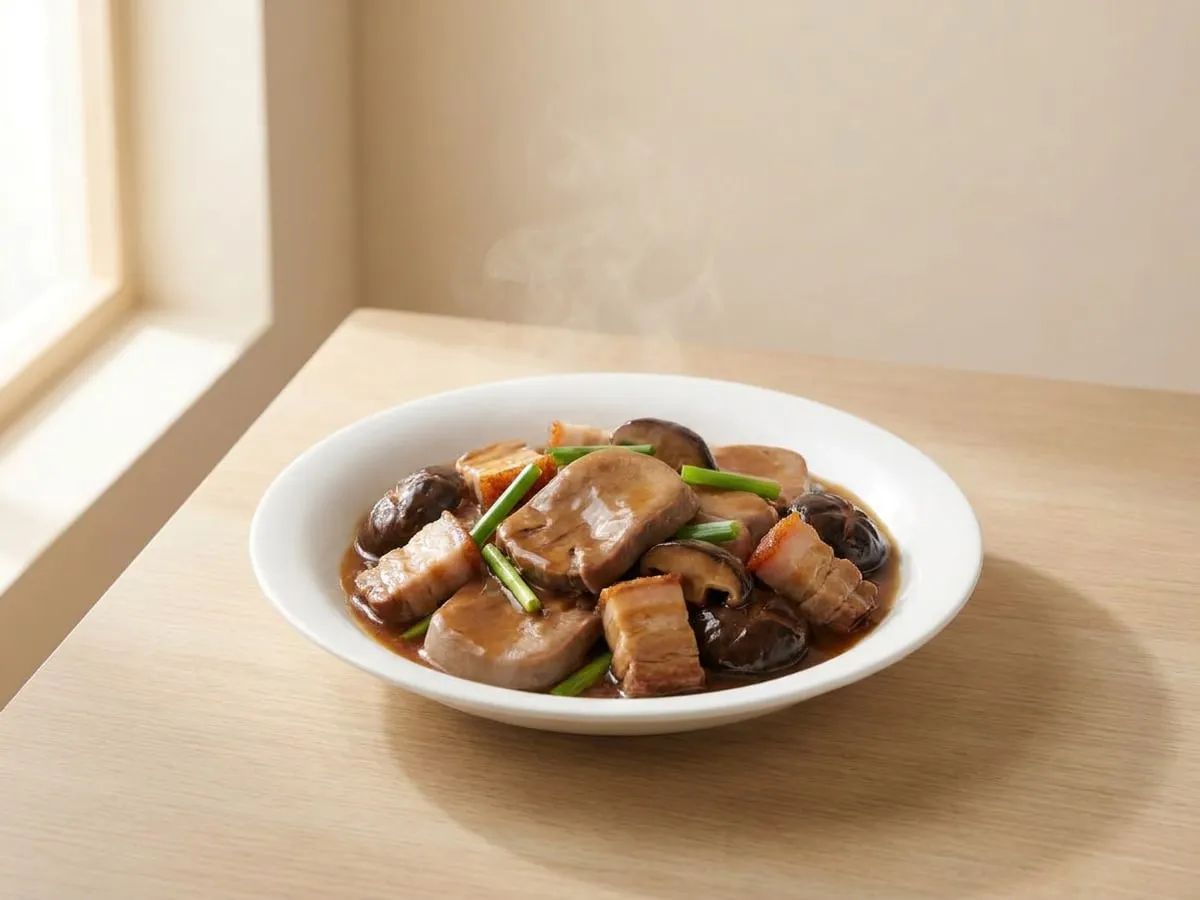
Ox tongue braised with shiitake and roast pork
Also called Ox tongue braised with shiitake and roast pork (another name)
“Give it time. It is better again tomorrow.”
Ingredientsserves 4
Method
- Thaw a frozen tongue in the fridge for one to two days. Rinse it and scrape the surface with the back of a knife, rinsing and scraping two or three times. Soak the shiitake in cold water for thirty minutes until soft, then remove the stems and halve them.
- Bring a large pot of water to the boil, blanch the tongue for ten minutes, then lift it into cold water.
- In a pot of fresh water, put the whole tongue and the sliced ginger, with water to cover. Bring to the boil, then simmer on low for one to one and a half hours, until the skin starts to lift at the tip.
- Lift out the tongue and, while it is still warm, peel off the whole rough skin starting where it lifts; cut away any thick patches at the root end. Left on, the skin is tough and coarse, and once the tongue is cold it is hard to peel.
- Cut the tongue into 1 cm slices or 3 cm chunks. Heat a little oil in the wok, fry the roast pork briefly until some fat runs, and lift it out. Add more oil, fry the smashed ginger and garlic until fragrant, add the tongue and toss, then splash the wine down the side of the wok.
- Return the roast pork with the shiitake, toss, move everything to a pot, and add stock to just cover, with the oyster sauce, dark soy and rock sugar. Bring to the boil, cover and braise on low for 45 minutes to an hour, until a chopstick goes into the tongue easily.
- Uncover, raise the heat and reduce until the sauce coats the tongue; thicken with a little cornflour slurry only if it is still thin. To plate, spoon the tongue slices, roast pork and mushrooms together into a deep dish or claypot, pour the sauce over and scatter the spring onion.
Take care
- Contains soy and wheat (dark soy, oyster sauce); oyster sauce contains mollusc (oyster). The roast pork is already cooked: refrigerate it and use it within a day or two of buying. Cool leftovers within two hours and refrigerate.
The story
牛脷 is ox tongue: Cantonese avoids the word 舌, which sounds like 蝕, to lose money, so Hong Kong butchers and menus write 牛脷. This is a home braise: the tongue is simmered soft and peeled, then braised with roast pork belly from the roast-meat shop and soaked shiitake, the roast pork bringing its flavour and fat and the mushrooms soaking up the sauce. At home, simmering the tongue whole before peeling is far easier than cutting it raw, and the skin comes away cleanly.
Same technique
Lo Fo Tong is cultural food-heritage reference, not medical advice. If you are pregnant, unwell or on medication, talk to your doctor or registered practitioner before changing what is in the pot.