Rice bean
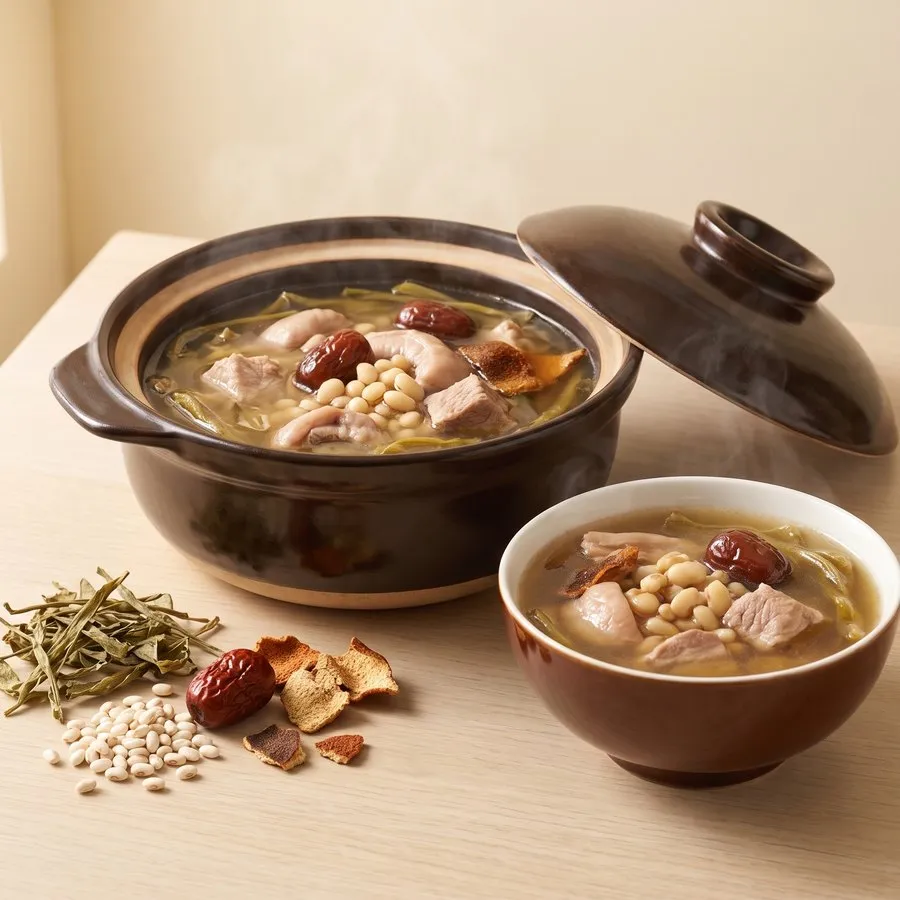
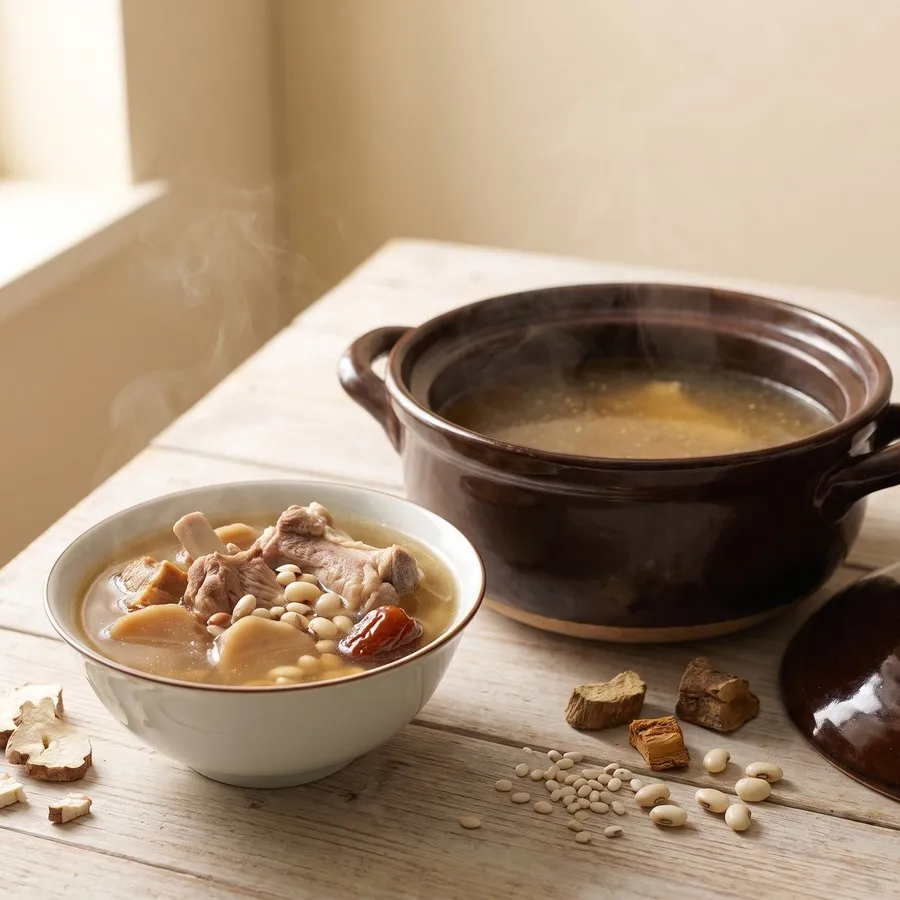
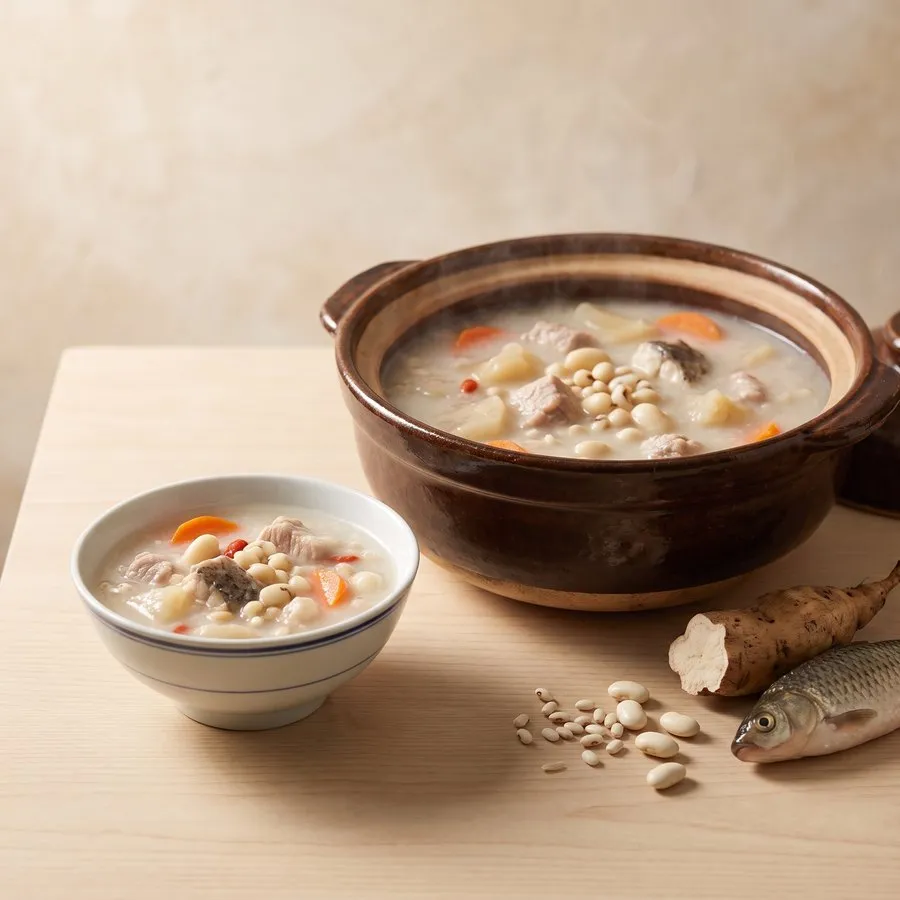
The dried seed of the rice bean (Vigna umbellata), slimmer, darker and harder than the culinary red bean it resembles. It stays comparatively firm even after long boiling and is used for its function rather than its eating quality, forming the backbone of damp-clearing pots like kudzu and old cucumber soup.
TCM properties
Nature · neutral Flavour · sweet、sour Meridians · heart、small intestine
Traditional food therapy
In Cantonese food therapy rice bean is used to promote water flow, dispel dampness and ease puffiness; tradition treats it as an occasional soup bean rather than an everyday one.
Cautions: read first
- Strongly water-draining, so take care if you already pass water often.
- Pregnant women should check before drinking it.
- Long use is traditionally said to make people thin, so it is not for drinking every day.
Preparation
Soak for at least an hour; it takes a long boil and cooks down floury (起沙, the sandy texture of a bean that has gone all the way).
Origin
Mainly grown in Guangdong, Guangxi and Jiangxi. AU packs are labelled 'adzuki', and labels often mix up rice bean (赤小豆) and adzuki bean (紅豆); rice beans are the smaller, longer, darker red ones
Availability in Australia
Easy to find