Job's tears / coix seed
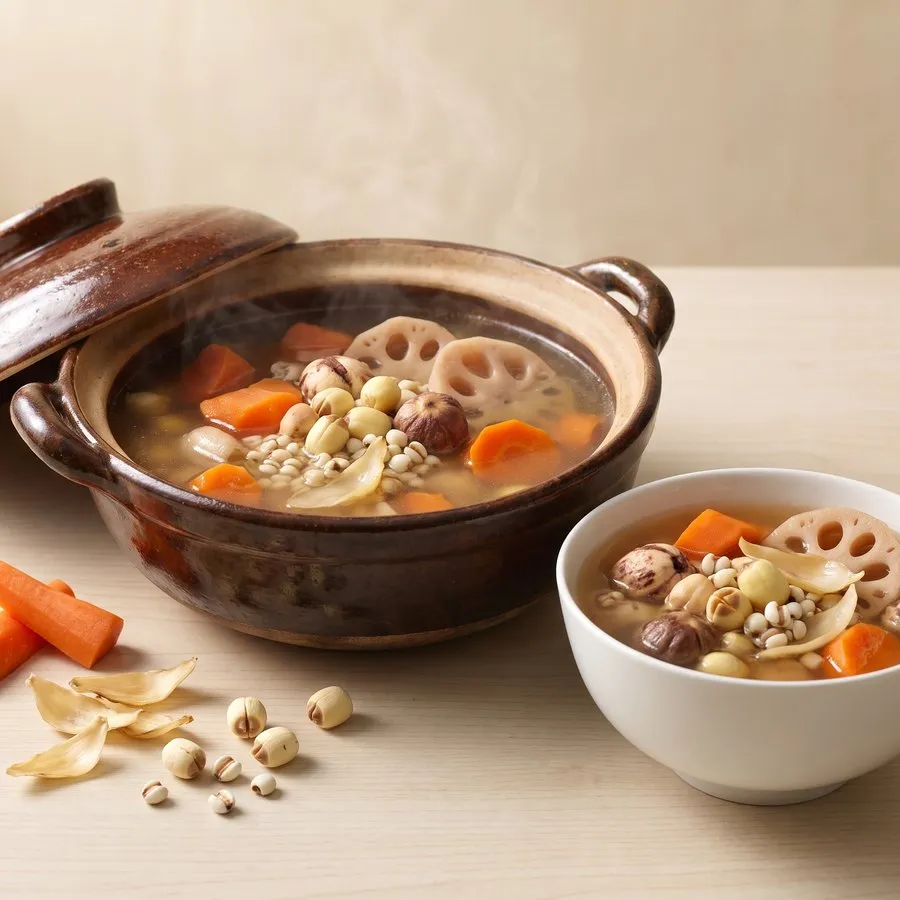
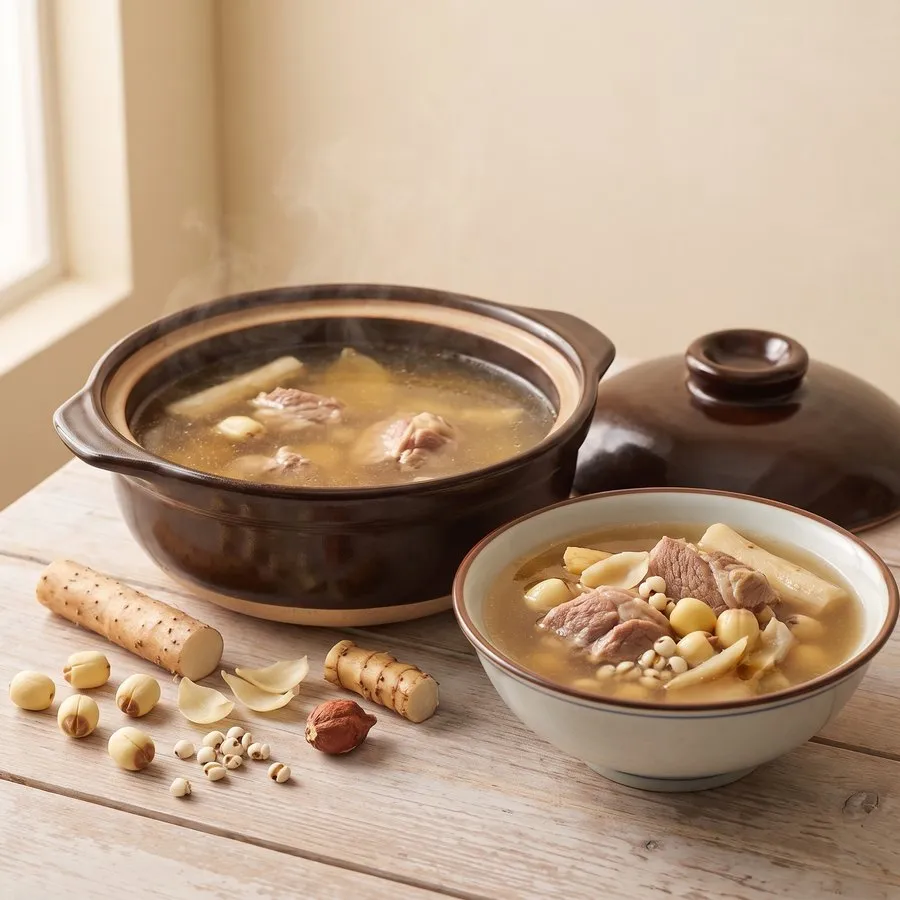
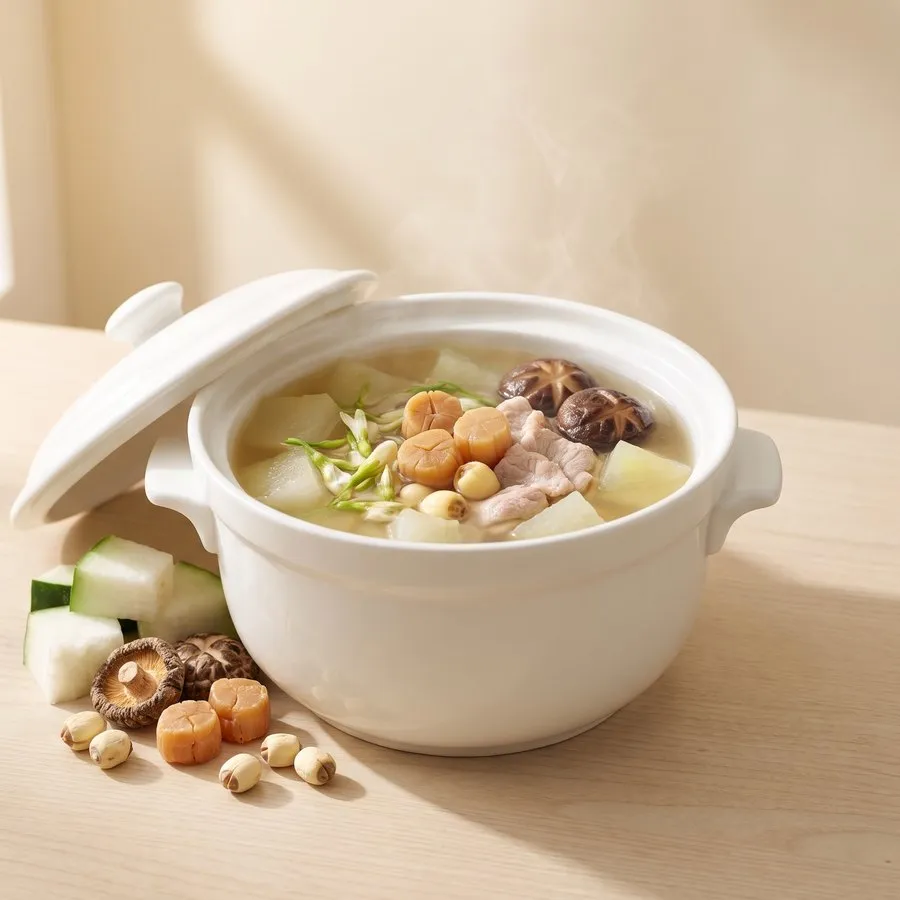
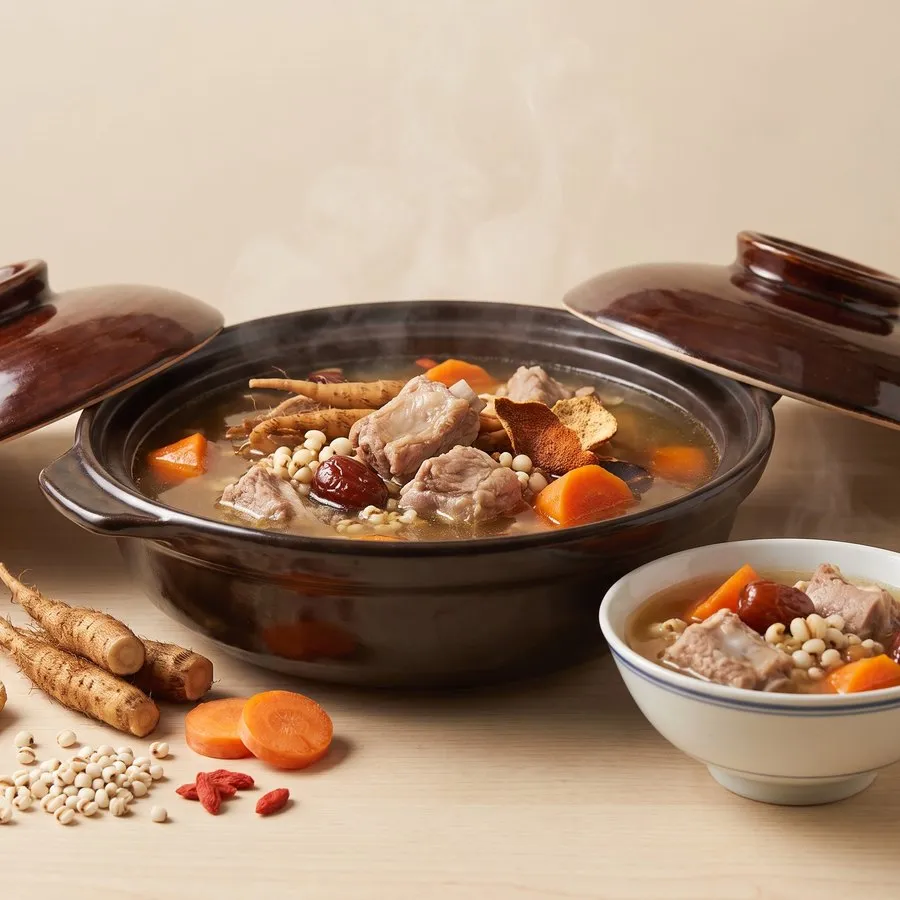
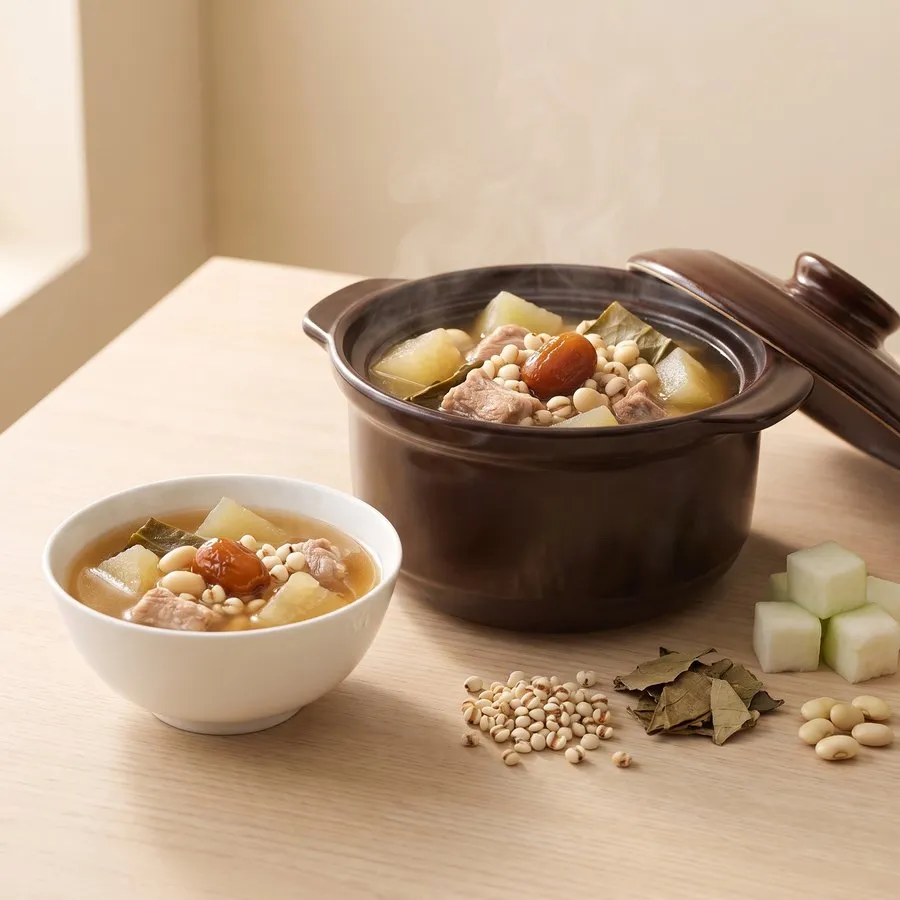
The polished kernel of Job's tears (Coix lacryma-jobi), a teardrop-shaped grain sold raw (生薏米) or toasted (熟薏米); Hong Kong practice uses half of each. It cooks to a chewy, barley-like grain that lightens the pot and lends a clean, faintly milky note to damp-clearing soups such as winter melon or old cucumber soup.
TCM properties
Nature · cooling Flavour · sweet、bland Meridians · spleen、stomach、lung
Traditional food therapy
In Cantonese food therapy raw Job's tears is used to clear damp-heat and promote water flow, while the toasted grain is preferred for strengthening the spleen; the customary half-and-half mix covers both.
Cautions: read first
- Safety criticalPregnant women should use with caution or avoid it (tradition holds it slippery and draining, so soups for pregnancy use hyacinth bean (扁豆) in place of Job's tears).
- Use with care if your fluids run short or you are constipated.
- If your constitution runs cold and weak, use roasted Job's tears (熟薏米).
Preparation
Soak and rinse; use half raw and half roasted together.
Origin · Geo-authentic (道地) source
Xingren in Guizhou and Fujian (Pucheng, Ninghua) are the geo-authentic (道地) preferred growing areas. AU stock observed is raw Job's tears (生薏米) in Chinese-brand packs
Availability in Australia
Easy to find