Dried scallop (conpoy)
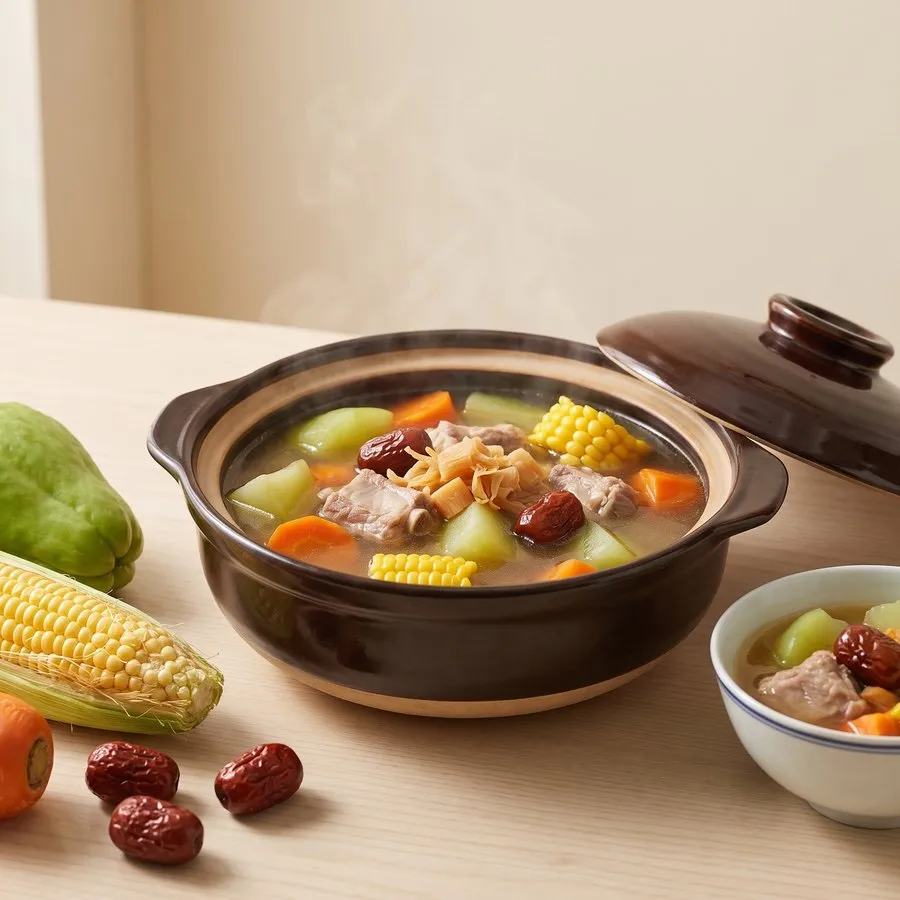
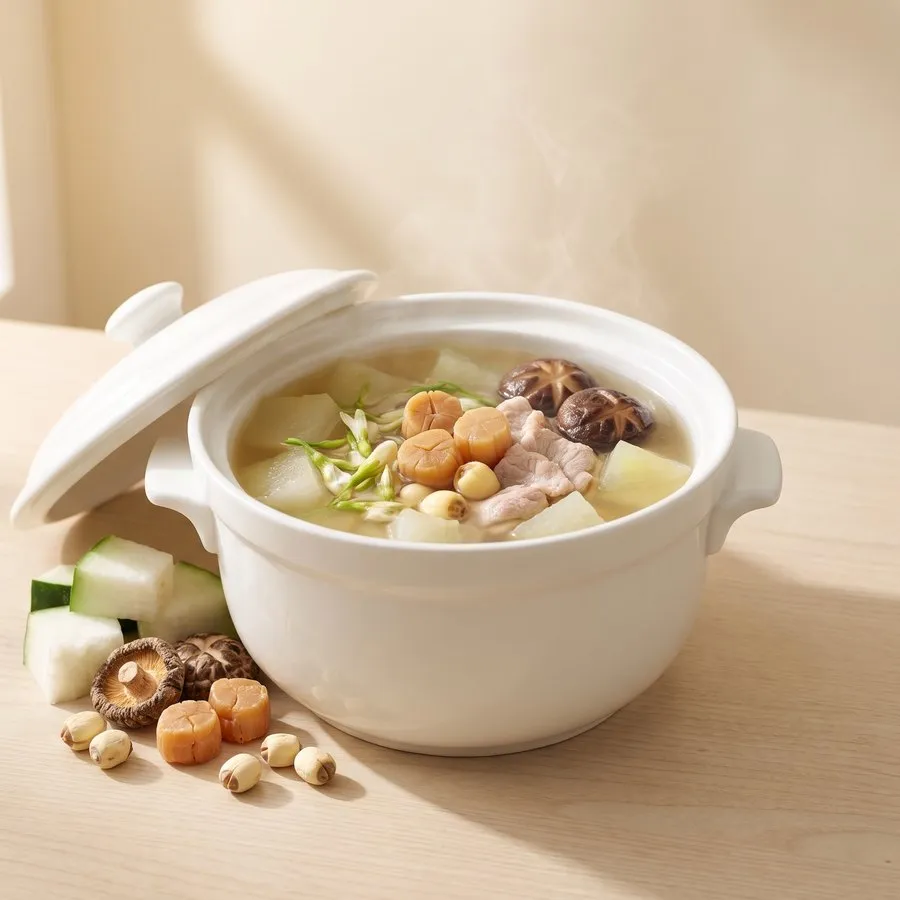
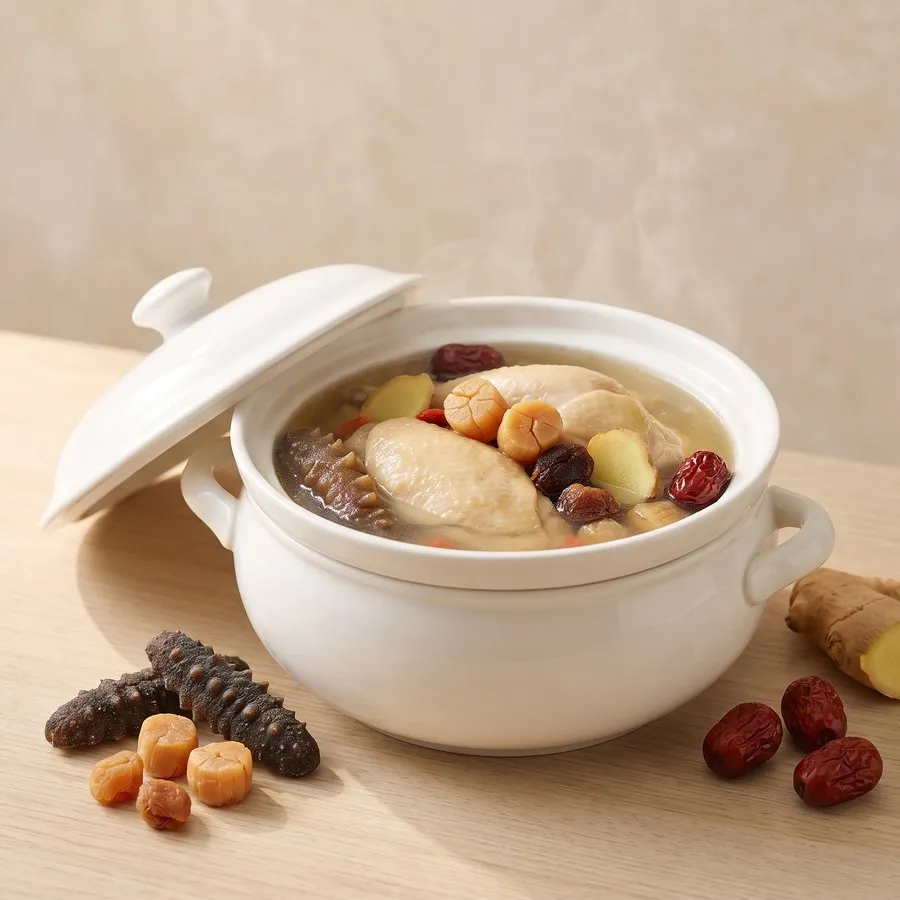
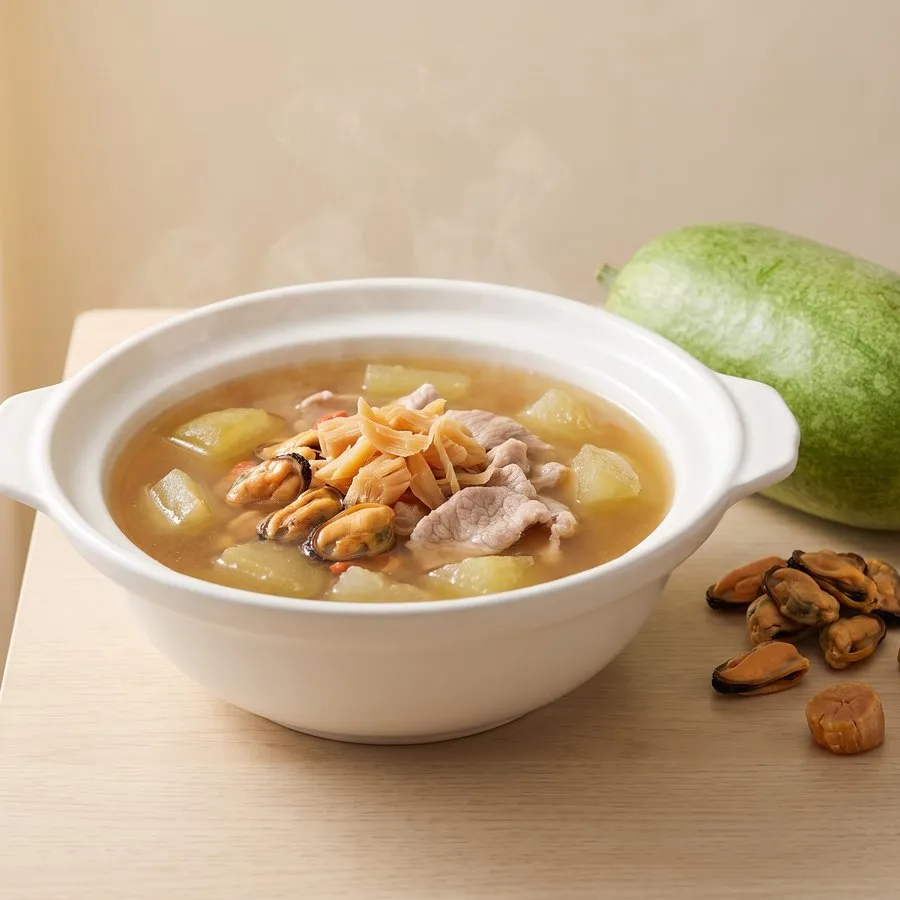
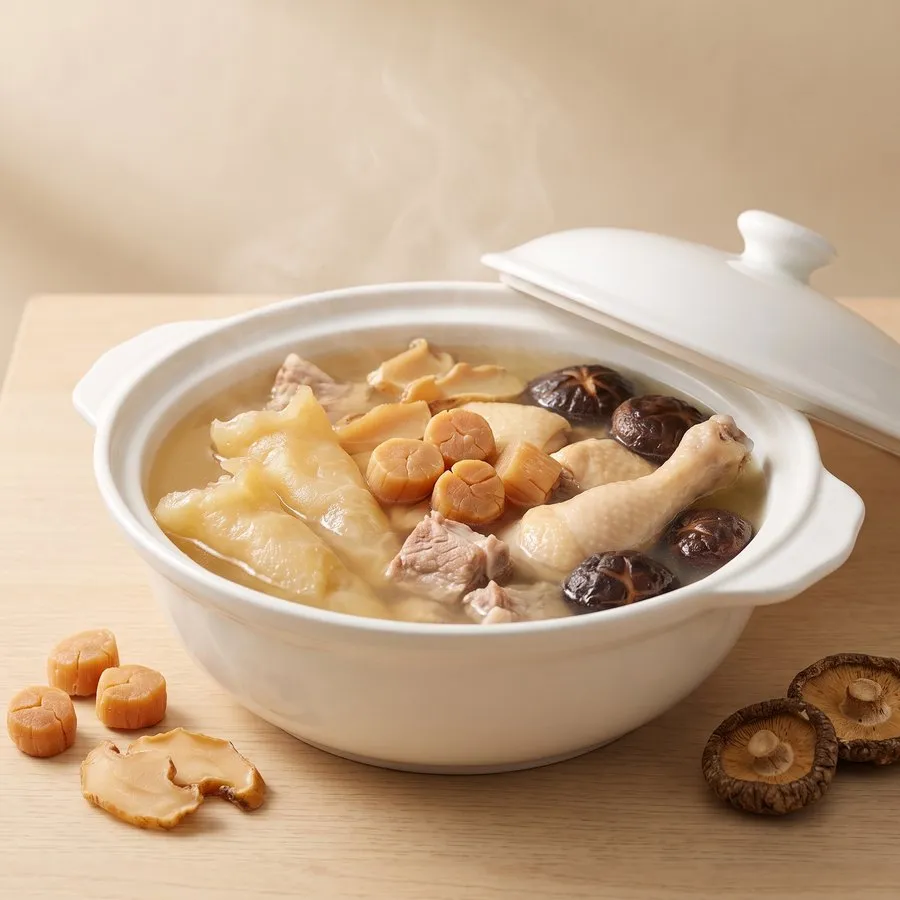
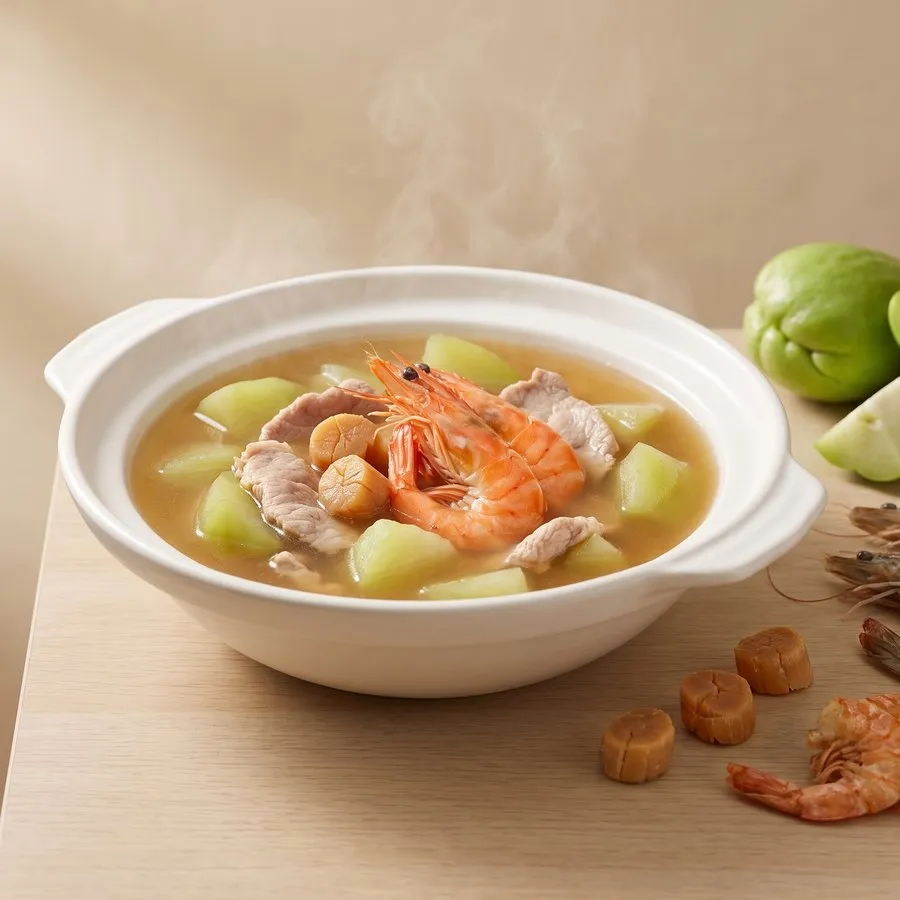
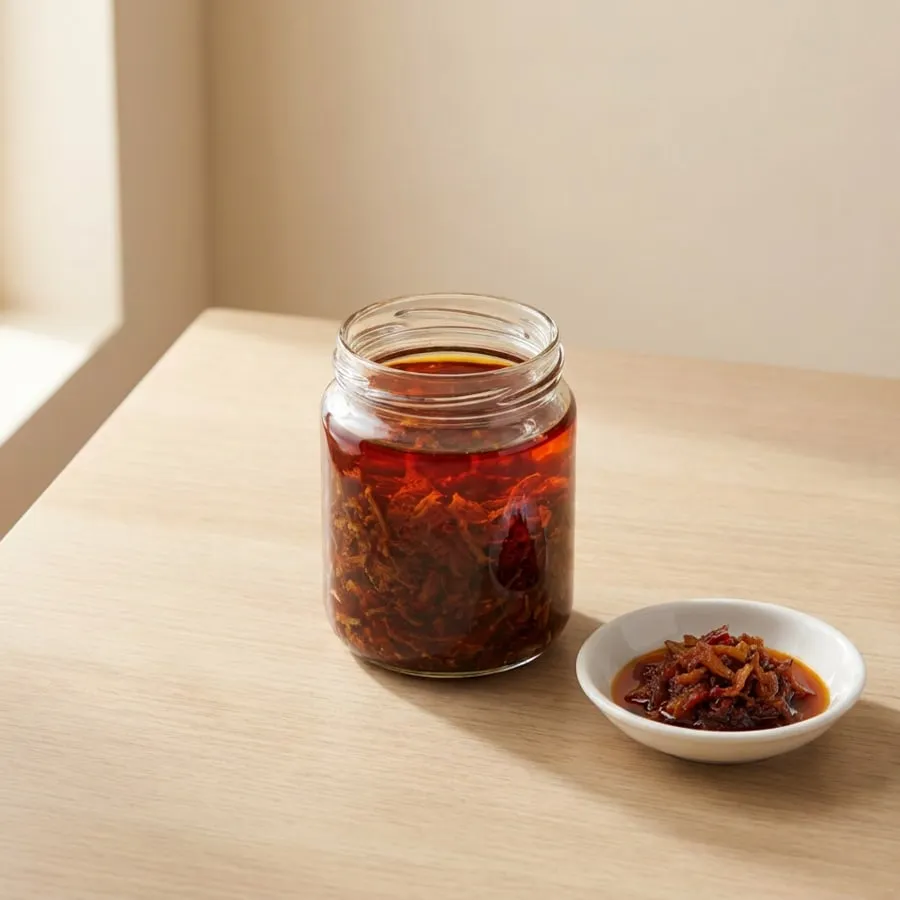
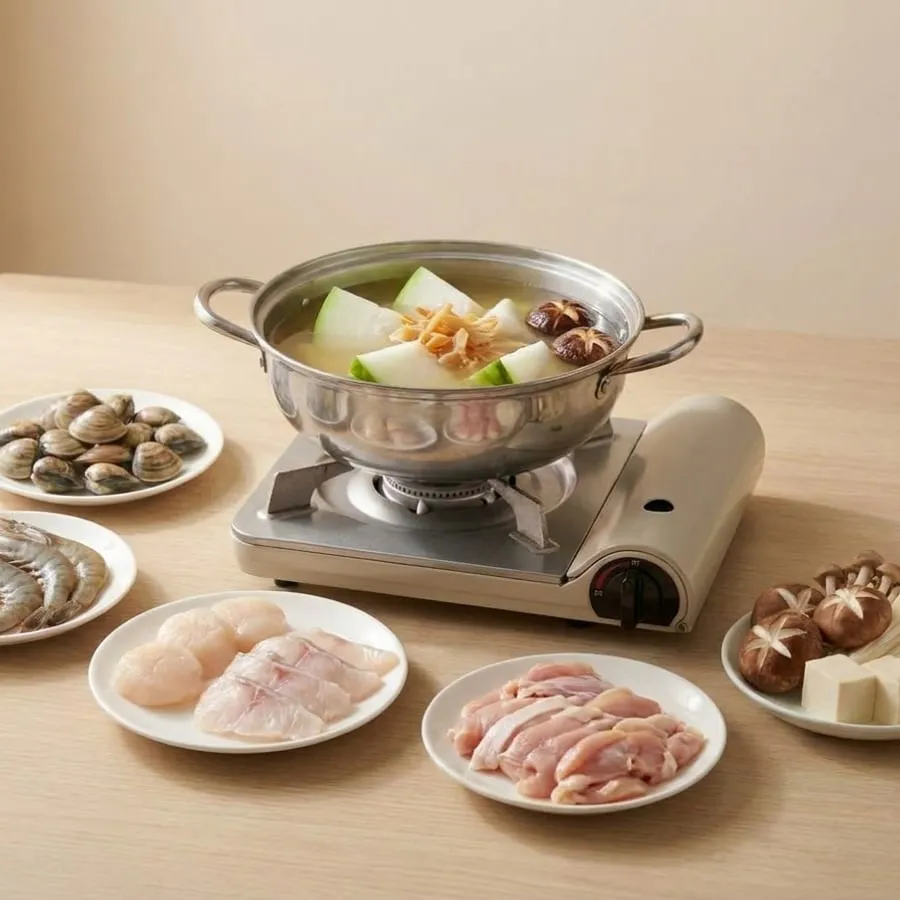
The dried adductor muscle of the scallop (conpoy) sold as amber cylindrical discs graded by size and origin. Soaked and torn into threads, with the soaking water added to the pot, it delivers the most concentrated sweet umami in the Cantonese dried-seafood pantry. Even two or three pieces transform a winter melon or mushroom soup.
TCM properties
Nature · neutral Flavour · sweet、salty Meridians · kidney、spleen
Traditional food therapy
In Cantonese food therapy it is used to nourish yin, support the kidneys, moisten dryness and harmonise the stomach, while lending its prized savour to tonic soups and thick broths.
Cautions: read first
- Extremely high in purines, so avoid it during a gout flare
- High in sodium, so take care if your blood pressure is high
- Avoid if you are allergic to seafood
Preparation
Soak until soft and add it to the soup along with its soaking water; tearing it into threads draws out more flavour.
Origin
Hokkaido in Japan (Soya conpoy is the top grade); Qingdao and Dalian in China rank below it. Australian grocer stock is mostly small Chinese grades; graded Japanese sits well above; Soya in Hokkaido is the acknowledged premier producing area, which is not the same thing as the daodi (道地) status of a Chinese medicinal herb
Availability in Australia
Easy to find