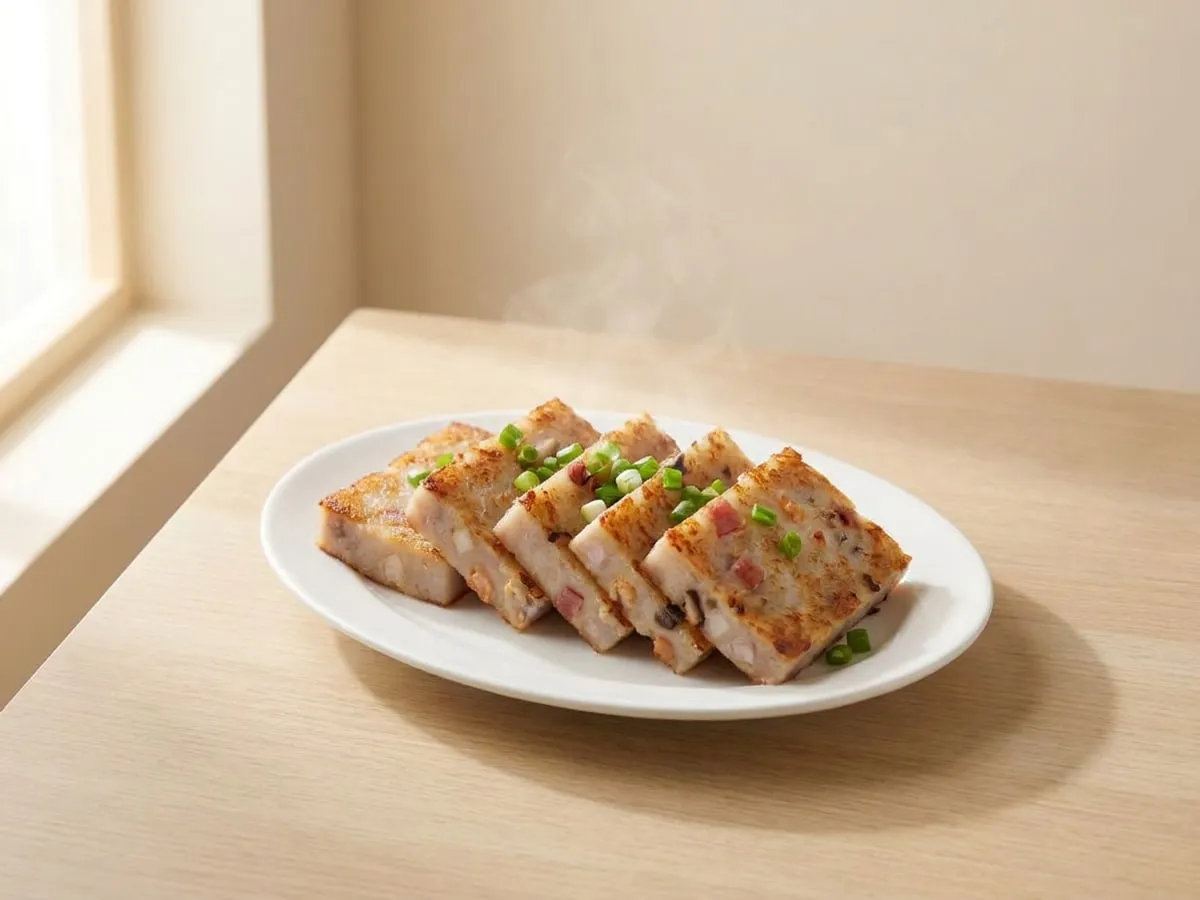
Taro cake
Also called Taro cake (family recipe)
“A New Year cake, shared around the family.”
Ingredientsserves 6
Equipment
- A 20 cm round tin (糕盤) and a steamer or a wok with a rack that takes it
- A wok for the frying and a flat pan for the slices
- Gloves for peeling the taro
Method
- Soak the mushrooms, dried shrimp and scallop separately and keep every drop of the soaking water. Peel the taro wearing gloves, as the raw juice makes skin itch, and cut it into 1 cm dice; dice the sausage, cured pork and mushrooms, chop the shrimp and shred the scallop.
- Fry the sausage first in a little oil so its fat runs, then add the cured pork, mushrooms, shrimp and scallop and fry until fragrant; set aside.
- Add the rest of the oil to the wok and fry the taro with the five spice for three to five minutes, until the edges colour and the taro has drunk the oil. Frying the taro before it is simmered is what makes this cake different from turnip cake.
- Pour in the soaking water and enough water to come just level with the taro, cover and cook over medium heat for eight to ten minutes, until a chopstick goes in but the dice still hold their shape and only a little liquid is left. For a smooth cake, mash part of the taro; for bite, keep it all in dice.
- Whisk the rice flour and wheat starch with the salt, sugar, chicken powder and pepper into a cup (250 ml) of cold water to a smooth slurry. With the taro hot on the lowest heat, pour in the slurry, stirring; within a minute it turns into a thick, sticky paste. Turn off the heat and stir in the fried cured meats and mushrooms.
- Press into the oiled 20 cm tin, smooth the top and steam over high heat for 45 to 60 minutes, topping up with boiling water so the wok never boils dry. A chopstick into the middle comes out clean when it is done. Scatter the spring onion and sesame over the top.
- It can be cut into wedges straight from the steamer and eaten hot. To fry it, cool it completely, best overnight in the fridge, then turn it out, slice it 1.5 cm thick and pan-fry in a little oil over medium-low heat until both faces are golden. Lay the slices on a plate, scatter a little spring onion and serve hot.
- A runny cake that will not slice had too much water or taro boiled too soft: cooked taro gives up water and starch, and then the slurry cannot set it. Fry the taro first, add only just enough water, and keep to about three parts taro to one of flour.
- Refrigerate the cake within two hours of steaming once it has cooled, never leave it out overnight, and it keeps about a week. It freezes well sliced, and the slices go into the pan from frozen.
Take care
- Contains crustacean (dried shrimp), pork and wheat (the wheat starch); with the scallop it contains mollusc. Cured meats contain nitrite and some sausages contain sulphites. Raw taro irritates the skin and the mouth: handle it with gloves and cook it through. Refrigerate the cake once cool: Lunar New Year falls in the Australian summer, and a steamed cake left out overnight spoils.
The story
Taro cake is turnip cake's close cousin, made almost the same way with diced taro where the grated radish would be. Two things set it apart: the taro is fried until it drinks the oil before it is simmered, and there is a pinch of five spice, which turnip cake never takes, so it comes out more fragrant and more floury. When the MICHELIN Guide visited Hong Kong's starred restaurants, 嘉麟樓 picked the lighter 荔浦芋 of a size and fried it before steaming, and the restaurant uses only the floury heart of the taro; a home cake uses the whole thing.
Same wall
Lo Fo Tong is cultural food-heritage reference, not medical advice. If you are pregnant, unwell or on medication, talk to your doctor or registered practitioner before changing what is in the pot.