All Sunday dishes › The counter at home
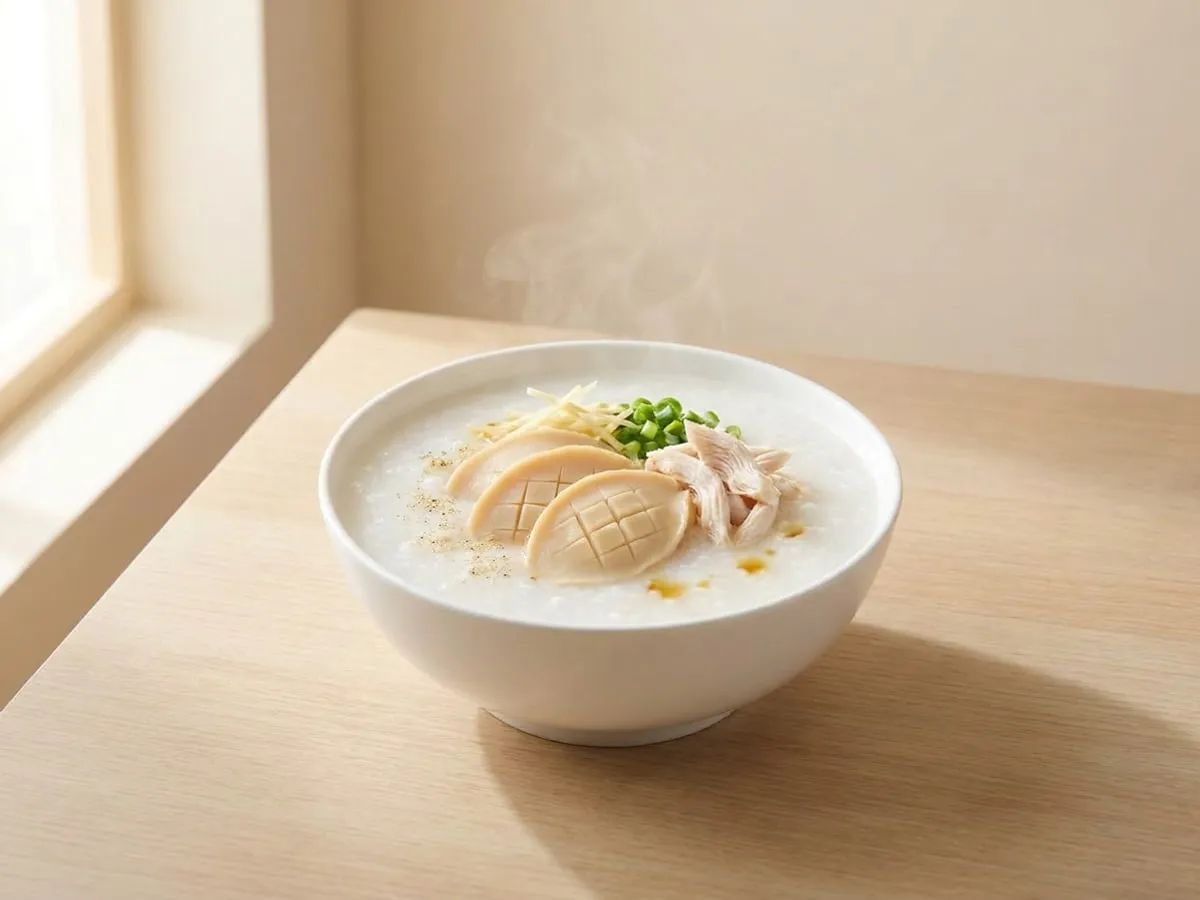
Abalone and chicken congee
鮑魚雞粥
“Congee wants its full time on the boil before the rice opens.”
Ask Ah Ma
Ingredientsserves 4
Sesame oila few drops
Equipment
- A 5-litre pot.
- A can opener and a sharp knife, for thin abalone slices.
- A probe thermometer for the thickest part of the thigh by the bone, if you have one.
How the time splits
- 20 minOil and salt on the rice; blanch the chickenhands on
- 30 minThe rice at a rolling boil, lid offhands off
- 40 minChicken in, half-covered, low heathands off
- 10 minShred the chicken; open the tin, liquid into the congee, slice the abalonehands on
- 2 minChicken back in, then the abalone and ginger for a minute or two onlyhands on
- 3 minTaste and servehands on
Method
- Rinse the rice, mix it with half a teaspoon of salt and a teaspoon of oil and leave it twenty minutes. If you are using dried scallops, soak them in a little water meanwhile and tear them up.
- Put the chicken in a pot of cold water, bring it to the boil and boil three to five minutes, then lift it out and rinse it inside and out. Thaw frozen thighs in the fridge first.
- Bring 2 litres of water to the boil on high in the big pot, add the rice and scallops with the lid off, stir twice in the first ten minutes, and keep it at a rolling boil for thirty minutes.
- Add the chicken, turn it to medium-low with the lid half on, and simmer thirty-five to forty minutes, until the thickest part next to the bone reads 75 °C. Lift the thighs out, let them cool a few minutes, and pull the meat into shreds; discard the skin and bones.
- Open the tin and pour its liquid into the congee. Slice the abalone thinly across; if it is thick, score a criss-cross on top first.
- Return half the chicken to the pot and bring it to the boil. Add the abalone slices and ginger for one to two minutes only, then take it off the heat. Tinned abalone is already cooked, and longer only toughens it.
- Taste before salting, since the tin liquid is already salty. Ladle the congee into bowls so each gets a few slices of abalone, lay the slices on top with the rest of the shredded chicken beside them, and finish with spring onion, white pepper and a few drops of sesame oil.
Take care
- Mollusc (abalone; dried scallops too, if used), sesame (sesame oil). Cook the chicken to 75 °C at the thickest part next to the bone, and thaw frozen chicken in the fridge.
- Do not use a tin that is bulging, leaking or deeply dented, or that spurts when opened. Do not keep leftover abalone in the tin: move it to a covered container in the fridge. The tin liquid and the abalone are salty, so taste before seasoning.
- Take the abalone out of any leftover congee if you can, since it toughens when reheated. Cool the congee quickly, refrigerate it and bring it back to a full boil.
The story
Abalone and chicken congee sounds grand, but at home it rests on a tin: the abalone is already cooked inside it, and needs only slicing and a minute or two in the congee. The chicken simmers with the rice so its savour stays in the pot, then is shredded and returned, and the tin liquid goes in too, so nothing is wasted. The usual mistake is to simmer the abalone with the chicken, which turns it to rubber.
Same kind
Lo Fo Tong is cultural food-heritage reference, not medical advice. If you are pregnant, unwell or on medication, talk to your doctor or registered practitioner before changing what is in the pot.