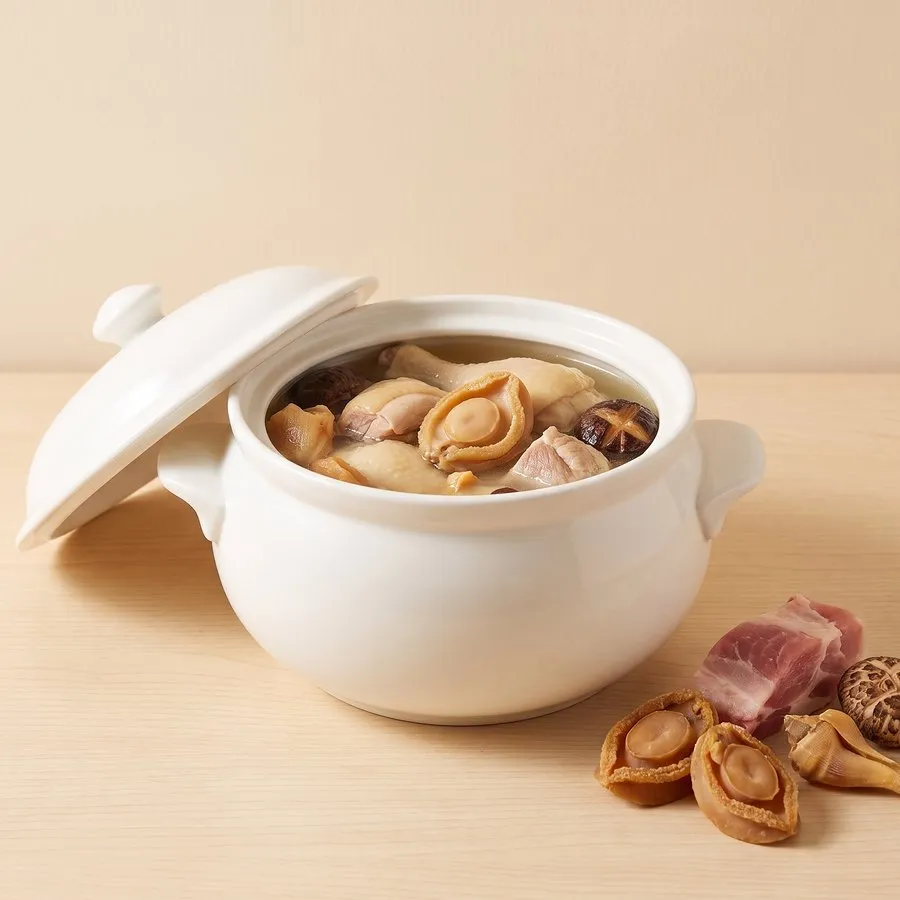
Abalone (dried or canned)
A large marine sea snail prized across Chinese cuisine, used in soups dried (the luxury form, needing days of soaking and steaming), canned or fresh in the shell. In the pot it gives a springy, satisfying bite and a rich, rounded umami; home soups mostly use canned or fresh abalone, whose shell is itself the herb shi kyut ming and can go in the pot too.
TCM properties
Nature · neutral Flavour · sweet、salty Meridians · liver
Traditional food therapy
In Cantonese food therapy it is used to nourish yin, clear heat, brighten the eyes and replenish essence, with the tradition also crediting it (and its shell) with calming liver yang.
Cautions: read first
- Go carefully if you have gout (high in purines)
- Canned abalone is high in sodium
- Keep the portion moderate if you digest poorly
- Not for tonic use while a cold is still unresolved
Preparation
Dried abalone takes several days to rehydrate (changing the water daily, then steaming and resting it back to softness), which is a high bar. Home soups mostly use canned abalone or fresh abalone in the shell, and the shell is itself the herb shi kyut ming (石決明), which can go into the pot too.
Origin
For dried abalone, northeastern Japan is the top source (Iwate kippin and ami abalone); Australia and South Africa are the main modern producers. Australia farms and cans its own abalone; a specialist dried supply exists locally
Availability in Australia
Herbal shops / specialists