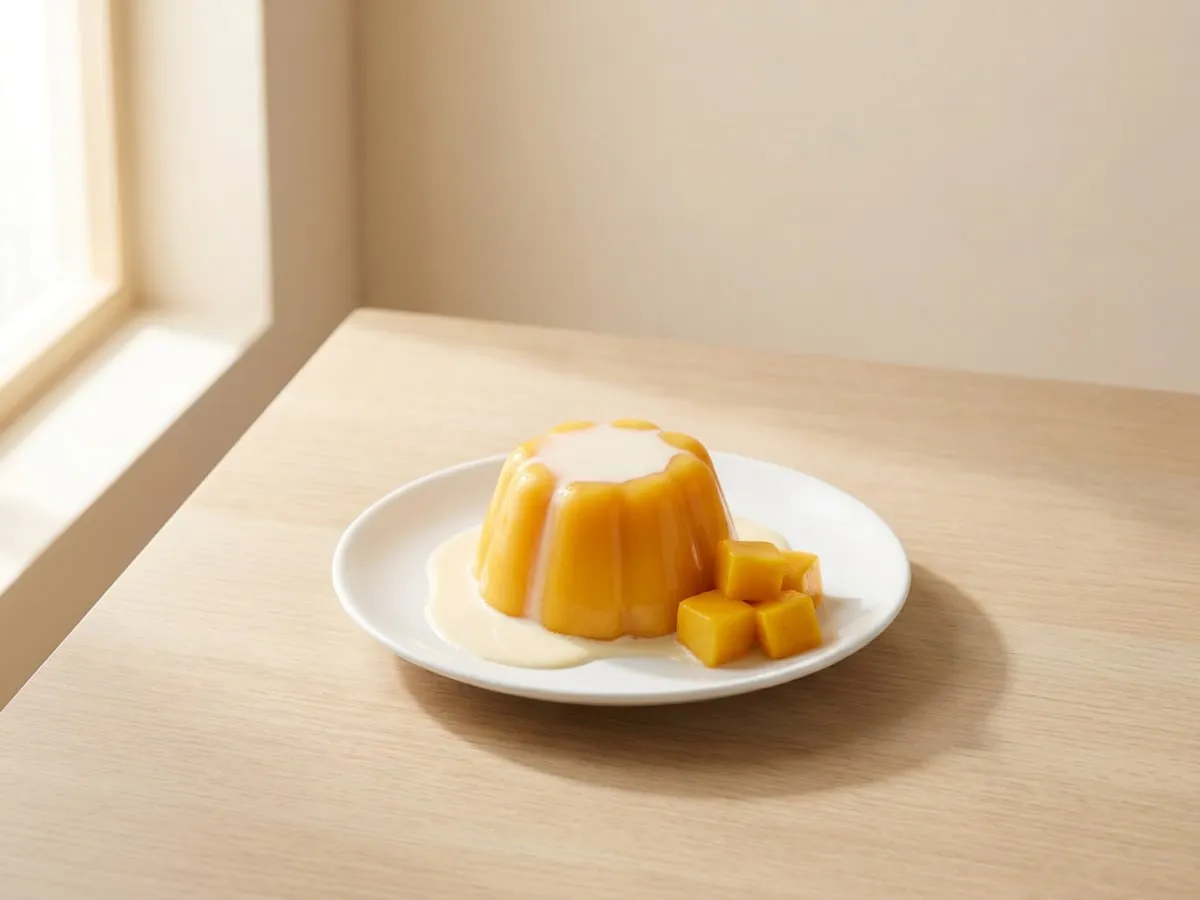
Mango pudding
芒果布甸
“Summer is hot. Chill it before you eat.”
Ingredientsserves 4
Equipment
- Pudding moulds or small bowls, four large or six small; the 酒樓 uses a fish-shaped mould
Method
- Sprinkle the gelatine over three tablespoons of cold water and leave it five minutes to swell.
- Dissolve the sugar in half a cup (120 ml) of hot water, add the swollen gelatine and stir until it has completely dissolved with no grains; do not let it boil, since boiling weakens gelatine and the pudding will not set.
- Blend the mango flesh smooth; sieve it if the variety is stringy. Dice a little extra mango.
- Stir the mango purée, milk and evaporated milk (and the cream, if using) into the still-warm gelatine syrup, then fold in the diced mango.
- Pour into wetted moulds or small bowls, cool, and refrigerate at least four hours, better overnight.
- Turn out, or serve in the bowl, with evaporated milk poured over the top the way the 酒樓 does it. A pudding that does not set had its gelatine boiled, not fully dissolved or too little of it, or an under-ripe, watery mango; a rubbery one had too much gelatine. Pineapple, kiwi and papaya stop gelatine setting; mango does not, which is why a mixed-fruit version fails.
Take care
- Contains milk. Gelatine is animal-derived, usually pork skin or beef bone, which matters for vegetarian, halal and kosher guests; agar is the substitute.
- A fresh-fruit pudding keeps two days in the fridge.
The story
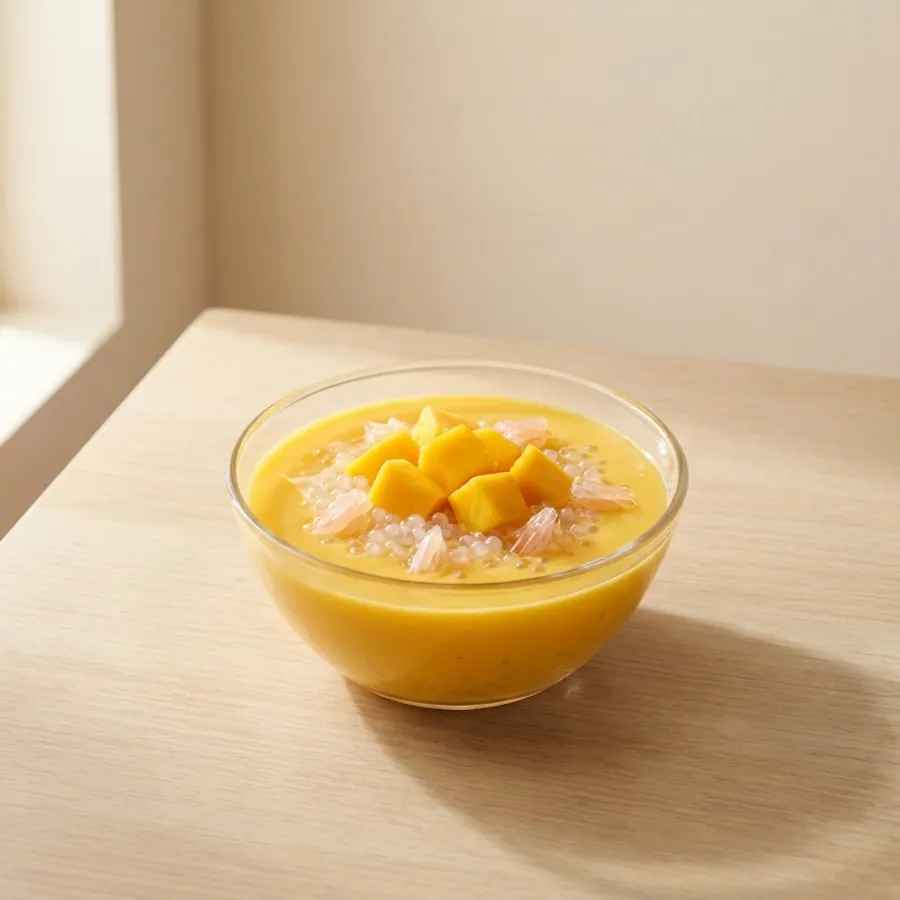
Mango pudding is the dim sum dessert, the item on the 酒樓's cold trolley, and Hong Kong families make it for birthdays because children like turning it out of the mould. It came into Cantonese kitchens through the colonial dining room, gelatine puddings being British, and became Hong Kong's the moment the mango went in; foodnext lists it among the 港式經典 beside 楊枝甘露.
Same wall
Lo Fo Tong is cultural food-heritage reference, not medical advice. If you are pregnant, unwell or on medication, talk to your doctor or registered practitioner before changing what is in the pot.