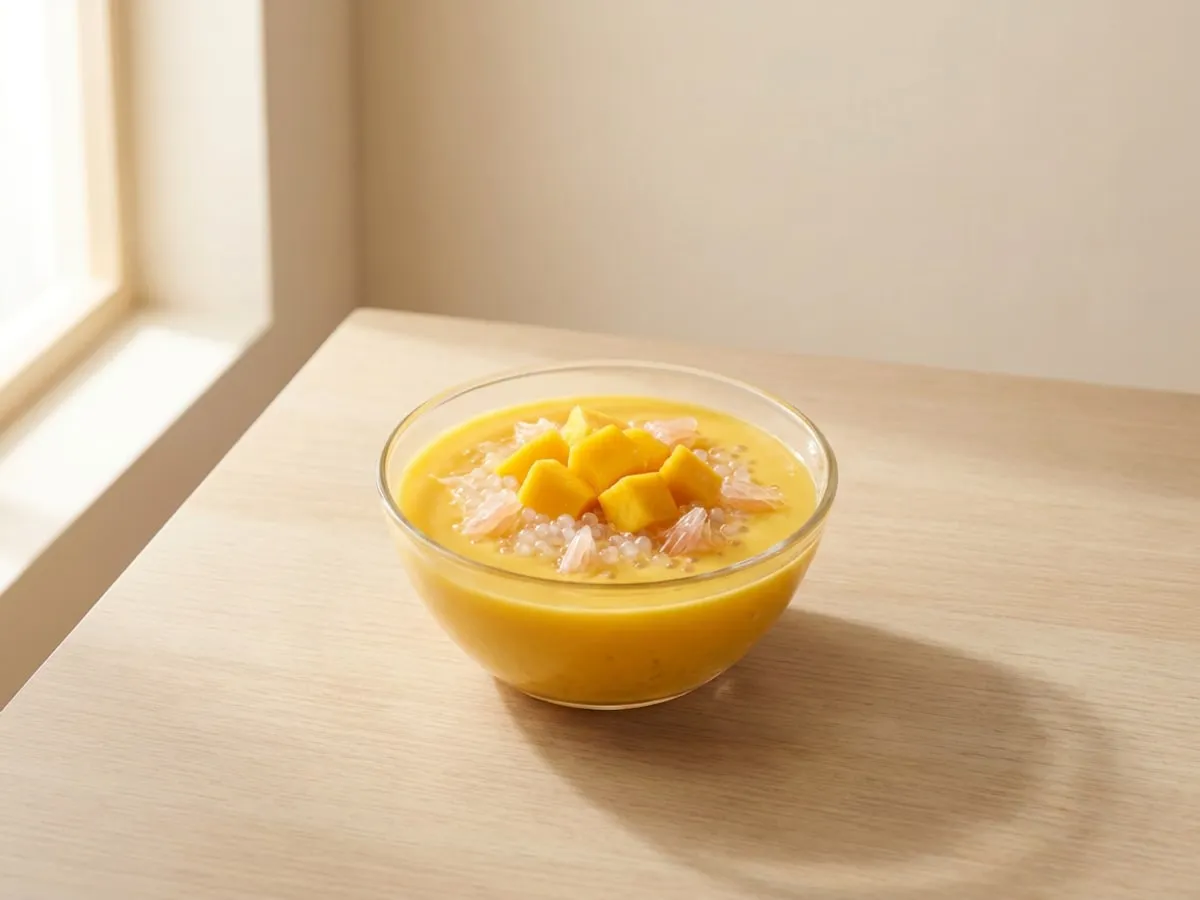
Mango, pomelo and sago
楊枝甘露
“Summer is hot. Chill it before you eat.”
Ingredientsserves 4
Method
- Sago: bring a litre of water to the boil, add the sago, stir once, boil five to eight minutes until only a white dot remains in each pearl, then off the heat, lid on, ten to fifteen minutes until clear; rinse under cold water and drain. Boiled to the end without the rest it turns to a gluey lump; unrinsed it sticks.
- Cut the thick peel from the pomelo, strip every bit of white membrane from the segments and pull the flesh into single sacs; any membrane left on makes the bowl bitter.
- Dissolve the sugar in 150 ml of water and cool it to a syrup. Cut two of the mangoes from the stone and blend the flesh with the milk and coconut cream until smooth; taste first and add only as much syrup as the fruit needs. Sieve the purée if the variety is stringy.
- Dice the third mango small.
- Stir the sago, most of the pomelo and most of the diced mango into the blended base and chill at least an hour.
- Serve cold, each bowl topped with the rest of the pomelo and mango and a spoon of evaporated milk. A watery base means under-ripe mango or too much milk; with a mild mango, use less milk.
Take care
- Contains milk. Coconut is not a declared tree-nut allergen in Australia; anyone allergic to coconut should take note.
The story
楊枝甘露 is the one 糖水 Hong Kong invented rather than inherited: created at 利苑酒家 in 1984 and named for the willow branch and sweet dew in 觀音's hand, it is now on every Chinese dessert menu in the world. A 糖水舖 dish that families copied at home once mangoes got cheap, and in Australia the mango is better than the original.
Same wall
Lo Fo Tong is cultural food-heritage reference, not medical advice. If you are pregnant, unwell or on medication, talk to your doctor or registered practitioner before changing what is in the pot.