All home cooking › Braised
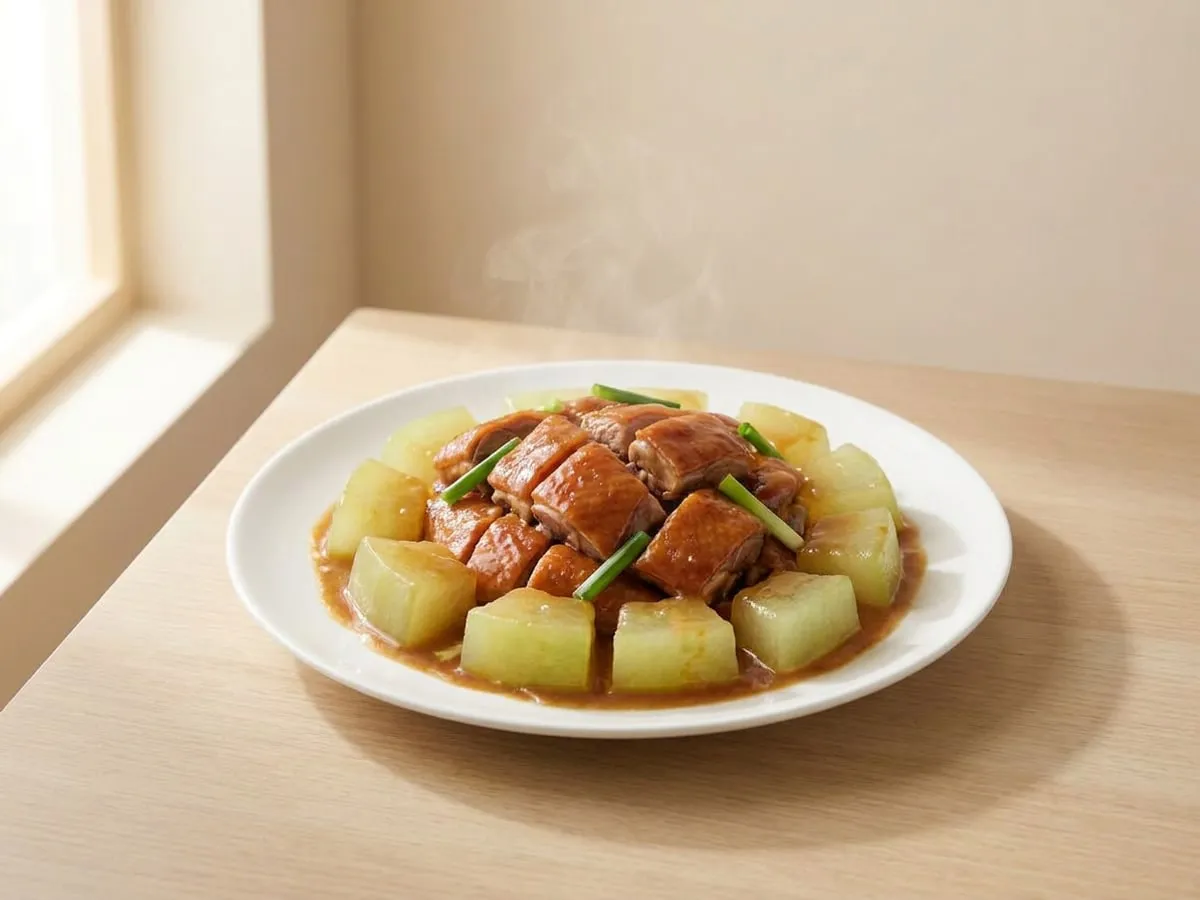
Duck braised with winter melon in chu hau sauce
Also called Teal braised with winter melon in chu hau sauce
“Give it time. It is better again tomorrow.”
Ingredientsserves 4
Method
- Thaw a frozen duck in the fridge for one to two days, fully, before cooking; never on the bench. Trim the loose fat at the cavity and the neck, and chop the bird on the bone into large pieces, or ask the Chinese poultry shop to. Pat the pieces dry with paper towel; wet duck spits in the wok. Peel the melon, scrape out the seeds and pith, and cut it into 4 to 5 cm chunks; winter melon is mostly water, and only big chunks hold together in a braise.
- Render the fat first. Lay the pieces skin-side down in a dry wok, setting them in away from you, and cook on medium for eight to ten minutes until the skin is golden and the fat has run, then turn them briefly. A domestic duck is bigger and fattier than a teal, and rendering it first is what keeps the braise from turning greasy. Lift out the duck and pour off the fat, keeping one tablespoon in the wok.
- In that fat fry the ginger, garlic and shallots until fragrant, then the chu hau paste for half a minute until it smells toasty. Return the duck and turn it until every piece is coated, and splash the wine down the side of the wok.
- Add the stock or water, the oyster sauce, dark soy and rock sugar, bring to the boil and skim off the froth. Move it to a heavy lidded pot or claypot, cover and braise on low for 45 minutes to an hour, checking twice and adding a little water if it runs low, until a chopstick goes easily into the thickest leg piece.
- The melon goes in last. Push the chunks down into the liquid, cover and braise another fifteen to twenty minutes, until a chopstick slides through but the chunks still have their edges. If the melon goes in with the duck, it collapses into the pot and waters down the sauce long before the duck is tender.
- The leg pieces should reach 75 °C next to the bone, and the meat should come away from the bone easily. Take the lid off and skim the fat from the surface with a ladle; a domestic duck gives a lot. Reduce on high heat until the sauce coats the pieces, and thicken with a little cornflour slurry only if it is still thin.
- To plate, arrange the duck skin-side up in the middle of a platter with the melon around the edge, pour the sauce over and scatter the spring onion on top. Serve at once. Cool leftovers within two hours and refrigerate; the next day lift off the set fat, and bring the dish back to a full boil when reheating.
Take care
- Contains soy, wheat and sesame (chu hou paste); dark soy contains soy and wheat, and Shaoxing wine contains wheat; oyster sauce contains mollusc (oyster). Thaw a frozen duck fully in the fridge, and braise it to 75 °C next to the bone. Duck fat spits as it renders, so dry the pieces first and lay them in away from you. Cool leftovers within two hours and refrigerate.
The story
Chu hau paste is a braising paste handed down from Foshan, and duck is one of the oldest things it goes with, while the winter melon soaks up the duck's richness and the sauce. The original dish is made with teal, a small, lean duck that is not sold here, so this version uses a domestic duck, its fat rendered out first and skimmed off again at the end. The melon waits until the duck is nearly tender, so it takes up the sauce and still holds its shape.
Same technique
Lo Fo Tong is cultural food-heritage reference, not medical advice. If you are pregnant, unwell or on medication, talk to your doctor or registered practitioner before changing what is in the pot.