Bitter apricot kernel
The bitter apricot kernel, a small flat almond-shaped seed, sold at retail in peeled, blanched form. Used in small measure alongside a larger share of sweet kernels, it contributes an intense marzipan-like aroma to clearing soups; it must always be thoroughly boiled and is never eaten raw.
TCM properties
Nature · warming Flavour · bitter Meridians · lung、large intestine
Traditional food therapy
In Cantonese food therapy a few well-boiled kernels are traditionally added to moisten the intestines, direct qi downward and ease cough, wheeze and phlegm, always balanced by a larger share of sweet apricot kernels.
Cautions: read first
- Safety criticalContains cyanogenic glycoside (amygdalin). Eaten raw it can cause cyanide poisoning, which in serious cases can be fatal.
- It must be boiled thoroughly, 10 minutes or more, to drive off the toxin
- Adult limit is about 3 to 10 g at a time
- Use with care if you are pregnant, for infants and young children, for anyone with a cold weak stomach and gut, and for anyone prone to allergies
- When paired with 南杏 (sweet apricot kernel), the rule is more sweet than bitter, at least 4 parts sweet to 1 part bitter
Preparation
Soak them and slip off the skins, then boil them thoroughly. Never eat them raw or as a snack.
Origin
North China (the apricot districts of Hebei, Shanxi and Inner Mongolia). AU retail sells only the peeled, processed kernel; raw bitter kernels are restricted under FSANZ
Availability in Australia
Easy to find
Pairs well with
Soups that use this ingredient
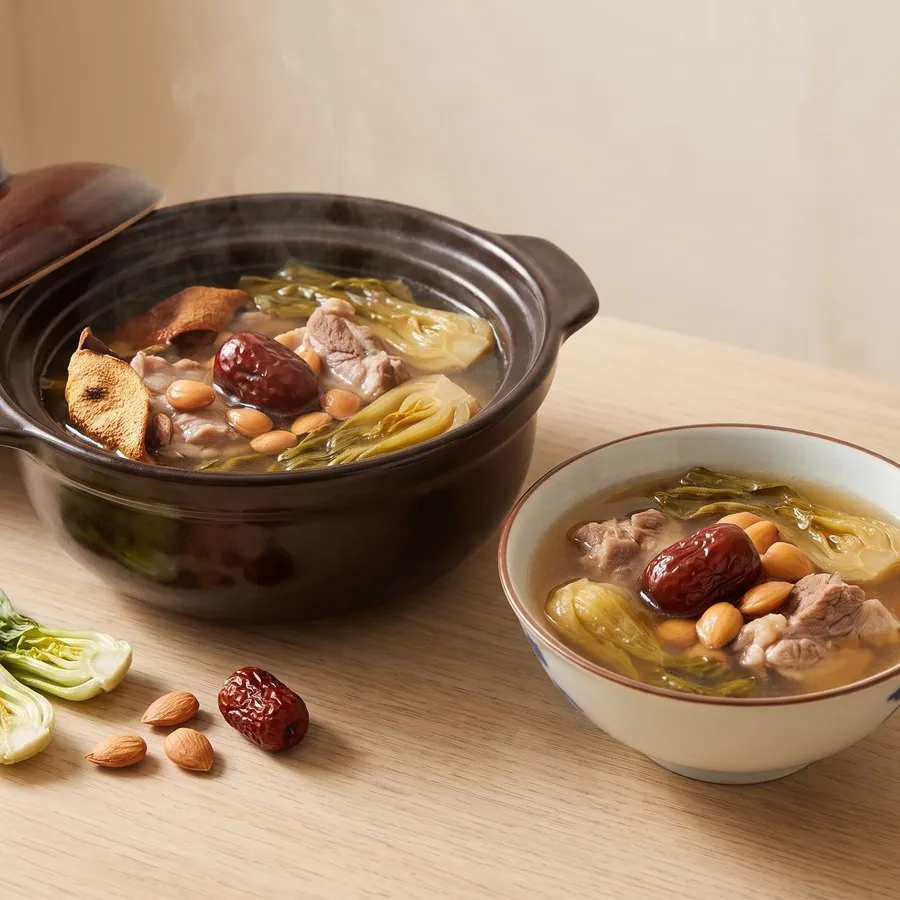 Dried bok choy soup with apricot kernels and pork bones
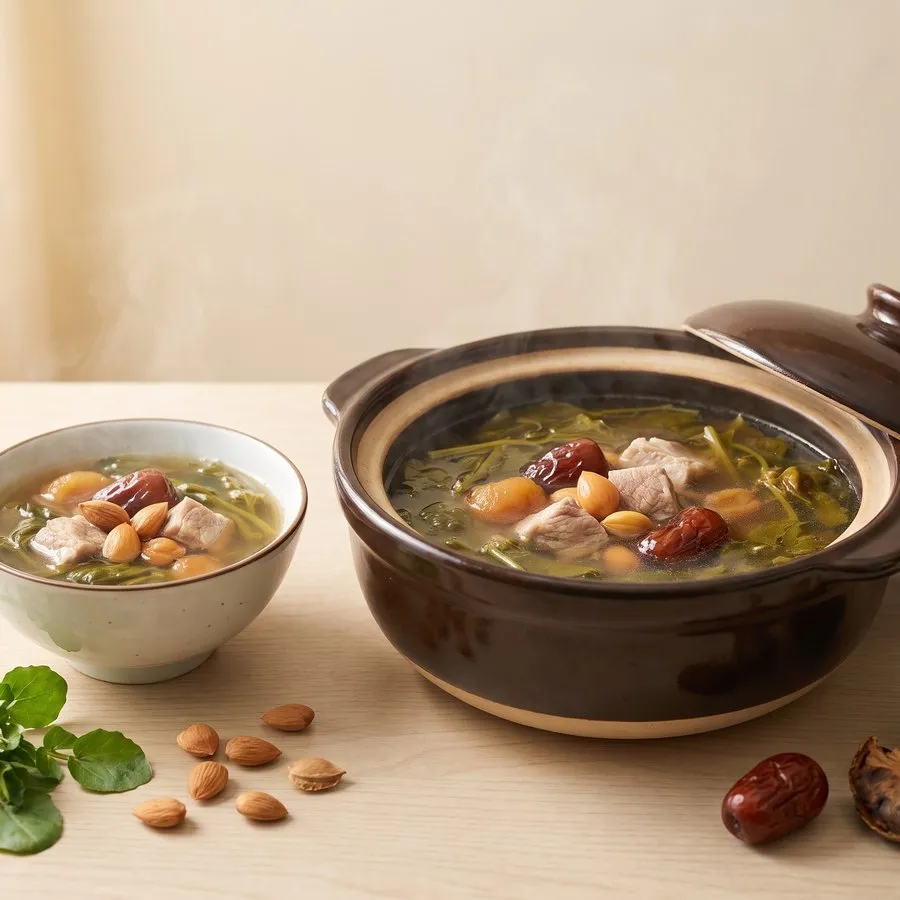 Watercress soup with apricot kernels, honey dates and lean pork
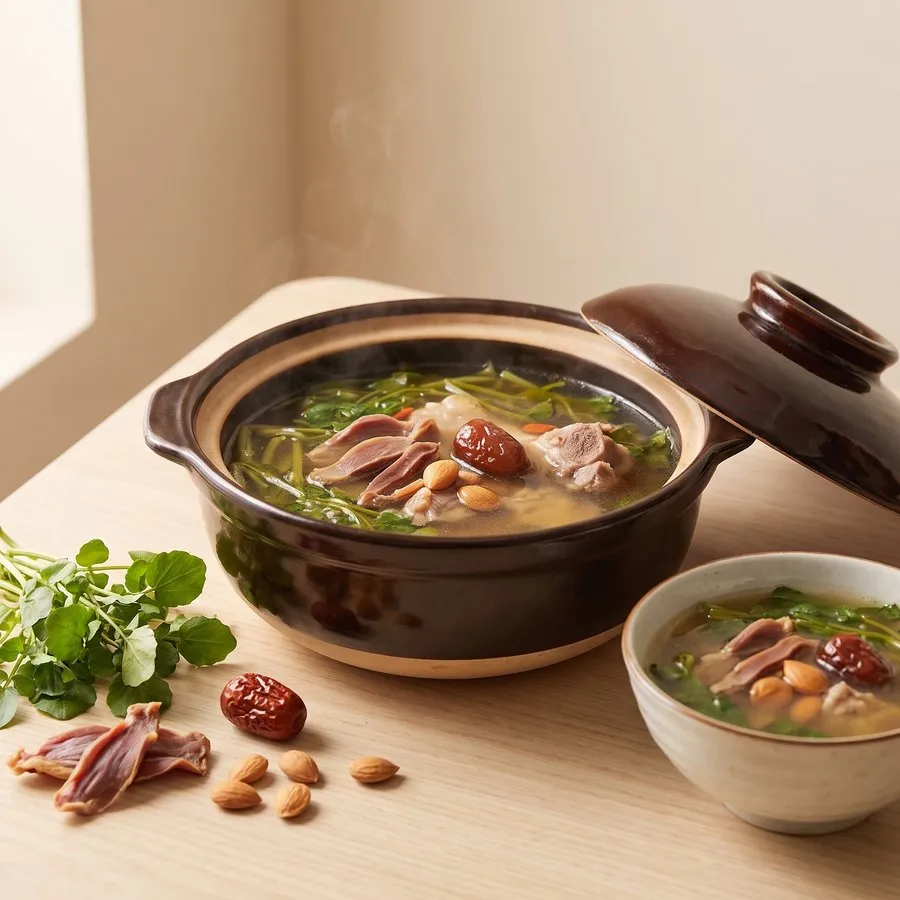 Watercress and dried duck gizzard soup with pork bones
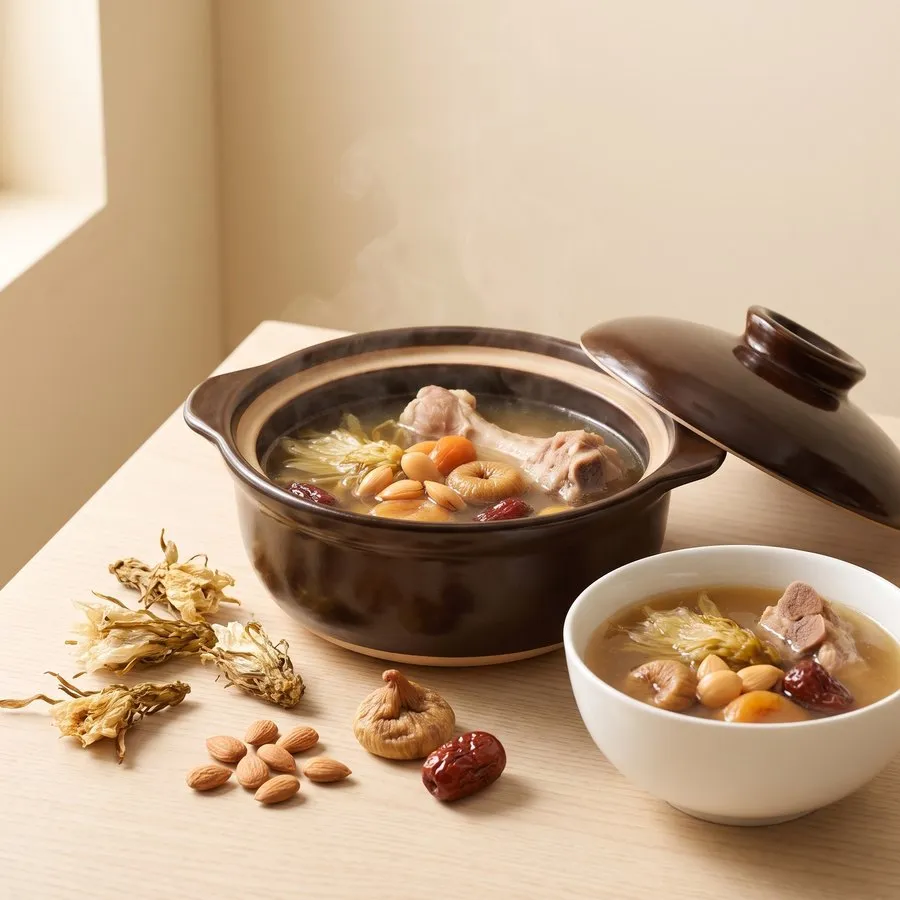 Night-blooming cereus (dragon fruit flower) soup with apricot kernels and pork bones
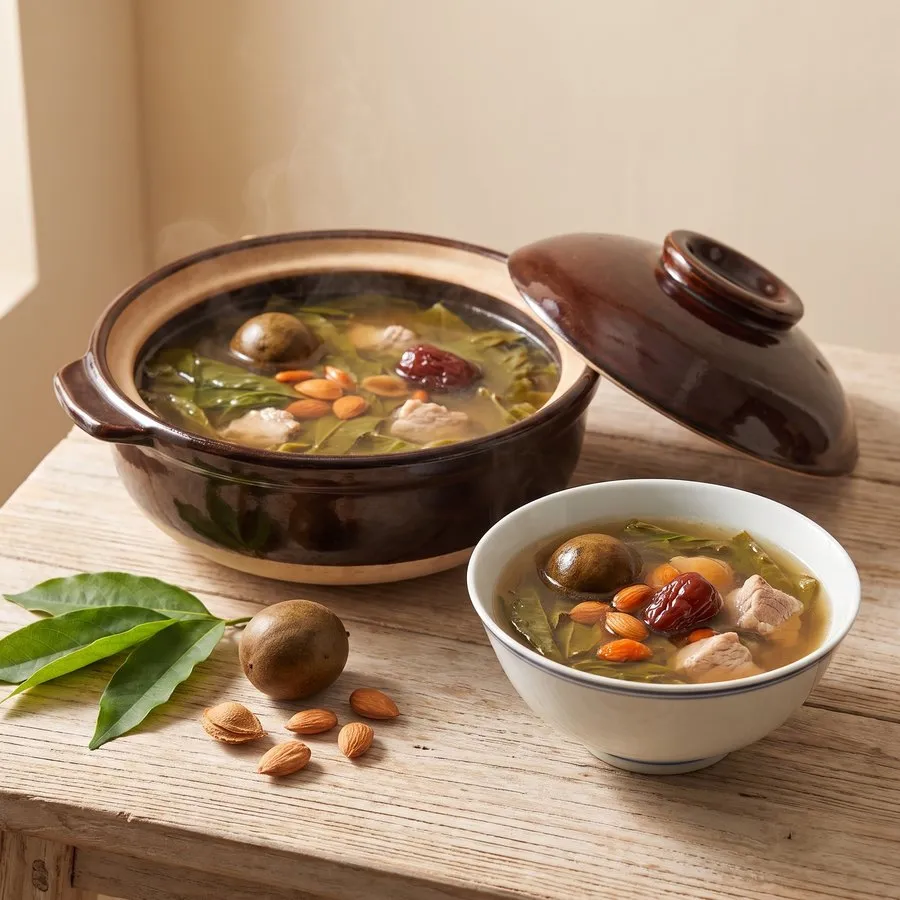 Sauropus (dragon's tongue) leaf and monk fruit soup with lean pork
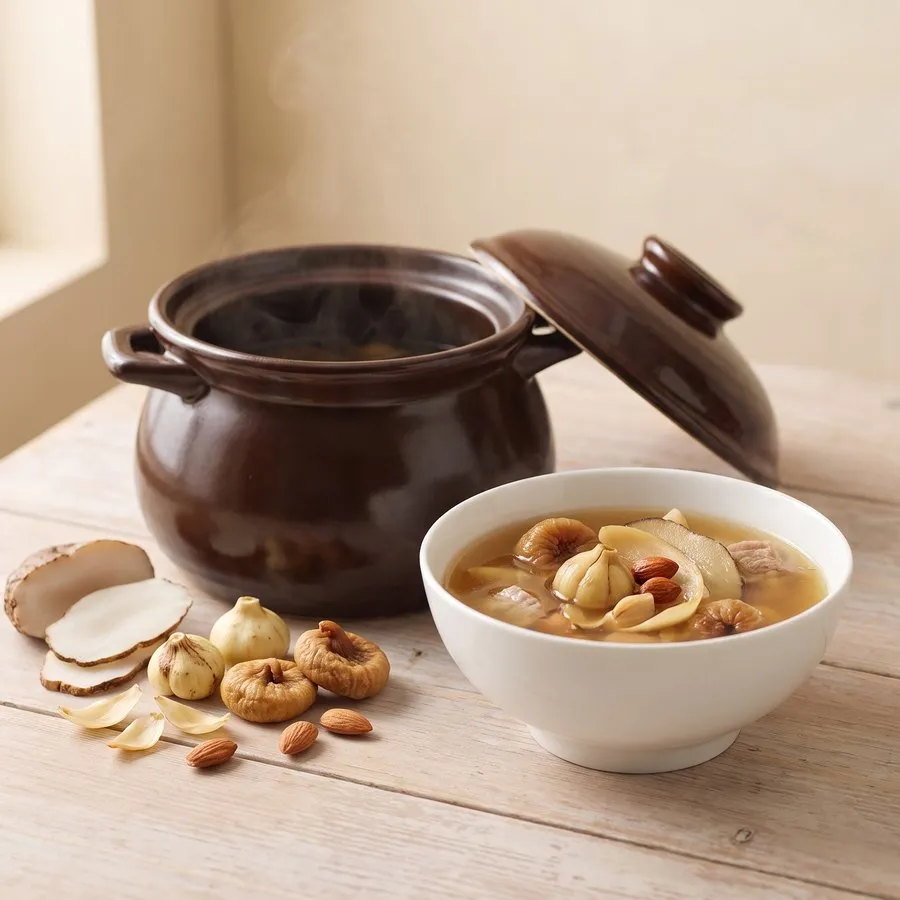 Fritillaria and sea coconut soup with figs and lean pork