Watercress
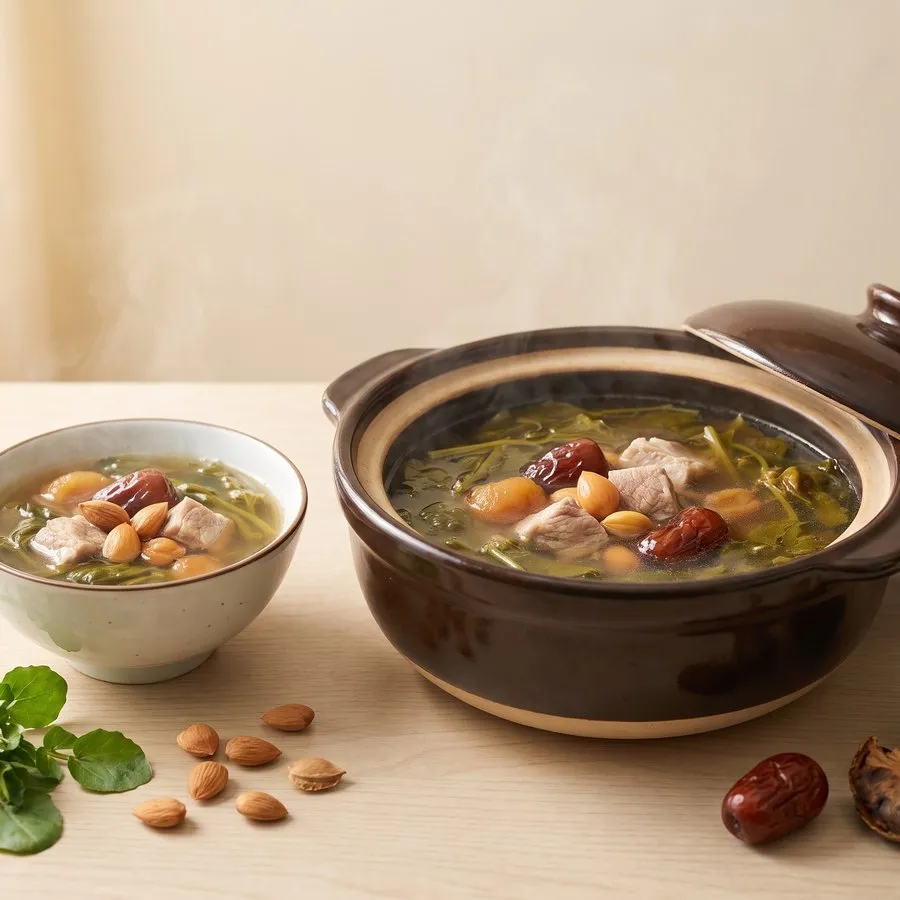
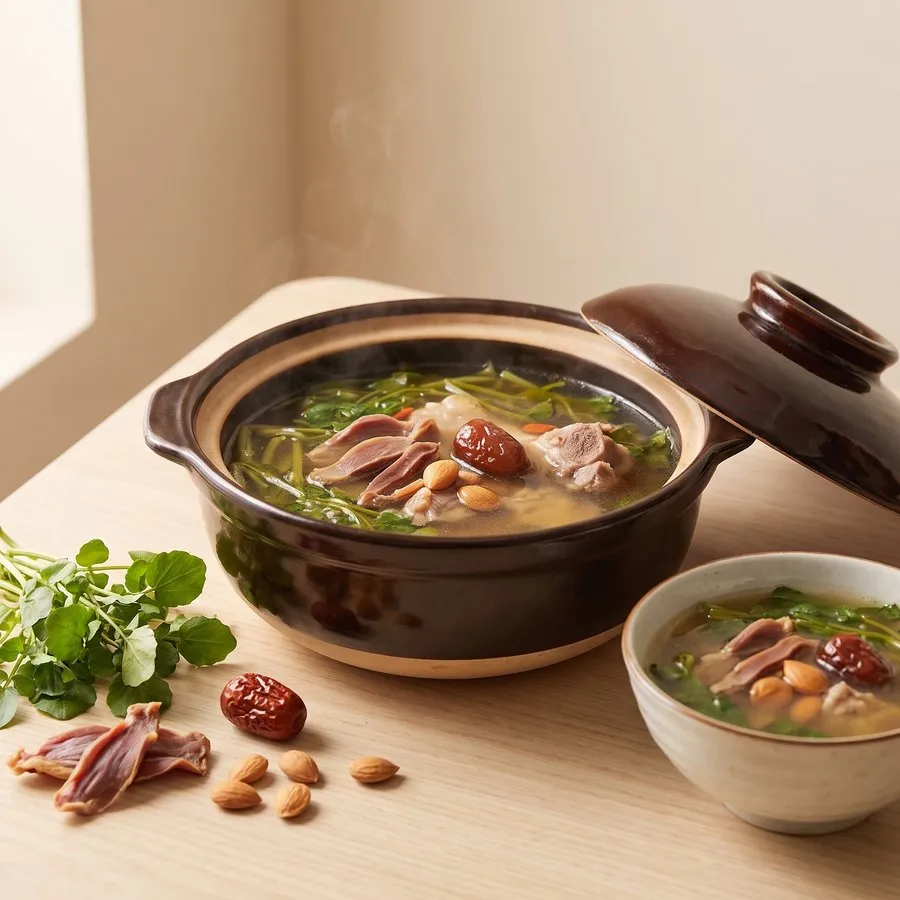
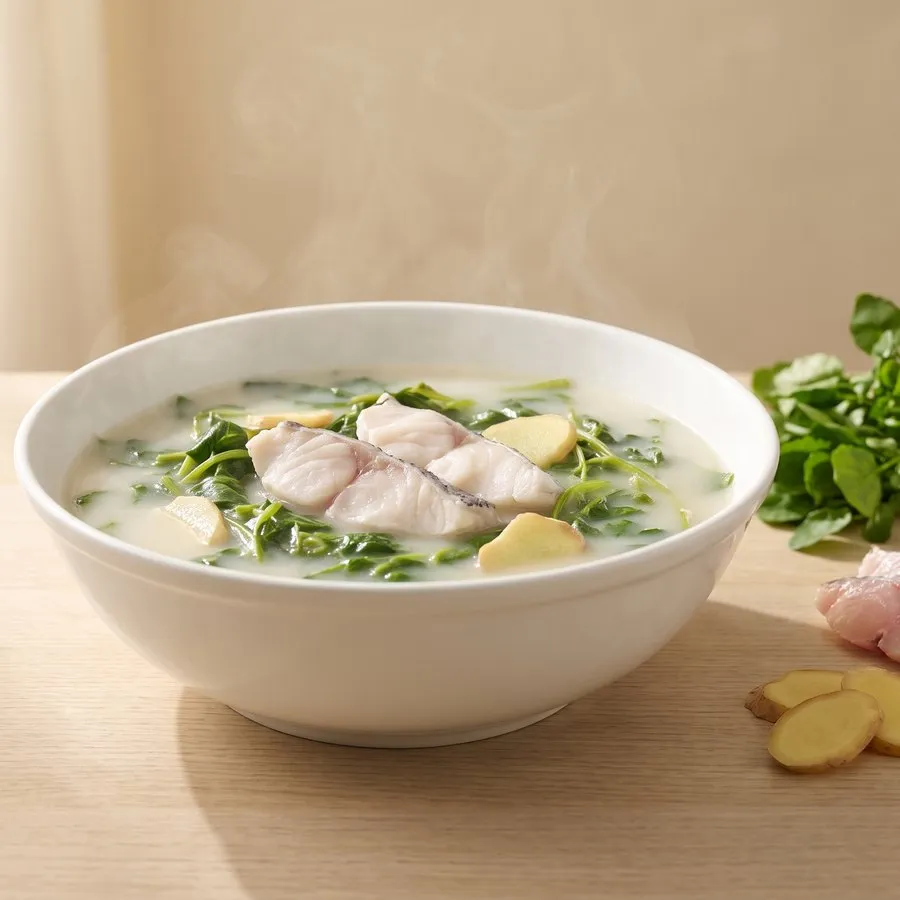
Watercress, an aquatic green raised in flooded beds, brought from Europe and long naturalised as a Cantonese soup staple in the Pearl River Delta. It is soaked and washed in salted water through several changes; older, thicker stems are prized for slow boiling, collapsing into a deeply savoury, slightly bitter broth with pork shin and preserved duck gizzard.
TCM properties
Nature · cooling Flavour · sweet、bitter Meridians · lung、bladder
Traditional food therapy
In Cantonese food therapy watercress is used to moisten the lungs, transform phlegm and promote water metabolism, and folk tradition also counts it a blood-nourishing green for the dry season.
Cautions: read first
- Cooling in nature: not suitable for a weak, cold spleen and stomach, or for a cold cough
- Folk tradition says pregnant women should take care with it (especially if it is not cooked right through)
- It grows in paddy water, so it must be washed thoroughly and cooked through (against leech eggs and parasites)
Preparation
Soak and wash it several times in salted water; for a slow-boiled soup (老火湯) use the older, thick-stemmed watercress and boil it until it is soft and has given up its flavour.
Origin
Paddy fields in Guangdong and the New Territories of Hong Kong (the traditional growing areas). Australian winter supply is local sleeved herb bunches; thick-stemmed soup watercress is an Asian-grocer in-store buy
Availability in Australia
Easy to find