All Sunday dishes › The counter at home
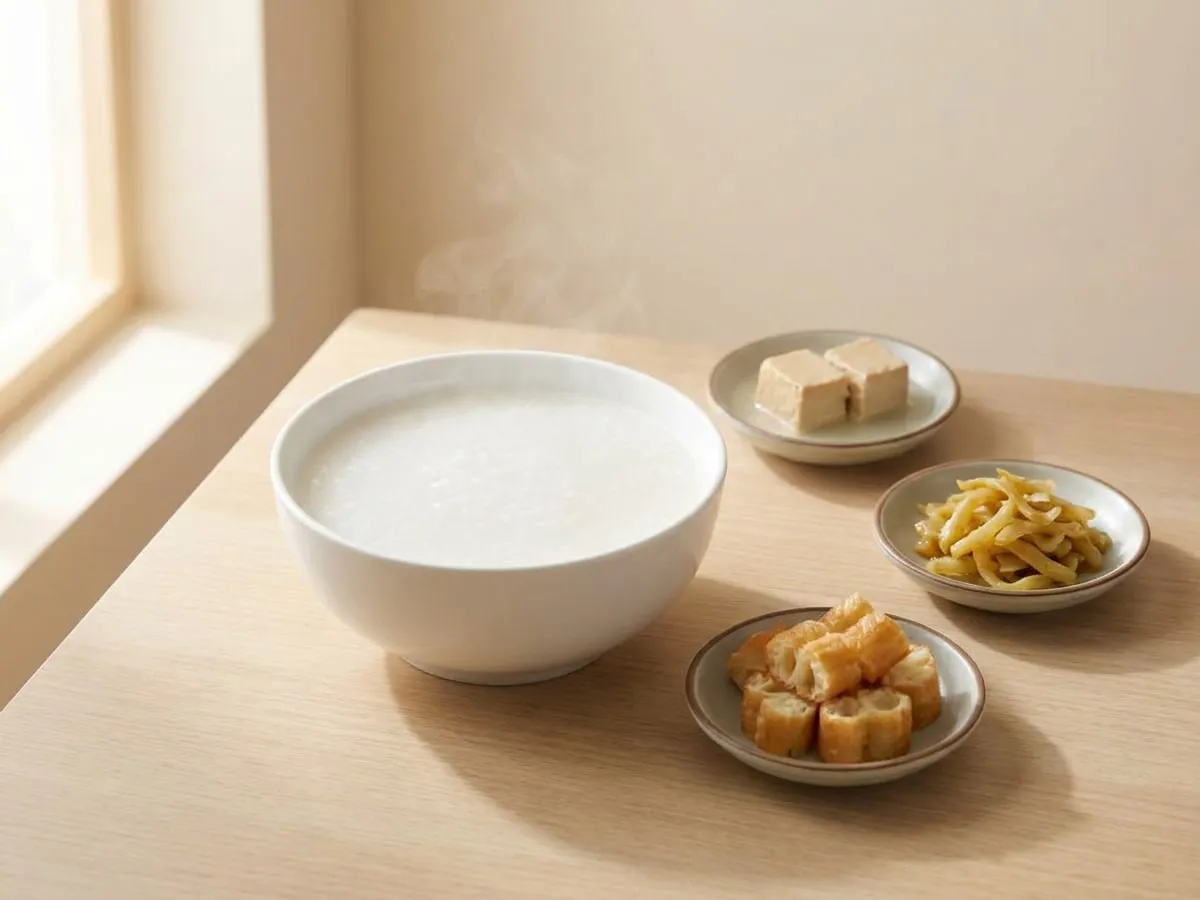
Plain congee
白粥
“Congee wants its full time on the boil before the rice opens.”
Ask Ah Ma
Ingredientsserves 4
Dried beancurd stick· optional; the congee-shop way, broken up and added with the rice, simmered until it melts inabout 20 g
Equipment
- A tall, heavy pot of 4 to 5 litres. Rice and water should fill no more than half of it; a big pot is what stops it boiling over.
- A long wooden spoon that reaches the bottom and the corners.
- A balloon whisk, if you want it silky; without one, give it a little longer.
- A kettle of boiling water, to thin it at the end.
How the time splits
- 25 minOil and salt on the rice, left to rest; the water comes to the boil meanwhilehands off
- 8 minRice into water at a full boil, kept at a hard boil, the bottom stirred once or twicehands on
- 55 minLid ajar, medium-low, the bottom stirred every fifteen minuteshands off
- 2 minA minute or two with a whisk, if you want it silkyhands on
Method
- Rinse the rice two or three times, drain it well, mix in half a teaspoon of salt and a teaspoon of oil and leave it twenty to thirty minutes. Meanwhile bring 1.8 litres of water to the boil in the big pot.
- Only when the water is at a full boil does the rice go in, with the beancurd stick if you are using it; stir once as it goes in. Rice dropped into water that is not boiling sinks, and once it sinks it sticks.
- Let it come back to the boil and keep it on high for five to ten minutes, stirring from the bottom once or twice so no grains settle.
- Turn it to medium-low with the lid ajar and keep it at a lively simmer for fifty to sixty minutes, stirring from the bottom every fifteen minutes or so, until every grain has burst and the congee is thick and creamy. The lid ajar is what stops it boiling over.
- For a silkier congee, whisk it hard for one to two minutes at the end to break up the last grains; without a whisk, give it ten to twenty minutes more.
- If it is too thick, thin it with boiling water, never cold. If it is to be the base for another congee, do not salt it; season each bowl instead. Cool any base you are keeping quickly in a wide, shallow container and refrigerate it; bring it back to a full boil with a little boiling water before using it, and use it within two days.
- Ladle it into bowls and serve it as it is, with nothing on top. Fermented bean curd and shredded preserved mustard tuber go in small dishes, and the fried dough stick, cut into lengths, on a plate of its own, for each person to take as they like.
Take care
- Soy if beancurd stick or fermented bean curd is used; wheat with the fried dough stick. Rice and water alone carry no allergen.
- Cool any congee you keep quickly: to 20 °C within two hours and to 4 °C within a further four, then into the fridge; never leave it on the bench overnight. Always bring it back to a full boil before eating.
The story
In a congee shop plain congee is 粥底, the base, and the fish-slice, scholar's and sampan congees all start from this pot. At home a bowl of it with a cube of fermented bean curd, a dish of preserved mustard tuber or a fried dough stick is a meal. It is also the first pot to learn: rice into water at a full boil, the lid ajar, the bottom stirred. Get those three right and every other congee is only a matter of what goes in.
Same kind
Lo Fo Tong is cultural food-heritage reference, not medical advice. If you are pregnant, unwell or on medication, talk to your doctor or registered practitioner before changing what is in the pot.