All Sunday dishes › The counter at home
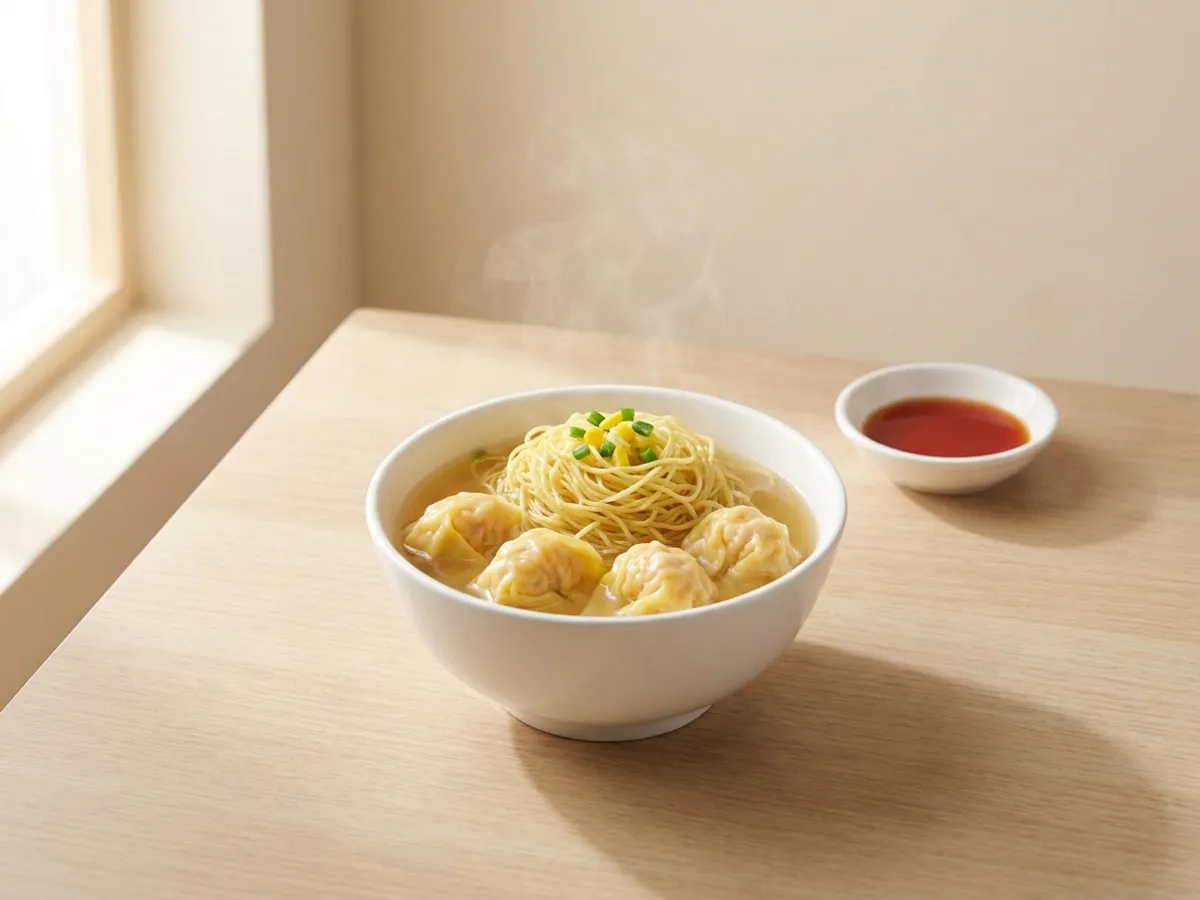
Wonton noodles: the broth, the noodle and the bowl
“Congee wants its full time on the boil before the rice opens.”
Ingredientsserves 2
Equipment
- Three pots: the broth, one for the wontons, one for the noodles. With only two, cook the wontons and then the noodles in the same water, but never either of them in the broth.
- A big bowl of cold water and a noodle basket for the rinse; a large sieve does the same.
How the time splits
- 15 minBlanch the bones, toast the flounder and the prawn shellshands on
- 2 hrThe broth on the lowest heathands off
- 30 minWhile the broth finishes, wrap the wontons (the 自家包雲吞 page)hands on
- 5 minStrain and seasonhands on
- 10 minCook the wontons, cook the noodles, build the bowlshands on
Method
- Wrap the wontons following the 住家菜 page 自家包雲吞: eight for two bowls, four a bowl, which is the rule of the 細蓉. Keep the prawn shells from peeling the prawns; the broth on this page needs them.
- Blanch the pork bones from cold water and rinse them. Toast the dried flounder in a dry pan or the oven until fragrant and crisp, scraping off any edge that has burnt, or the whole pot turns bitter; toast the prawn shells in a dry pan until pink.
- Put the bones, flounder, dried shrimp and ham in a pot with 3 litres of water, bring it to the boil, then turn it to the lowest heat for two and a half hours, adding the prawn shells only for the last half hour. Keep the heat low: a broth that boils hard goes cloudy.
- Strain the broth, season it with salt and a small lump of rock sugar, and keep it just simmering. Heat the bowls with boiling water. A noodle shop's bowls are hot, and a cold bowl at home takes the heat out of the broth before it reaches the table.
- Cook the wontons in a separate pot of boiling water and give them a minute after they float, then lift them out. Never cook them in the broth: the flour on the wrappers clouds it, and the Hong Kong rule is never one pot for both.
- Shake the noodles loose into another pot of boiling water, separate them with chopsticks, and lift them out after thirty to forty-five seconds, straight into the cold water, then back into the boiling water for ten seconds, and drain. This is where the bowl goes wrong: a fresh egg noodle is softer than a bamboo-pressed one and goes limp with ten seconds too many, so lift it early rather than late.
- Build the bowl: yellow chives at the bottom, four wontons, the hot broth, and the noodles last, on top of the wontons, so they sit above the broth. Noodles sunk in the broth are soft within a minute or two. A little white pepper, and the red vinegar on the table for anyone who wants it.
Take care
- Wheat, egg (the noodles and the wrappers), prawn (a crustacean), pork, fish (the dried flounder). The pork filling must be cooked through: a full minute after the wontons float.
The story
A noodle shop's wonton noodles rest on three things: the noodle pressed with a bamboo pole, the flounder broth simmered for hours, and the order the bowl is built in. A flat could never do the first, so Hong Kong families bought the noodle and wrapped the wontons themselves, which is the half the 住家菜 page 自家包雲吞 records. This page adds the other half: the broth, the noodle and the bowl. The old masters' rules are simple. Four wontons a bowl, wontons below and noodles above, and in the old shops a spoon under the noodles to keep them out of the broth. That small bowl is the 細蓉.
Same kind
Lo Fo Tong is cultural food-heritage reference, not medical advice. If you are pregnant, unwell or on medication, talk to your doctor or registered practitioner before changing what is in the pot.