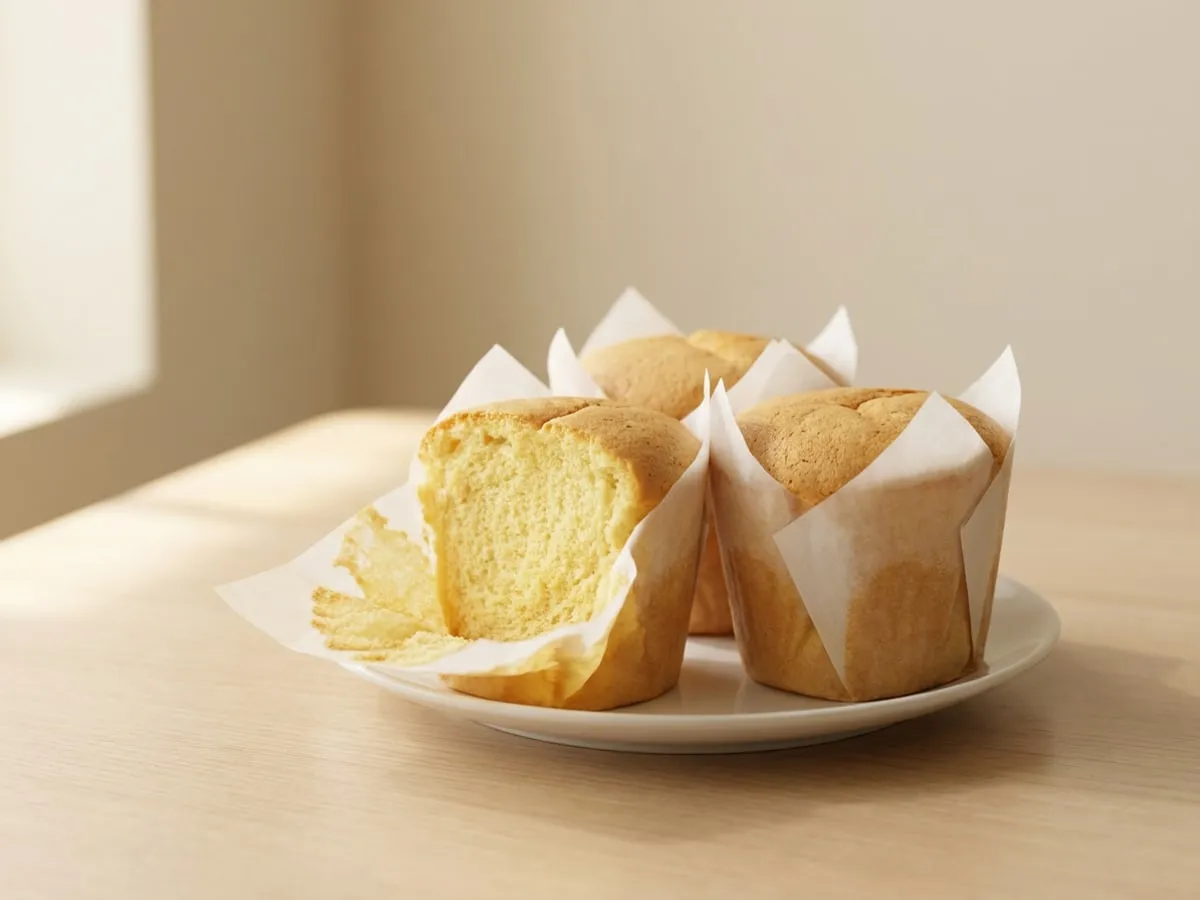
Paper-wrapped sponge
紙包蛋糕
“Fresh from the oven. One is enough.”
Ingredientsserves 4
Equipment
- Eight squares of baking paper about 20 cm, pushed into the cups so the corners stand up; that ruffle is the look
- Eight ramekins or tea cups, or a muffin tray
Method
- Heat the oven to 160°C fan. Push a square of baking paper into each cup so the corners stand up. Without the paper the cake sticks to the cup.
- Beat the yolks with 20 g of sugar until pale and thick, stir in the oil and the milk, then sift in the cake flour and fold until smooth with no lumps.
- Whisk the whites with the lemon juice to soft peaks, add the 50 g of sugar in three lots and beat to firm, glossy peaks, six to eight minutes with a hand mixer. Under-beaten whites are why the cakes rise and then sink into a wrinkled cup.
- Fold a third of the whites into the yolk batter to loosen it, then pour in the rest and fold lightly from the bottom up until no white shows. Do not stir: stirring knocks the air out and the cake bakes dense. A firm layer at the bottom is yolk batter that was not folded through.
- Spoon into the cups to about eight-tenths.
- Bake at 160°C for twenty-two to twenty-five minutes until well risen and golden, then open the oven door a crack, drop to 140°C and bake a further eight to ten minutes so the cake dries out and holds its shape instead of collapsing. Open the door halfway through to look and it sinks just the same.
- Lift out by the paper and cool on a rack. Best the day they are made, warm from the oven or cooled.
Take care
- Contains egg, milk and wheat. Do not taste the raw batter. Egg whites whip best from room-temperature eggs, but the eggs should not sit out longer than the hour it takes.
The story
紙包蛋糕 is the cake of the 冰室 and the old-style 餅店, sold in its paper cup for HK$1 or 2, eggy and light, torn from the paper on the walk to school; HK01 lists it among the disappearing old snacks. It is the first cake most Hong Kong children ate, and the one they ask their mum for when the bakery near the new house does not sell it.
Same wall
Lo Fo Tong is cultural food-heritage reference, not medical advice. If you are pregnant, unwell or on medication, talk to your doctor or registered practitioner before changing what is in the pot.