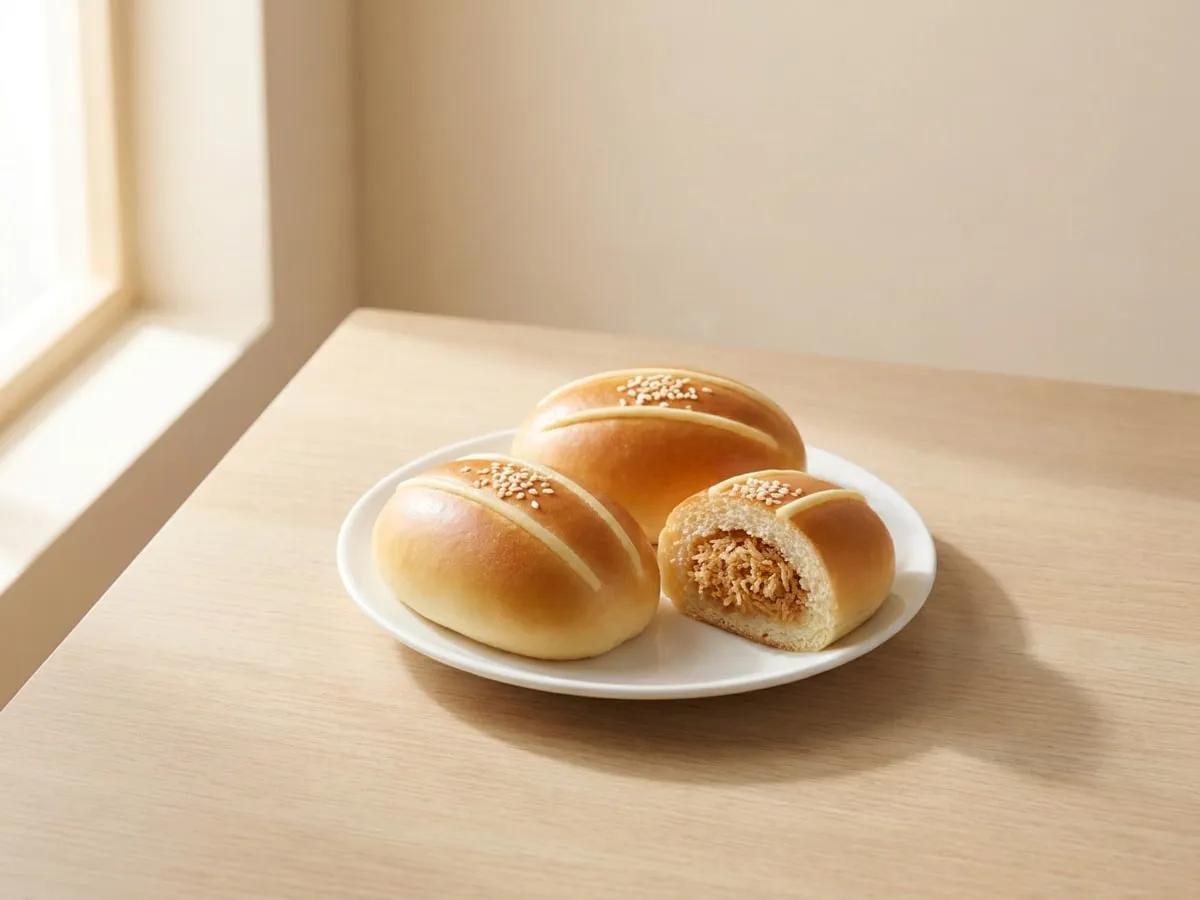
Cocktail bun
雞尾包
“Fresh from the oven. One is enough.”
Ingredientsserves 4
雜貨舖Flour· bread flour 375 g: 25 g for the tangzhong, 350 g for the dough; 2 tbsp plain flour for the two stripes on top375 g bread flour plus 2 tbsp plain flour
Method
- The tangzhong: whisk 25 g of bread flour into 125 ml of water, cook on low, stirring, until it thickens to a paste that holds a line, cool and cover; the night before, or at least an hour ahead.
- The dough: mix 350 g of bread flour, 55 g of sugar, the salt, one tablespoon of milk powder, the yeast, one egg, the milk and all of the tangzhong, knead until smooth (ten minutes in a mixer, fifteen to twenty by hand), add the 30 g of soft butter and knead on until it passes the windowpane test. Cover and rise until doubled: sixty to ninety minutes in a Hong Kong kitchen, longer in a Sydney winter, in the oven with only the light on.
- The filling: beat 90 g of soft butter with 40 g of sugar, stir in the coconut and four tablespoons of milk powder to a paste, and add a tablespoon of flour if it is loose. Chill until firm and divide into eight logs. Unchilled filling melts and leaks out of the seam in the oven.
- Knock the dough back and divide into eight. Flatten each to an oval, lay a log of filling along the middle, fold the long sides over and pinch the seam hard, then roll gently to a torpedo. Lay them seam-down on the tray. A seam that is not pinched hard leaks.
- Cover and let them rise a second time, forty-five to sixty minutes, until puffy.
- Mix 15 g of butter, a tablespoon of sugar and two tablespoons of plain flour to a paste and put it in a piping bag. Brush the buns with the beaten egg, pipe two stripes along the top of each and scatter the sesame. If the paste is too loose the stripes bake flat; add a spoon of flour.
- Bake at 170°C fan for fifteen to seventeen minutes until golden. Cool on a rack; the filling firms as it cools. Over-baked, they go dry; the tangzhong is what keeps them soft into the next morning.
Take care
- Contains egg, milk, wheat and sesame, and coconut: coconut is not on Australia's mandatory allergen list, but some Australian labels declare it as a tree nut. Do not taste raw dough.
The story
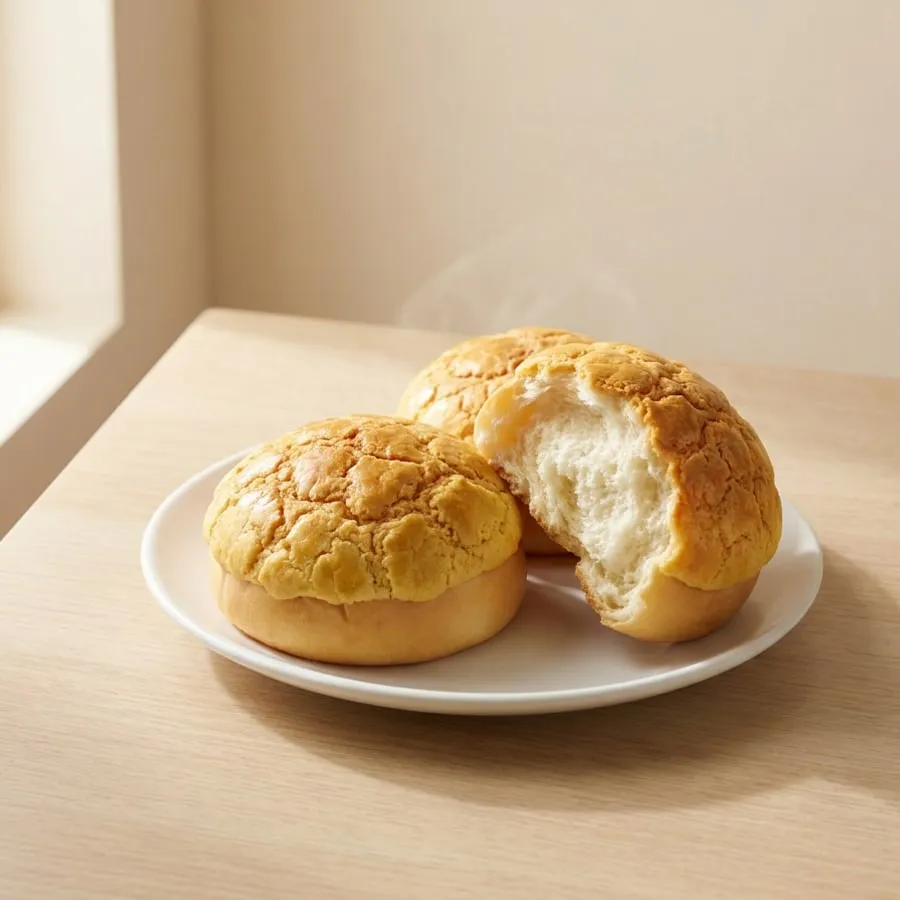
In the 1950s a Hong Kong baker who could not bear to throw out the day's unsold bread crumbed it, mixed it with sugar and coconut and stuffed it into new buns; a mixture of odds and ends is a cocktail, hence 雞尾包. It is the second bun in every 餅店 window after the 菠蘿包, and the two stripes on top are how you tell it from the 椰絲包.
Same wall
Lo Fo Tong is cultural food-heritage reference, not medical advice. If you are pregnant, unwell or on medication, talk to your doctor or registered practitioner before changing what is in the pot.