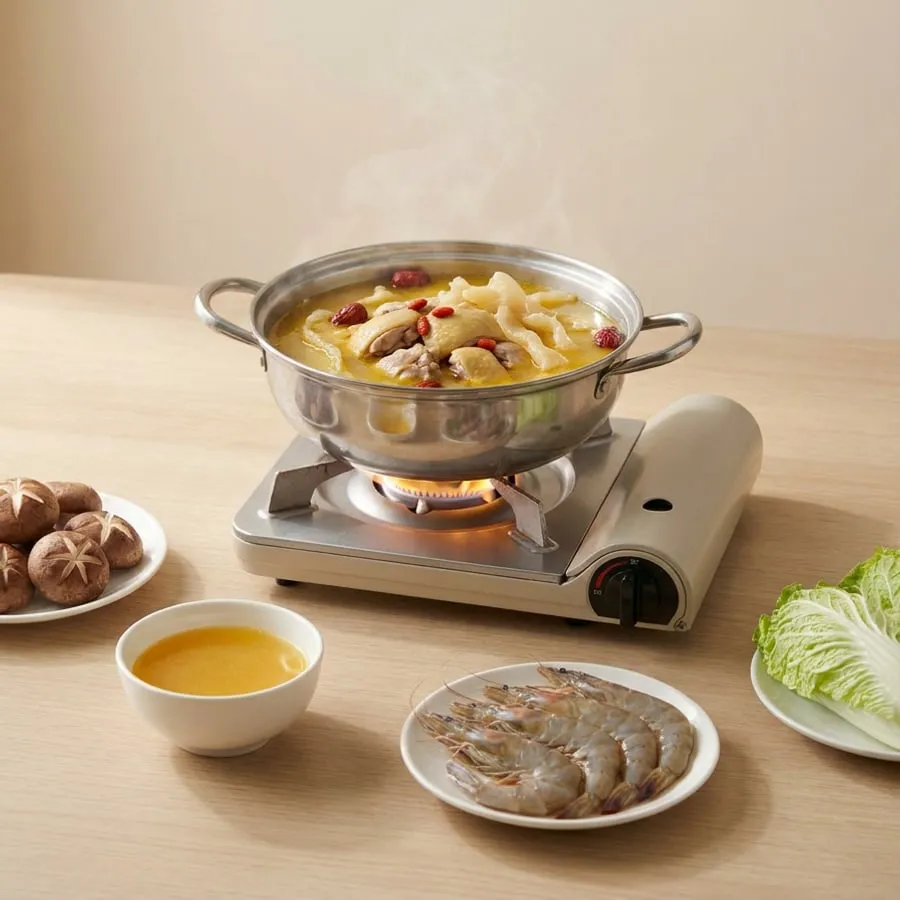
Fish maw (dried swim bladder)
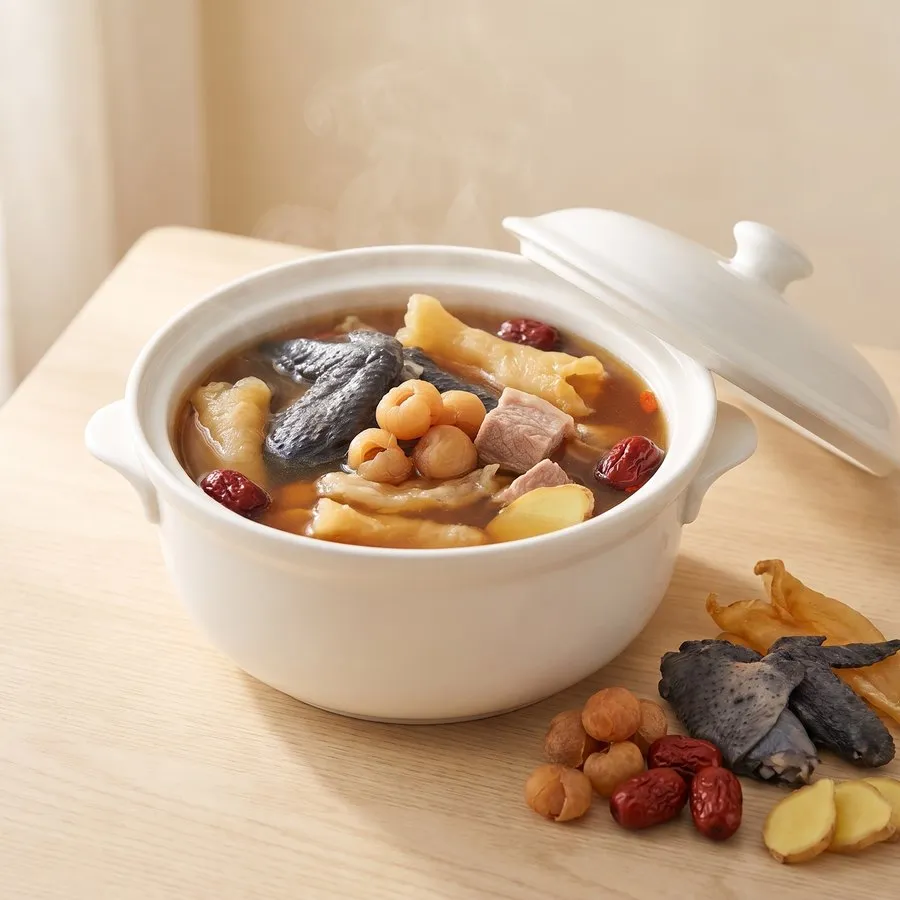
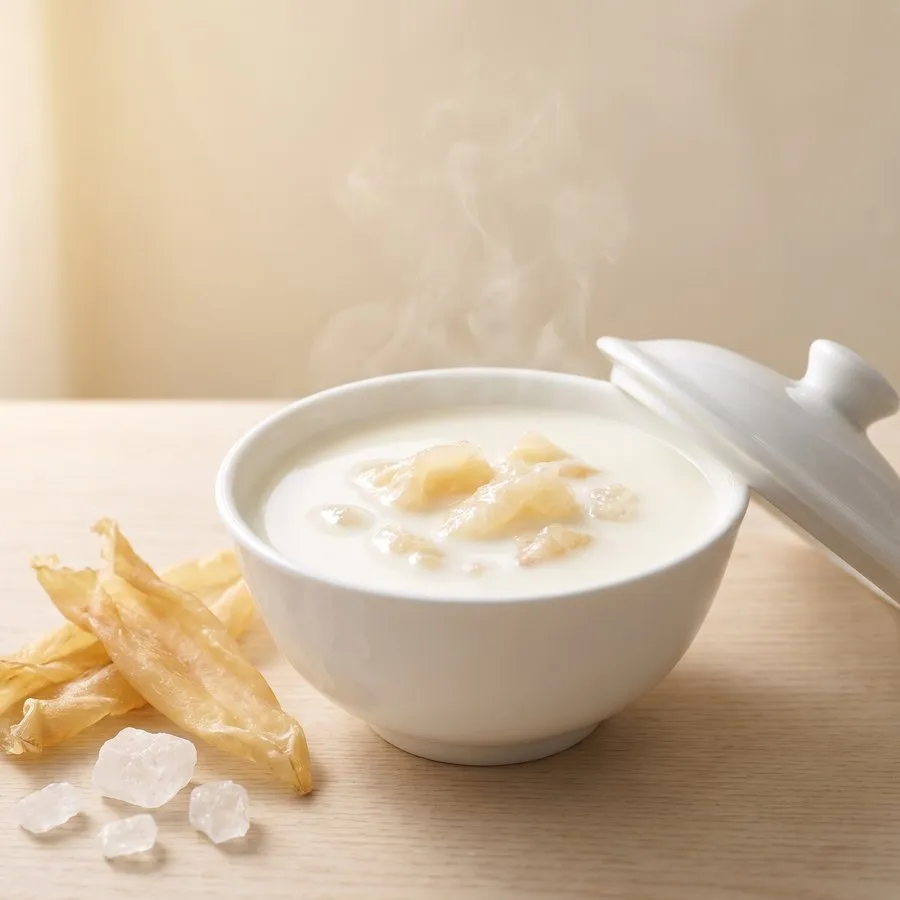
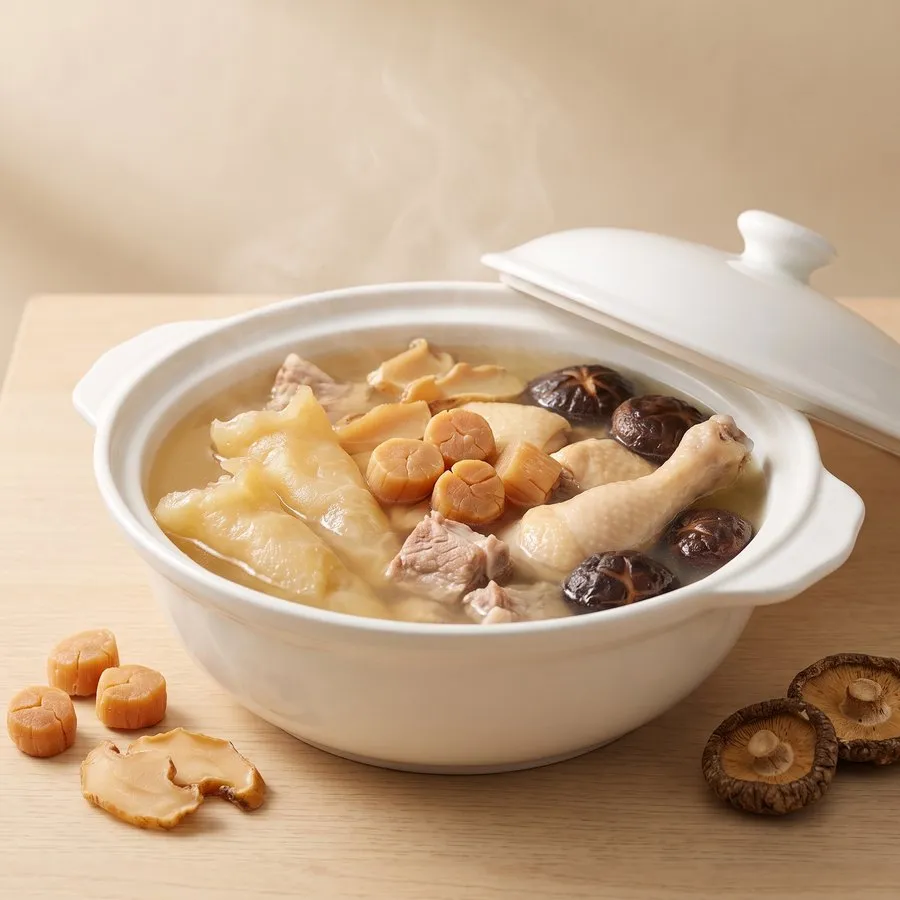
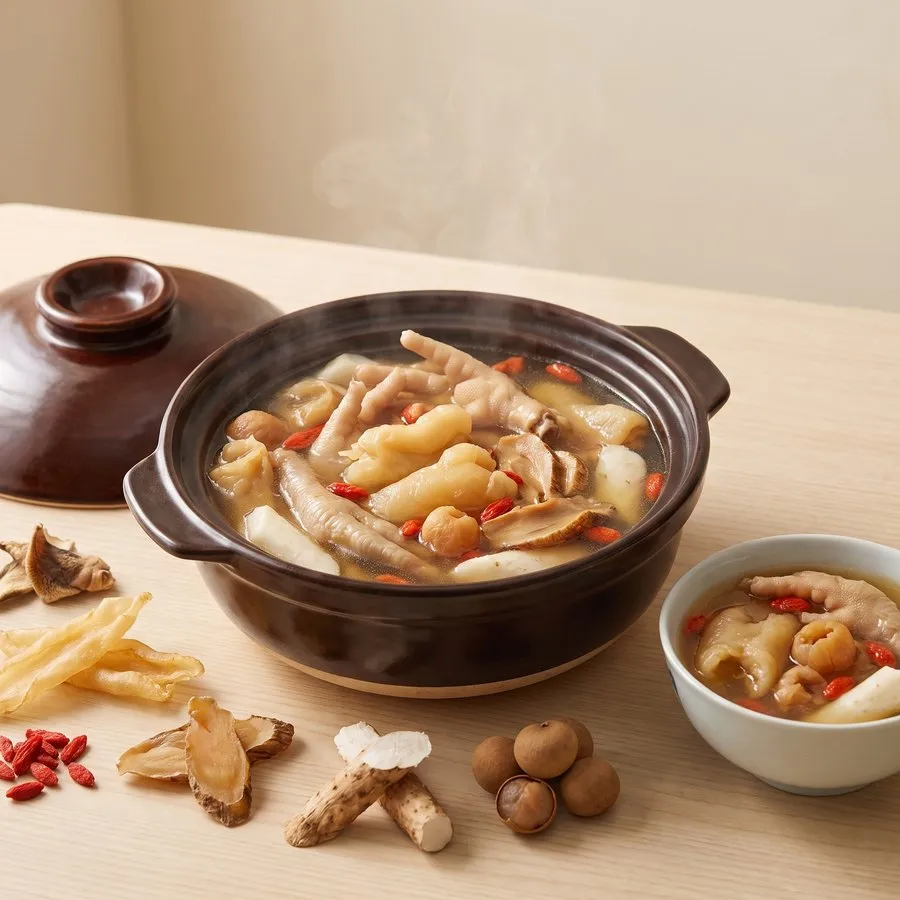
The dried swim bladder of large fish (traditionally croakers), sold as stiff, translucent golden sheets or tubes graded steeply by species, thickness and size. After soaking, steaming and blanching with ginger and spring onion it turns thick and gelatinous, giving soups a luxurious, collagen-rich body with a neutral taste. Price spans two orders of magnitude, from everyday NZ ling maw to top wild maws.
TCM properties
Nature · neutral Flavour · sweet、salty Meridians · kidney
Traditional food therapy
In Cantonese food therapy it is used to nourish yin, replenish blood, support the kidneys and essence, and it is traditionally taken as a beauty food for skin thanks to its rich collagen.
Cautions: read first
- Not suitable while a cold is still unresolved (its richness is said to keep the pathogen in)
- Go carefully if you carry a lot of phlegm-damp or digest poorly
- Breastfeeding mothers must not eat it straight after giving birth (it thickens the milk and brings a risk of blocked ducts)
- Take care if you have gout or a protein-restricted diet
Preparation
To rehydrate: soak in plain water until soft, then steam or boil it and plunge it into iced water (repeat for thick pieces). Blanch it (飛水) with ginger, spring onion and wine to take off the fishiness. Use it as soon as it is rehydrated, or freeze it.
Origin
Traditionally croaker maw from the South China Sea; the mainstream modern sources are Brazil, West Africa and New Zealand. Australian entry grades are New Zealand ling and cod maw; premium wild large-piece maw comes through specialist importers
Availability in Australia
Herbal shops / specialists