All Sunday dishes › The Sunday dishes
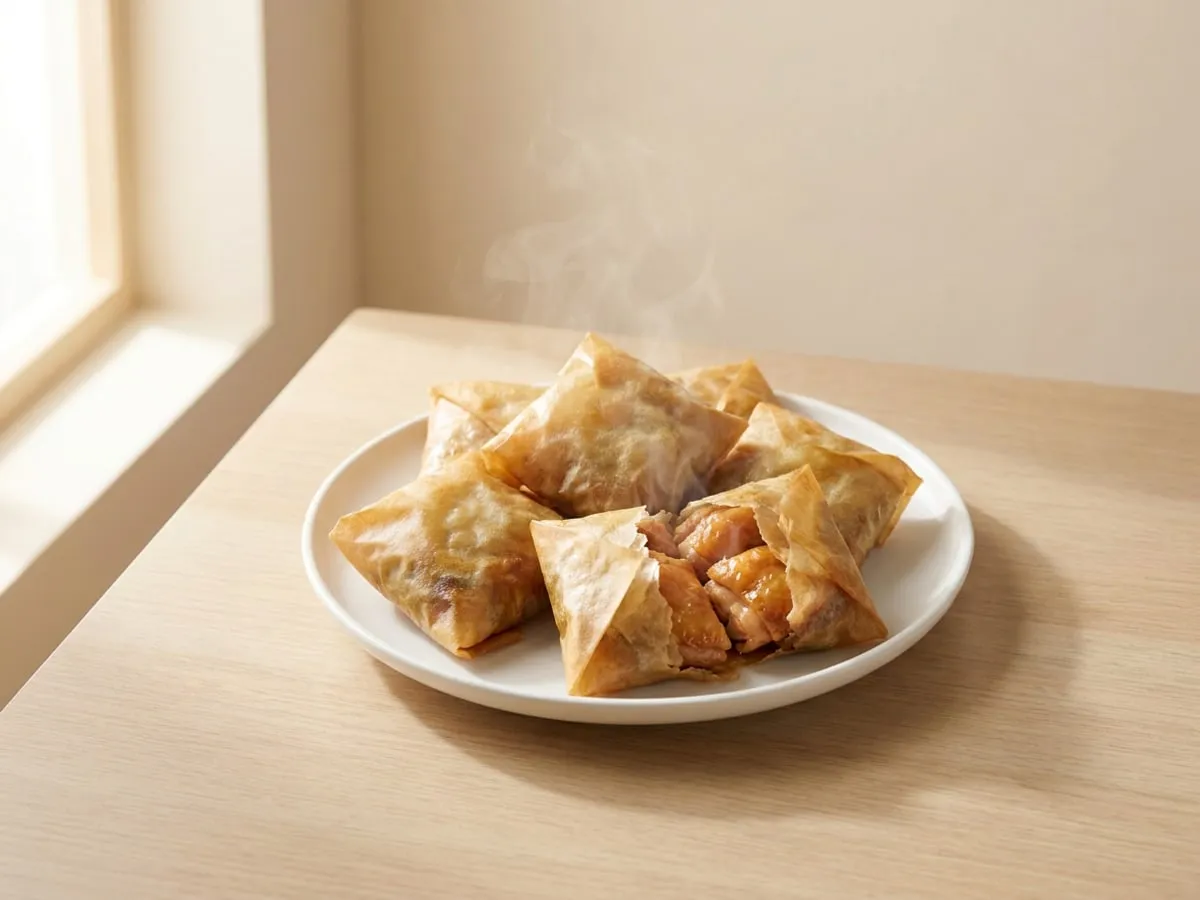
Paper-wrapped chicken, fried in parcels
“This one cannot be hurried. Only start it if the day is yours.”
Ingredientsserves 4
Equipment
- Baking paper cut into 13 to 15 cm squares, about fourteen of them, and a box of toothpicks. Not cellophane, cling film or waxed paper: they melt in hot oil.
- A wok or a wide deep saucepan with 3 to 4 cm of oil, filled no more than a third of the way up. This is the dish on the wall that needs the least equipment; any kitchen can do it.
- A thermometer. Without one, stand a dry chopstick in the oil: a steady stream of small bubbles round it means about 170°C.
How the time splits
- 20 minCut the chicken and mix the marinadehands on
- 2 hrMarinating in the fridgehands off
- 25 minFolding the parcels one by onehands on
- 15 minFrying in batches: you cannot walk awayhands on
Method
- Dry the thigh and cut it into pieces 2.5 by 5 cm, all the same size and thickness; slice anything thicker than 2.5 cm in half. Once it is wrapped you cannot see whether the middle is cooked, so the thickness is decided here.
- Mix the ginger juice, wine, sand ginger, five-spice, pepper, oyster sauce, a teaspoon of sesame oil and the cornflour slurry, turn the chicken through it and leave it in the fridge for two hours. The old restaurant version marinated only fifteen minutes and let the parcel hold the scent in; two hours takes the flavour further.
- Brush a little sesame oil in the middle of a paper square, lay on a slice of shallot and a length of spring onion, and put a piece of chicken on top, skin down. Fold the near corner over the chicken, fold in the two side corners, then roll forward to the last corner and tuck it underneath or pin it with a toothpick. The old restaurant parcel also held a small slice of ham, a piece of mushroom and a coriander leaf.
- The parcel has to be tight. One that opens in the oil lets the juices out, the oil foams and clouds, and the chicken soaks it up. Until you trust your fold, pin every parcel with a toothpick and count how many you use. Lay the finished parcels flat on a plate, not stacked.
- Heat the oil to about 170°C and lower in four or five parcels with a slotted spoon. Fry four to five minutes, turning once, until the paper is golden and a little puffed. The paper should colour, not blacken; if it darkens, the oil is too hot, so turn the heat down and let it drop before the next batch. Drain on a rack.
- As soon as the first batch is out, open the thickest parcel and cut the thickest piece: the meat should be white through, the juices clear, no pink, and 75°C on a thermometer. If it is not, put the first batch back in the oil and give every later batch a minute longer.
- Serve them in the paper and let each person open their own. Count the toothpicks back before the plate goes to the table.
Take care
- Poultry. The chicken must be cooked through: open the thickest parcel from the first batch and cut the thickest piece; no pink, clear juices, 75°C at the centre. Keep raw chicken and cooked food on separate boards. Contains soy, wheat and mollusc (oyster sauce) and sesame.
- A pan of hot oil. Fill it no more than a third deep, make sure the outside of each parcel is dry, and lower them in with a slotted spoon rather than dropping them. Keep a lid beside the stove: if the oil catches, cover it and turn off the heat, and never use water. Do not move the pan until the oil is cold. Keep children and pets away from the stove while you fry. Count the toothpicks out and count them back before serving.
The story
An old restaurant dish, the kind the Cantonese call nostalgic: brought to the table in a heap of parcels, one each, and the scent when you tear yours open is the whole point of it. As restaurant menus shortened it quietly went. It is on this wall because it is the easy one: nothing hangs, nothing steams, nothing waits overnight, just an afternoon of folding. The restaurants wrapped it in cellophane; at home it is baking paper, for the practical reason that baking paper stands up to hot oil. What children like best is the opening, so once the plate is down, leave that part to them.
Same kind
Lo Fo Tong is cultural food-heritage reference, not medical advice. If you are pregnant, unwell or on medication, talk to your doctor or registered practitioner before changing what is in the pot.