All Sunday dishes › The festival table
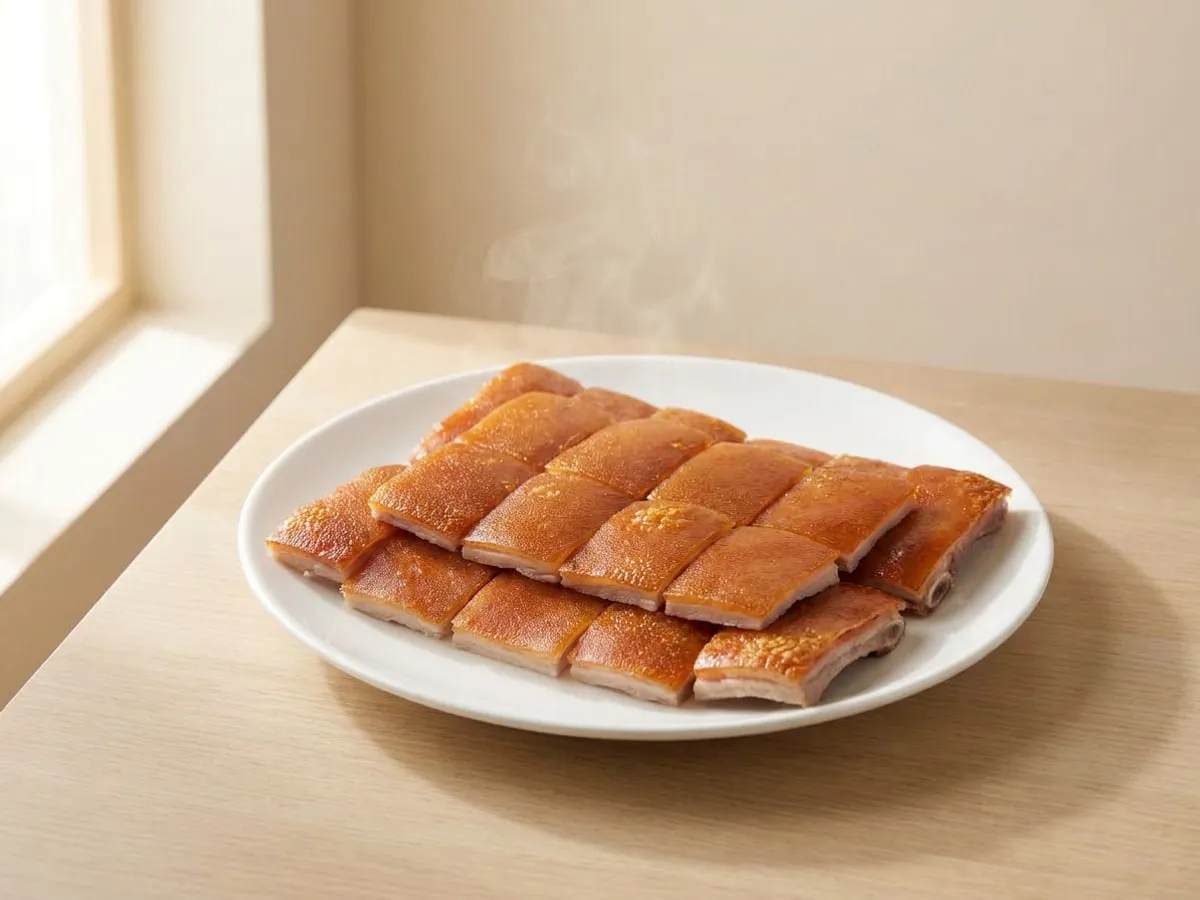
Roast suckling pig
“You eat after the offering. These few dishes are what the year waits for.”
Ingredientsserves 8
Equipment
- An oven: measure its width and depth before you order, so the piece fits with room all round
- A roasting tray with a rack, with water in the tray
- A probe thermometer: doneness is the temperature, not the colour of the skin
- A fine skewer, a pricker or a fork for the skin, and a roll of foil
- A cleared fridge shelf big enough for the piece, uncovered
- A big board and a heavy cleaver; kitchen scissors where the cleaver will not go
How the time splits
- 20 minDry it and season the meat side, keeping the skin cleanhands on
- 12 hrSkin up, uncovered in the fridge overnight to dryhands off
- 10 minPrick the skin, brush with vinegar and oil, foil the thin partshands on
- 1 hr 25 minRoasting on a rack over a water tray, topped up when it runs lowhands off
- 20 minHigh heat to crackle the skin: stand at the ovenhands on
- 15 minResting, loosely coveredhands off
- 10 minChop and lay it outhands on
Method
- Order a few days ahead from the butcher: half a pig split lengthwise with the head and trotters off, or a suckling-pig shoulder or leg section with the skin on. Measure your oven first, so the piece fits the tray with room all round. Thaw a frozen piece in the fridge for one to two days, and ask the butcher to check the skin is free of hair.
- Pat the pig dry with paper towel. Mix the salt, five-spice, sugar and rose liquor and rub them into the meat side and any cut faces only, keeping every bit off the skin. For a roast-meat-shop taste, mash the red bean curd with the sesame paste and hoisin and rub that over the meat side too.
- Set it skin up on a rack and leave it uncovered in the fridge overnight to dry the skin. Skin that is wet or carries seasoning goes leathery however hot the oven gets at the end; it will not blister. The next day, wipe off any moisture.
- Prick the skin all over, closely, with a fine skewer or fork, through the skin but not into the meat, then brush it with the vinegar. Brush it thinly with oil just before it goes in. Wrap the ears, tail and any thin parts in foil so they do not burn.
- Heat the oven to 180 °C fan-forced. Pour water into the tray, set the rack over it and lay the pig on the rack skin up. Roast for 1¼ to 1½ hours, topping up the water whenever it runs low, or the drips will smoke. It is cooked when a thermometer in the thickest part, next to the bone, reads 75 °C. The skin is ready long before the meat, so do not go by its colour.
- Raise the oven to 230 to 250 °C and roast another 15 to 30 minutes, until the skin has blistered all over. Stand at the oven for this part, and turn the tray if one side colours first.
- Take it out, cover it loosely and rest it for fifteen minutes. On a big board, chop it through the bone with a heavy cleaver into pieces about 3 cm square, each with skin and meat, and lay them in rows on a large platter, skin up. For an offering, the piece goes onto the altar whole and skin up, and comes back to the kitchen to be chopped afterwards. Leftover bones go into congee; leftover meat is good fried with spring onion.
Take care
- Pork, alcohol (rose liquor rubbed into the raw meat). The red bean curd paste, if used, adds soy, wheat and sesame. The thickest part, next to the bone, must reach 75 °C: use a thermometer, not the colour of the skin. Wash the board, knives and your hands after handling raw pork.
- Above 230 °C the fat spits, and a water tray that runs dry lets the drips smoke and even flare, so keep it topped up, and keep your face clear when you open the oven door.
- A cooked pig on the altar, or one collected from a roast-meat shop, is cooked food at room temperature: eat it within two hours or chop it and refrigerate it, and reheat it right through.
The story
Most families order their roast suckling pig whole and ready-roasted from a roast-meat shop or a restaurant, for offerings, shop openings and New Year, and set it straight on the altar when they bring it home. A whole piglet does not fit a home oven, or only just, with its legs tucked under and set across the diagonal; a half, or a shoulder or leg section, does. What a home oven gives you is blistered crackling, as on 脆皮燒腩仔. The smooth, glassy skin of a shop pig comes from a charcoal fire and a cook standing over it turning the pig, which no home oven can do.
Same kind
Lo Fo Tong is cultural food-heritage reference, not medical advice. If you are pregnant, unwell or on medication, talk to your doctor or registered practitioner before changing what is in the pot.