All Sunday dishes › The Sunday dishes
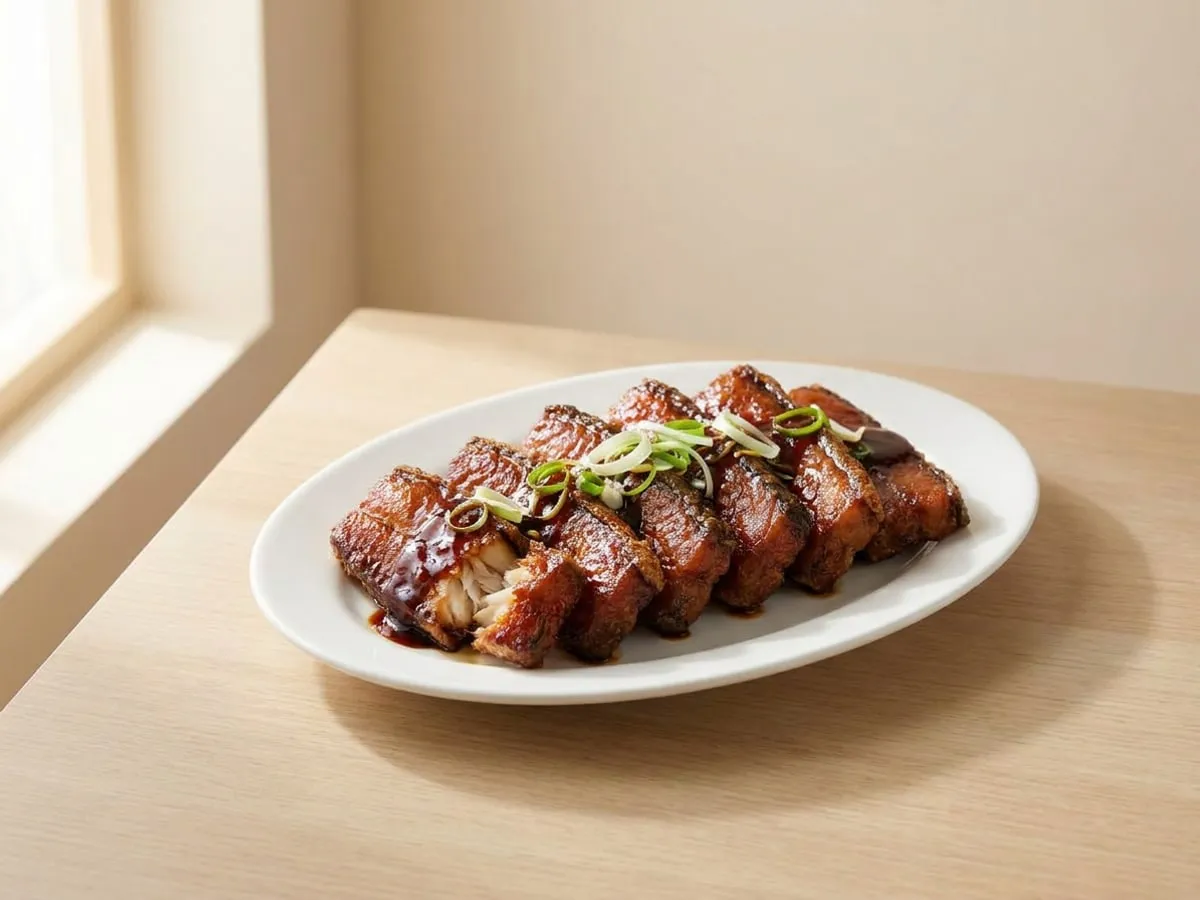
Shanghai-style crisp soy-soaked fish
Also called Crisp "smoked" fish
“This one cannot be hurried. Only start it if the day is yours.”
Ingredientsserves 6
Equipment
- A small deep pot or wok that takes 3 to 5 cm of oil, filled no more than a third
- A thermometer for the oil
- A spider or slotted spoon, and kitchen paper
- A small saucepan for the sauce
- A wide, deep dish or box with a lid that holds all the fish in the sauce; deep, so it does not spatter over
- For the crisp glazed version, a rack over a tray to dry the fish on
How the time splits
- 10 minDry the fish, cut it, marinate it and spread it out in the fridgehands on
- 20 minSimmering the spices in waterhands off
- 15 minSoy, sugar and wine in to reduce; the vinegar only once the heat is offhands on
- 2 hrThe sauce cools while the fish keeps marinating in the fridgehands off
- 30 minFrying in batches to deep brown, each batch straight into the sauce; you cannot walk awayhands on
- 2 hrSoaking in the sauce, no more than two hours at room temperature, then into the fridgehands off
- 5 minLay the pieces on the plate, spoon sauce over, scatter spring onionhands on
Method
- Pat the belly dry with kitchen paper and cut it into pieces about 5 cm wide. Toss them with 1 tbsp of the light soy, 2 tbsp of the Shaoxing wine, 4 slices of ginger, the salt and the white pepper. Spread them in one layer and leave them uncovered in the fridge for at least two hours, or four to six if you have the time. A surface that has dried a little fries crisper.
- Make the sauce while the fish marinates, so it has time to cool. Put 2 cups of water in a small saucepan with the star anise, cassia, bay leaves, 2 slices of ginger and 2 spring onions, simmer gently for twenty minutes and lift out the aromatics. Add 4 tbsp of light soy, the dark soy, the rock sugar and 2 tbsp of Shaoxing wine and simmer about fifteen minutes more, until it is slightly syrupy and lightly coats the back of a spoon. Stir in the vinegar only after the heat is off: boiled vinegar gives the sauce a medicinal taste. Pour it into the wide, deep dish and let it cool.
- Pour the oil into the small deep pot or wok, no more than a third full, and heat it to 180 to 190°C. Lift the fish out of the marinade and pat it dry again; for a crisper crust, dust it lightly with cornflour. Fry two or three pieces at a time, lowering them in close to the oil and away from you, and leave them alone for two to three minutes until a hard crust has formed before you turn them.
- Keep frying until the pieces are deep brown and hard at the edges, firm enough to tap with a chopstick. Err on the side of over-frying: fish taken out at pale gold goes soft and soggy after a night in the sauce. Let the oil come back to 180°C between batches.
- As each batch comes out, put the pieces one at a time into the cold sauce and turn them so every side is coated. Hot fish hisses and spits as it meets the cold sauce, so use a deep dish and lower each piece in close to the surface; that crackle is why the dish is also called 爆魚.
- Once everything is fried, leave the fish in the sauce for two hours, turning it once or twice. No more than two hours at room temperature: after that, cover it and put it in the fridge, where a night makes it better still. Keep it in its sauce in the fridge and eat it within three days.
- To serve, lay the pieces whole on a plate without cutting them further, spoon a little of the sauce over, add a few drops of sesame oil and scatter the spring onion on top. Eat it cold or at room temperature. The other way is the crisp glazed version: dip each fried piece briefly through the sauce just as it comes back to the boil, lift it straight out and leave it on the rack, where the sauce dries to a sticky, shiny glaze and the crust stays crisper. It is plated whole in the same way.
Take care
- Fish. Soy and wheat (light and dark soy, Shaoxing wine). Sesame (sesame oil). There is Shaoxing wine in the marinade and the sauce; the sauce is boiled, but not all the alcohol cooks off. Belly pieces carry rib bones, and cutlets the backbone: eat with care.
- Deep oil: fill the pot no more than a third, dry the fish before it goes in, lower it in close to the oil and away from you, keep a lid at hand, and never put water on burning oil. Hot fish spits when it meets the sauce, so use a deep dish and add the pieces one at a time. Keep children away from the stove for this part.
- Once the fried fish is in the sauce, it spends no more than two hours at room temperature, then goes into the fridge, covered, in its sauce, and is eaten within three days.
The story
Shanghai "smoked" fish is never smoked: the fish is fried deep brown and then soaked in a sweet, spiced soy sauce, and eaten cold or at room temperature. It is a cold plate for the Shanghainese New Year, and Shanghainese families in Hong Kong make it for the New Year too. It can be made a day or two ahead and only gets better in the fridge, which makes it one thing done early in the rush of the last days of the old year. The grass carp it was made with cannot be bought or sold in Australia, so this page uses barramundi belly, which is fatty enough to stay tender inside a hard, crisp crust.
Same kind
Lo Fo Tong is cultural food-heritage reference, not medical advice. If you are pregnant, unwell or on medication, talk to your doctor or registered practitioner before changing what is in the pot.