All café dishes › Rice plates and baked rice
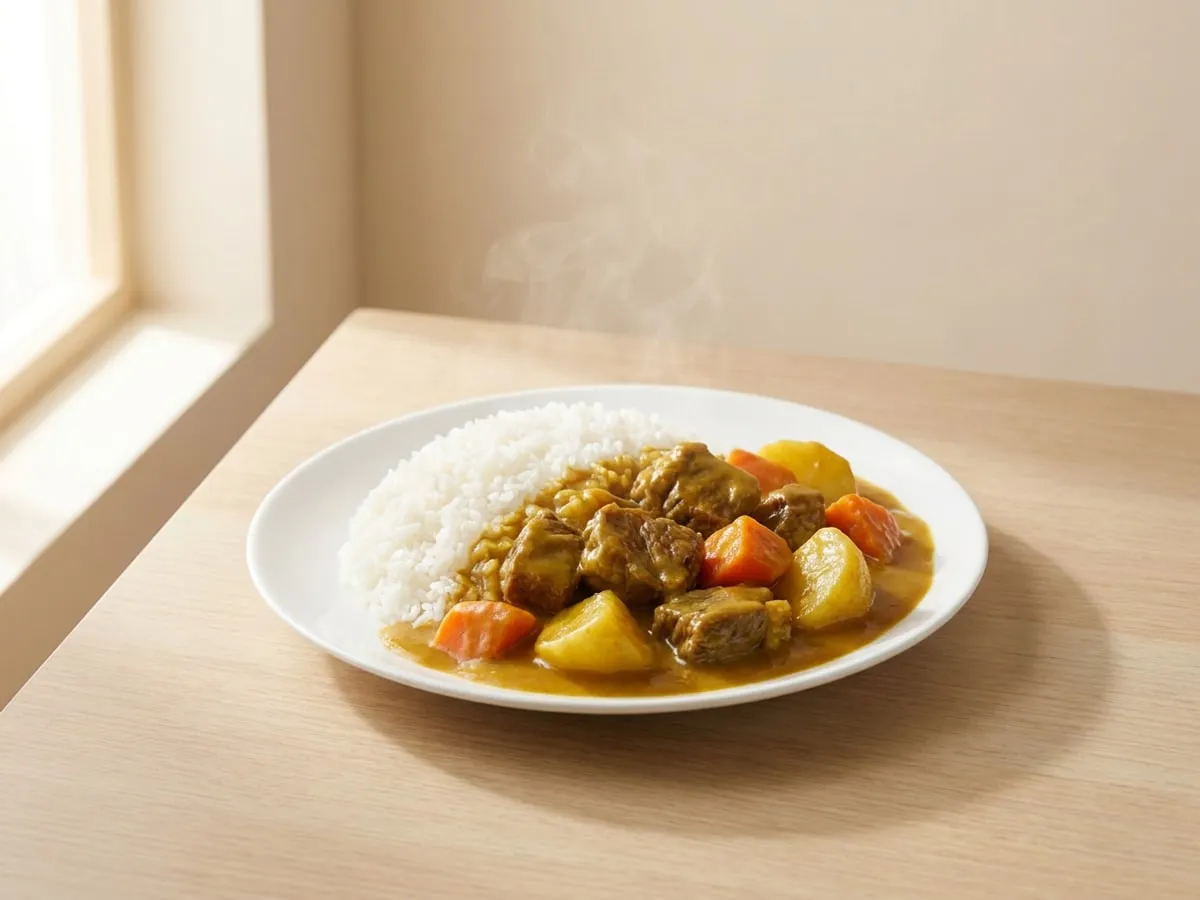
Curry beef brisket rice
“A plate of rice and a bowl of soup. Eat first, work after.”
Ingredientsserves 4
Method
- Blanch the beef: cover with cold water, bring to the boil, simmer five minutes, drain and rinse off the scum. If the piece was whole, cut it after blanching so it does not shrink.
- Heat two tablespoons of oil in the pot, fry the ginger, shallots and garlic until fragrant, then the onion wedges until soft. Add the curry paste (or the curry powder and turmeric) and fry one minute, until the oil turns yellow-red and it smells cooked rather than dusty.
- Add the beef and turn it until coated in the curry. Add water to just cover, the soy, sugar and star anise; bring to the boil, skim, then lid on and the lowest heat for an hour and a half. Tendon needs the full time; without it an hour and a quarter is enough.
- Add the potato and carrot and braise twenty-five minutes more, until a chopstick goes through the beef without resistance and the potato is softening at the edges.
- Pour in the coconut milk, lid off, and simmer five to ten minutes until the gravy is thick enough to coat a spoon. Salt to taste.
- Rice on the plate, beef and gravy over it, ladled so the rice soaks it up: that is the café plate. A spoon of chilli oil for anyone who wants heat.
- For tomorrow: stop after step four, cool, refrigerate, and add the coconut milk when reheating. In a pressure cooker, the beef takes thirty-five minutes at pressure, then the potato a further eight, then the coconut milk and the reduction.
Take care
- Contains soy and wheat (soy sauce; many curry pastes contain wheat or soy, read the label). Some Malaysian pastes contain shrimp paste (crustacean) and peanut; Japanese curry roux contains wheat and milk. The beef is cooked through at these times. A curry kept for the next day goes into the fridge within two hours.
The story
Curry brisket is the café's other brisket: the taste of the Indian and Southeast Asian curry houses of the 1950s, carried into the cha chaan teng through the sauce makers' curry paste, the same jar that makes curry fish balls on the street. The shop braises its brisket in plain stock and keeps a separate pot of curry gravy, so a plate is brisket ladled with gravy in thirty seconds, which is why café curry brisket tastes of gravy more than of curried beef; at home the beef braises in the curry, slower and better. It is the dish Hong Kong families in Australia most often say they cannot get right, and the reason is the paste, not the beef.
Same counter
Lo Fo Tong is cultural food-heritage reference, not medical advice. If you are pregnant, unwell or on medication, talk to your doctor or registered practitioner before changing what is in the pot.