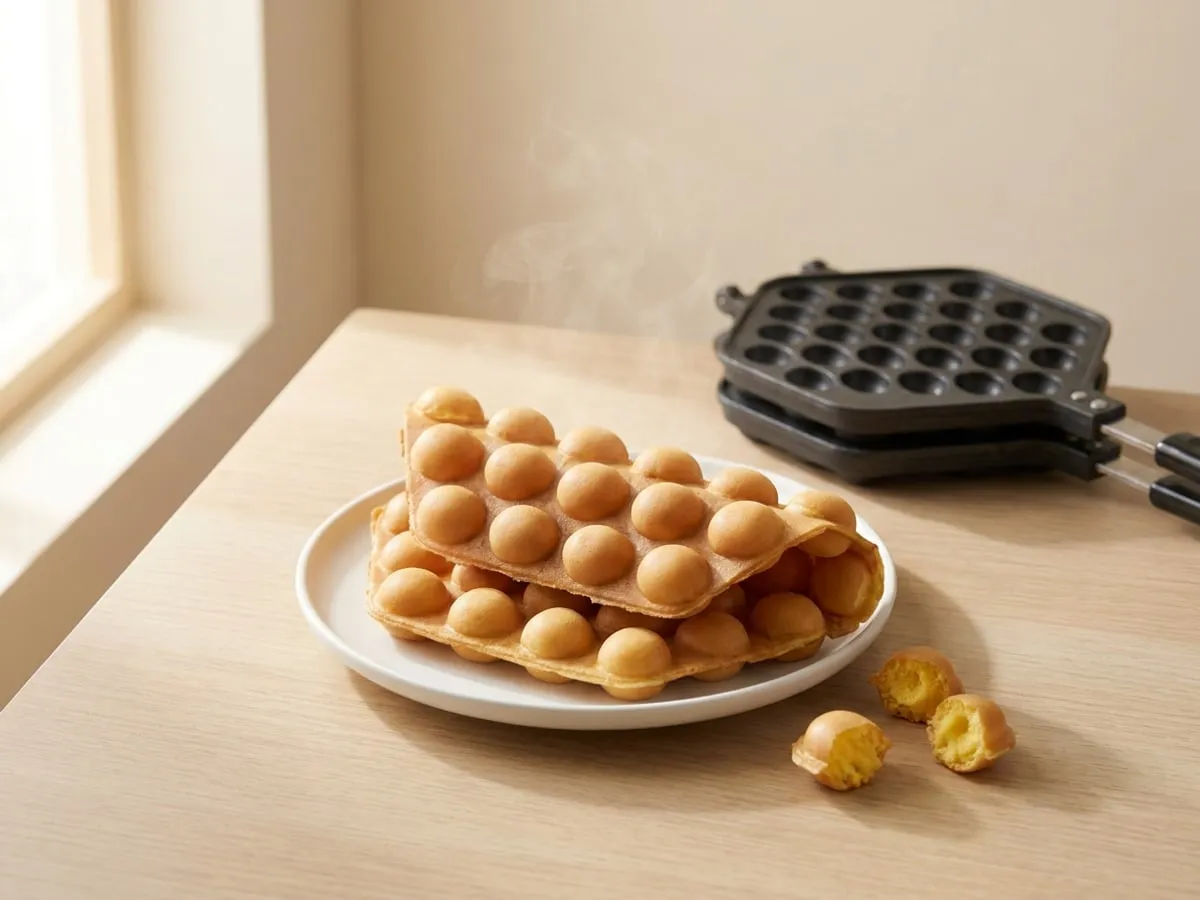
Egg waffle
雞蛋仔
“Bought after school as a child, and still eaten now.”
Ingredientsserves 4
Equipment
- An egg-waffle iron: the two-piece cast stovetop pan, or an electric egg-waffle maker; a Belgian waffle iron will not do it
- A rolling pin or a large bowl to set the sheet in a curve
Method
- Beat the eggs with the sugar until pale, then stir in the milk.
- Sift in the cake flour, tapioca starch, custard powder and baking powder and whisk until smooth with no lumps; stir in the melted butter.
- Cover and rest in the fridge for at least 15 minutes; an hour's rest gives a crisper shell over a softer inside, the tip the stalls and Hong Kong parents both give.
- Heat both halves of the egg-waffle pan on the hob for two minutes each side and brush with oil; a pan that is not hot enough or not oiled gives a soft waffle that sticks, so oil it before every sheet.
- Pour batter into the lower half to fill the hollows about three-quarters, close the pan and turn it over at once so the batter runs into the top half; flipped late, the balls come out hollow and tear.
- Cook two minutes, flip, and two minutes more, checking until golden; four to five minutes in all.
- Lift the sheet out with a skewer, drape it over a rolling pin or a bowl so it sets curved, and fan it for 30 seconds: fanning is the street stall's trick for the crisp shell, and a soft, floppy waffle means the pan was not hot enough, the batter was not rested or it was not fanned. Eat hot; it is soft within ten minutes.
Take care
- Contains egg, milk and wheat. A cast-iron pan on a gas hob gets very hot; hold the handles with a dry cloth. The batter contains raw egg; do not taste it.
The story
雞蛋仔 is Hong Kong's street snack, born by one account in the 1950s from a grocer's cracked eggs and a mould, and it is the food of every after-school afternoon at the wooden cart outside the school gate (the ULifestyle and 自家ON! street-food pages). For the diaspora it is the snack that cannot be bought in most Australian suburbs, so it is the one people buy the pan for.
Lo Fo Tong is cultural food-heritage reference, not medical advice. If you are pregnant, unwell or on medication, talk to your doctor or registered practitioner before changing what is in the pot.