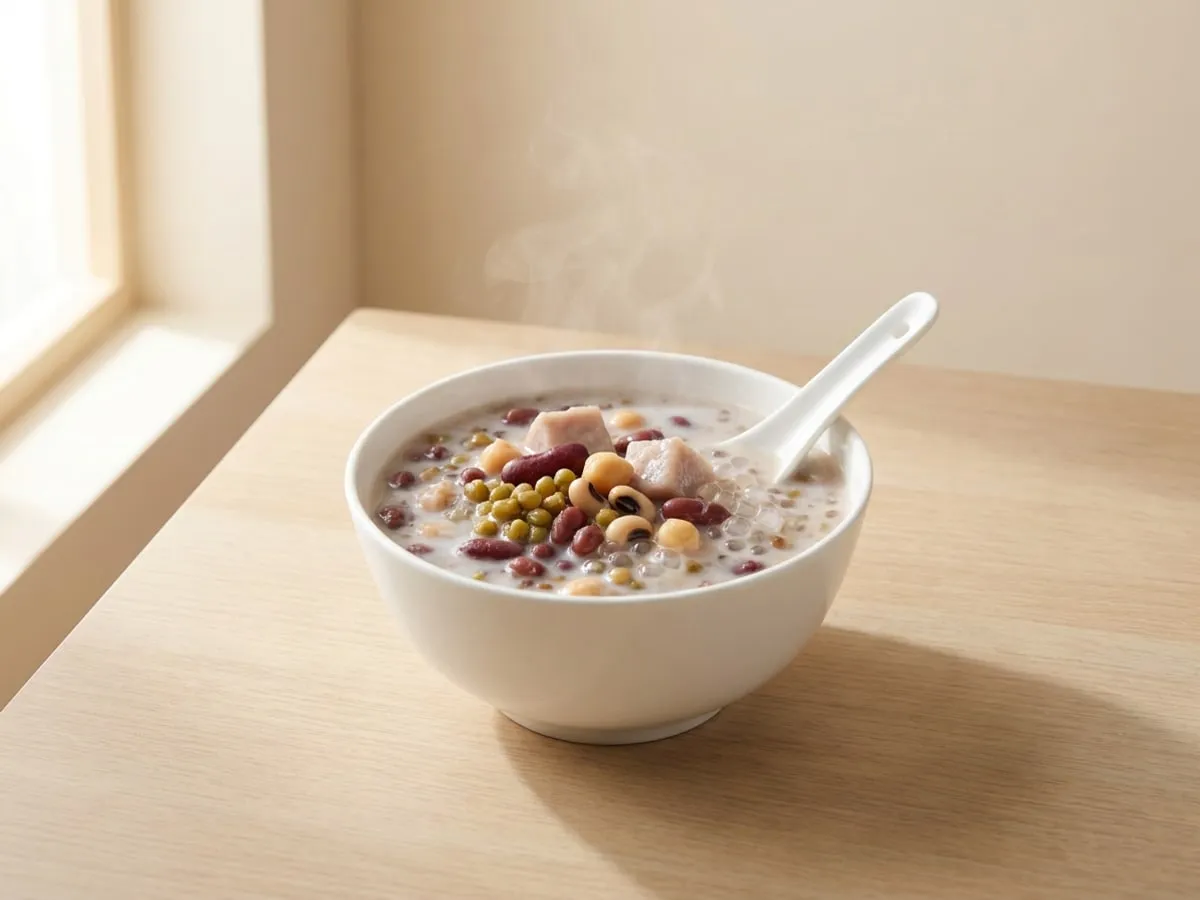
Mixed bean and sago sweet soup
喳咋
“A bowl of sweet soup after dinner, and the meal is complete.”
Ingredientsserves 4
Method
- Wash the five beans and the peanuts, soak them overnight and drain. Hong Kong grocers sell a ready-mixed 喳咋料 packet; in Australia you build the mix from the pulse shelf.
- Bring six cups of water (about 1.5 litres) to a rolling boil, add the kidney beans and chickpeas first, boil hard ten minutes (kidney beans must be boiled through), then simmer on medium thirty minutes; add the black-eyed beans, adzuki, mung and peanuts, lid on, and simmer an hour to an hour and a half until every kind is soft, topping up with hot water if it runs low. One bean in mush while another is still hard means they all went in together, unsoaked.
- Cook the sago separately: into boiling water, five minutes at the boil, then off the heat, lid on, five minutes more until the white centres have gone; rinse under cold water and drain. Sago cooked in the big pot turns it to glue.
- Add the taro and simmer twenty to thirty minutes until soft but still holding its shape.
- Add the slab sugar and the pinch of salt and stir until dissolved.
- Turn the heat off and stir in the coconut and the sago. Do not let it boil again once the coconut is in, or it splits and goes grainy.
- Serve warm; in summer cool it, chill it and serve it cold.
Take care
- Contains peanut. Dried red kidney beans carry a lectin that raw or under-cooked beans keep and that causes vomiting and stomach pain: soak overnight, discard the soaking water, and boil hard for at least ten minutes before the long simmer. Raw taro irritates the skin; peel it with gloves.
The story
喳咋 is Macau's sweet soup: the name is said to come from the Portuguese for mixed, and the story every source repeats is that soldiers in the Macau barracks cooked whatever beans they had into one sweet pot for lunch. It came to Hong Kong through the dessert shops, which sell the Malaysian bubur cha cha beside it, and Hong Kong television uses it as shorthand for a family that eats together.
Same wall
Lo Fo Tong is cultural food-heritage reference, not medical advice. If you are pregnant, unwell or on medication, talk to your doctor or registered practitioner before changing what is in the pot.