All home cooking › Claypot
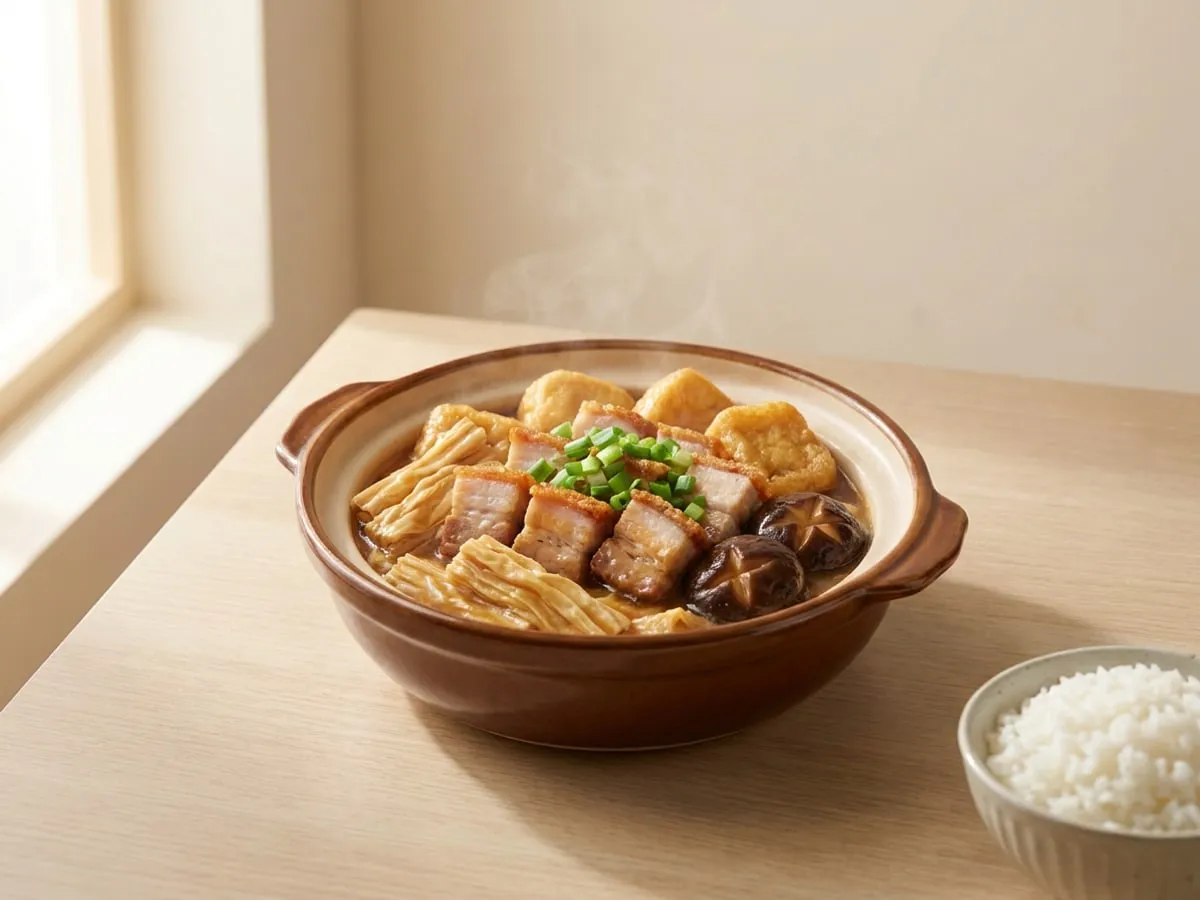
Roast pork belly and bean curd stick claypot
枝竹火腩煲
“One pot does the whole dinner. The crust is yours.”
Ingredientsserves 4
百子櫃Dried beancurd stick· bean curd sticks, soaked half an hour in cold water, cut in 5 cm lengths60 g dried
Method
- Soak the bean curd sticks half an hour in cold water until soft and cut them into lengths; there is no need to fry them first, restaurants deep-fry for the blistered skin but soaking is enough at home. Cube the tofu and fry it golden on both sides in a tablespoon of oil.
- Fry the ginger, garlic and shallots in a tablespoon of oil, add the roast pork and mushrooms and fry until the fat runs and the skin edges colour.
- Add the mashed fermented bean curd, fry a moment, and splash in the wine.
- Add the oyster sauce, light soy, sugar and a cup and a half of water, then the sticks and tofu; boil, lid on, low heat fifteen minutes until the sticks are soft and the crackling has turned to jelly.
- Lid off, reduce on high until the sauce coats everything, and add the dark soy if it looks pale. The roast pork is already cooked, but the whole pot must be reheated to a full boil. Scatter the spring onion, tip into a hot claypot and serve.
Take care
- The roast pork is cooked meat and must be reheated until the whole pot boils through. Contains soy (fermented bean curd, bean curd sticks, tofu, soy sauce) and wheat; oyster sauce contains mollusc (oyster); chu hou paste, if used, contains sesame.
The story
火腩 is the BBQ shop's word for roast pork once it goes into a pot as an ingredient, and this claypot is the Cantonese thrift dish that turns the end of a roast into dinner, the bean curd sticks doing what they do in the lamb claypot, soaking up the fat and the sauce. It is restaurant claypot cooking and a home dish in equal measure.
Same technique
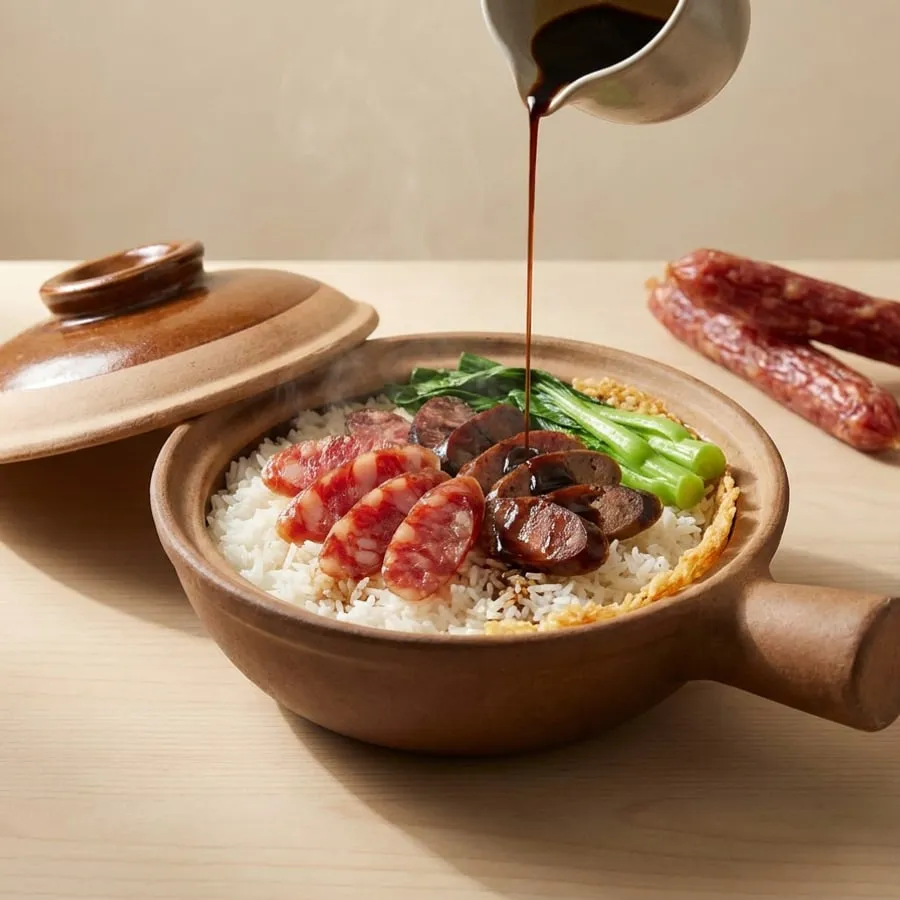
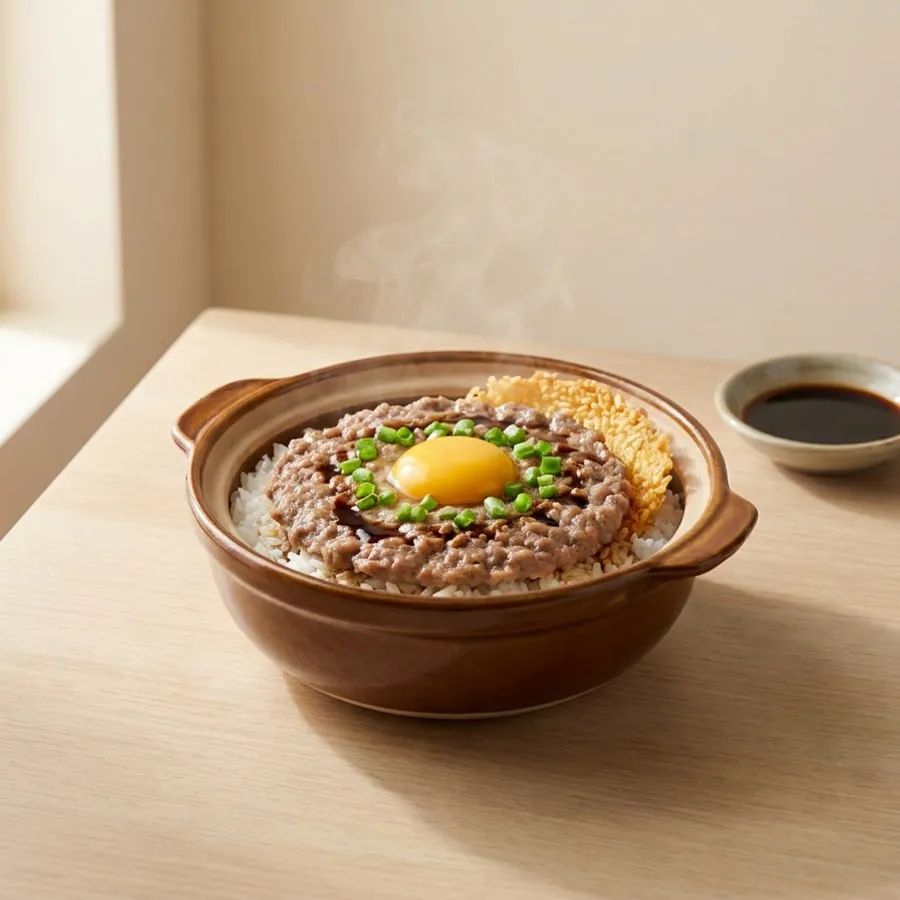
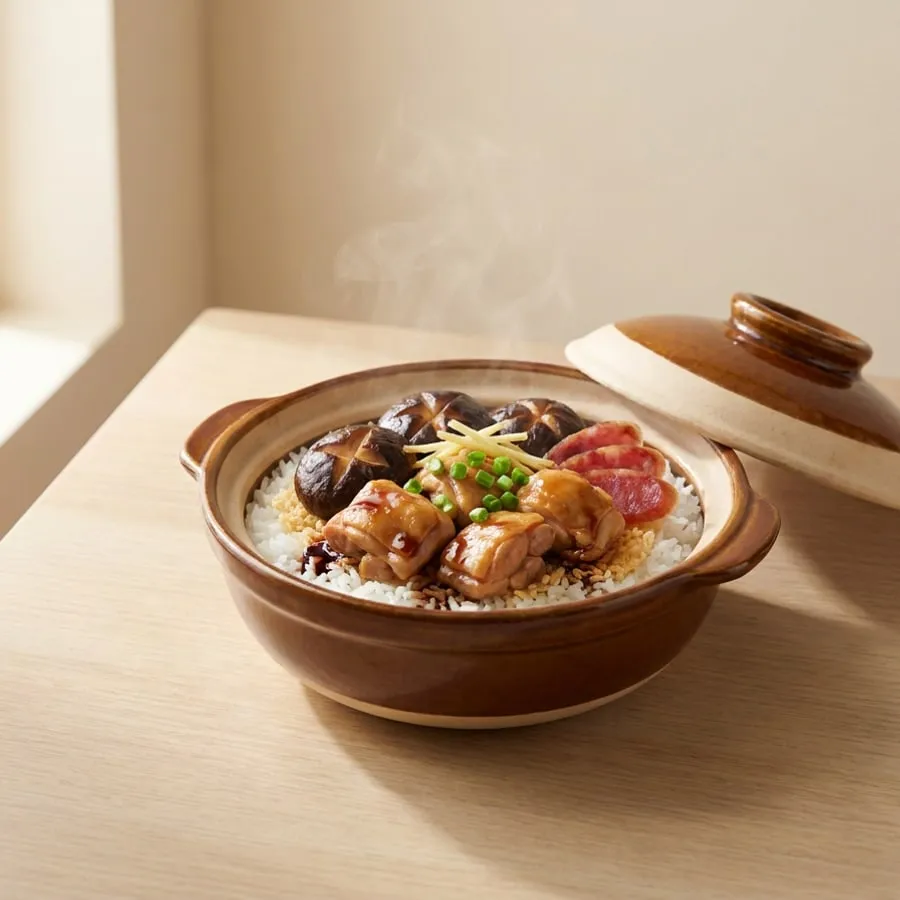
Lo Fo Tong is cultural food-heritage reference, not medical advice. If you are pregnant, unwell or on medication, talk to your doctor or registered practitioner before changing what is in the pot.