All home cooking › Wrapped by hand
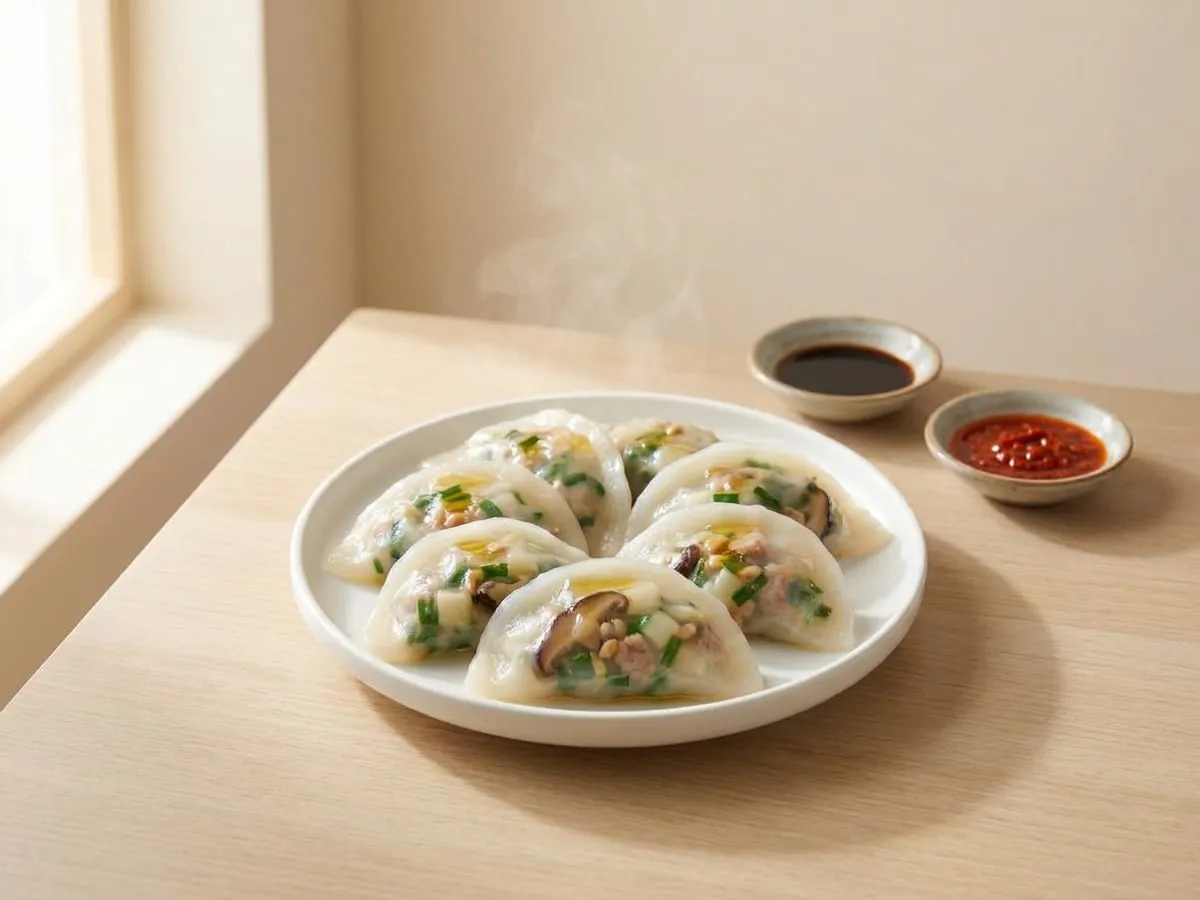
Teochew dumplings (fun gwo)
Also called Fun gwo (family recipe), Teochew fun gwo
“Everyone sits and wraps. What is left goes in the freezer.”
Ingredientsserves 4
Method
- The filling comes first, and it goes in cold. Soak the dried shrimp, mushrooms and preserved radish, squeeze the radish dry and chop everything small. Fry the shrimp, mushrooms and radish in two tablespoons of oil until fragrant, then add the pork and fry, breaking it up, until it is cooked through with no pink left.
- Add the jicama, oyster sauce, light soy, sugar and pepper with a splash of water, cover and cook two to three minutes; toss in the garlic chives and coriander, bind with the cornflour slurry and finish with the sesame oil. The filling must be dry, as a wet one soaks the wrapper.
- Spread the filling thin on a large plate to cool and refrigerate it within two hours; it can be made a day or two ahead. Stir in the peanuts only just before wrapping so they stay crunchy.
- The wrapper: mix the wheat starch, tapioca starch and salt, pour on 300 ml of water at a full rolling boil all at once and stir fast with chopsticks into a rough dough, then cover and leave five to ten minutes. While it is still warm, knead in a tablespoon of oil on a bench dusted with tapioca starch until smooth and soft. Water short of a full boil leaves the starch raw and the dough cracks; keep the dough covered at all times, as it cracks when it dries too.
- Wrap: roll the dough into a log, cut 20 g pieces and roll each into an 8 to 10 cm round, a little thicker in the middle. Put a teaspoon to a tablespoon of filling in the centre, fold into a half-moon and pinch shut, or pleat the edge. If oil on the edge stops it sealing, a dab of water will.
- Line the steamer with baking paper, set the dumplings 3 to 4 cm apart and steam over high heat for eight to ten minutes, until the skin has turned from white to translucent.
- Lift them whole onto a plate, brush the tops with a little oil so they do not stick together, and serve hot with soy sauce and chilli sauce on the side for dipping.
- To freeze: freeze the unsteamed dumplings on a tray until hard, then bag them; they keep three months and steam from frozen, a few minutes longer, until the skin is translucent and the filling hot through. Refrigerate any steamed ones left over once cool, and steam them again until soft before eating.
Take care
- Contains peanut: the peanuts are part of the filling, not a garnish, so leave them out of the whole batch for anyone allergic and tell the people eating. Also contains crustacean (dried shrimp), mollusc (oyster sauce), wheat (the wheat starch, which is not gluten-free), soy (light soy, oyster sauce) and sesame (sesame oil). Cook the pork through in the stir-fry, to 75°C at the centre; spread the cooked filling thin so it cools to 20°C within two hours and to 4°C within a further four. Only the peeled jicama tuber is eaten; its seeds, leaves and stems are toxic. Mind the steam when lifting the steamer lid.
The story
粉粿 are a Teochew dumpling; 粿, written with the rice radical, is the Chaoshan word for cakes and dumplings made of rice flour or starch, and Hong Kong also writes it 潮州粉果. The wrapper is wheat starch and tapioca starch scalded with boiling water, and it steams half-clear; Hong Kong's Teochew cooks added peanuts and preserved radish to the filling, and with jicama and garlic chives that became the taste of today's dim sum houses and Teochew shops. Taiwan's 粉粿 is a different food, a sweet starch jelly. Some families wrap a Cantonese-style filling instead: pork, shiitake, water chestnut, bamboo shoot and carrot.
Same technique
Lo Fo Tong is cultural food-heritage reference, not medical advice. If you are pregnant, unwell or on medication, talk to your doctor or registered practitioner before changing what is in the pot.