All Sunday dishes › The Sunday dishes
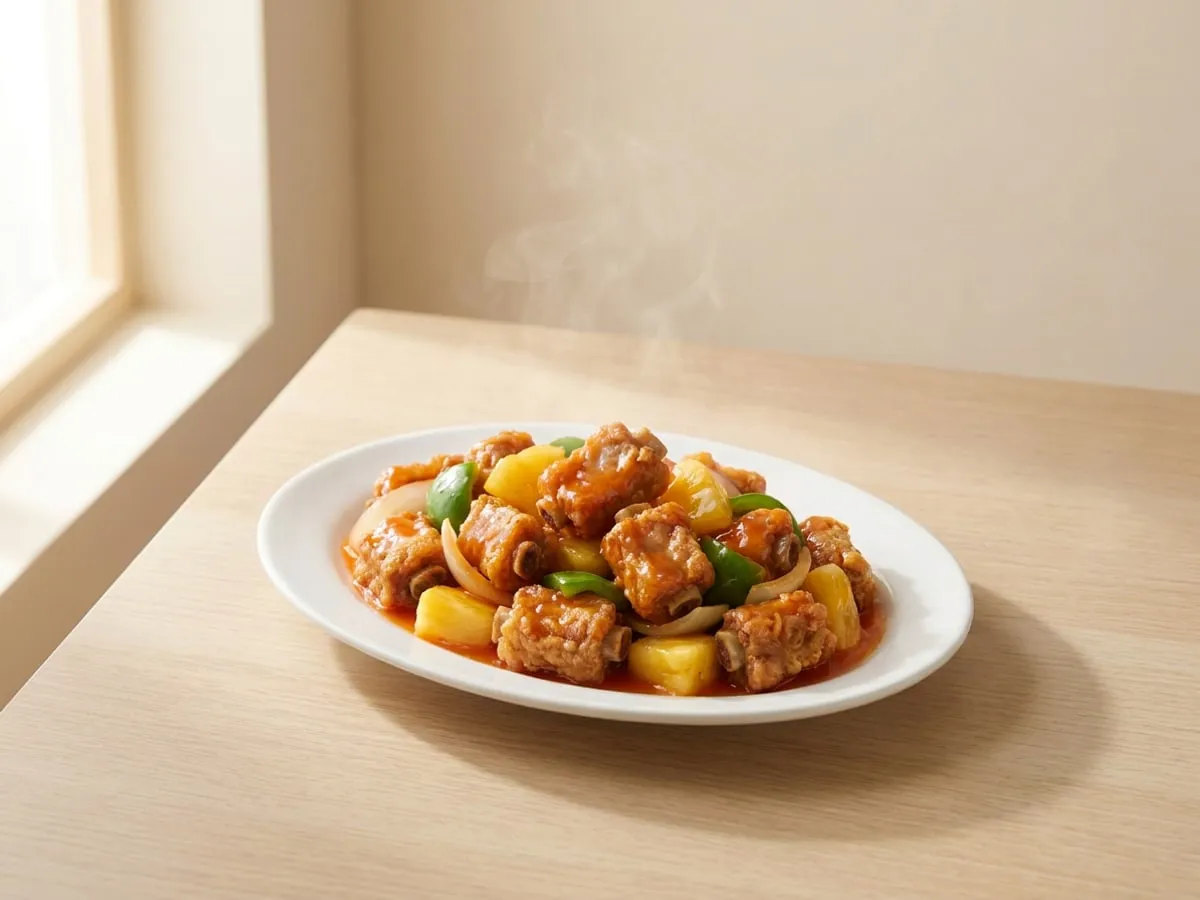
Sweet and sour spare ribs, fried twice, the bone-in original
“This one cannot be hurried. Only start it if the day is yours.”
Ingredientsserves 4
Equipment
- A wok with 3 cm of oil and a thermometer. Without a thermometer, stand a dry chopstick in the oil: a stream of small bubbles round it means medium heat.
- A second wok or a small saucepan for the sauce, so the ribs go straight from the oil into it without waiting. With only one wok, make the sauce in the saucepan; never move the pan of hot oil.
How the time splits
- 15 minDry the ribs and mix the marinadehands on
- 1 hrMarinating in the fridgehands off
- 25 minCoat, fry twice, toss in the sauce: the last ten seconds decide ithands on
Method
- Dry the ribs and mix them with the light soy, 1½ tsp sugar, ½ tsp Worcestershire, the pepper and 1½ tsp cornflour. Leave them in the fridge for an hour.
- While they marinate, get everything ready. Mix the ketchup, vinegar, 4 tsp sugar, 2 tsp Worcestershire, 150 ml pineapple juice and 2 tsp cornflour into the sauce; cut the pepper and onion, slice the garlic, drain the pineapple. The last ten seconds decide this dish. If the sauce is not ready, the fried ribs sit and wait, and waiting is what makes them soggy.
- Turn the ribs through the beaten egg, then roll each piece in cornflour, press it on, shake off the loose starch and set them on a rack.
- Heat the oil to 150 to 160°C and fry the ribs in two batches, five to six minutes each, until pale gold and cooked through, then lift them out. Open one at the bone: there should be no pink. Oil that is too hot browns the outside while the bone is still raw, so this fry is at medium, and it needs patience.
- Take the oil up to 180°C and fry all the ribs together for another minute until golden and crisp. Drain on a rack. Fried only once, the coating stays pale and oily; the second, hotter fry is where the crunch comes from.
- In the second wok or the saucepan, heat a tablespoon of oil and fry the garlic, onion and pepper for a minute. Pour in the sauce, bring it to a full boil until it thickens, and add the pineapple.
- Tip in the ribs, toss for ten seconds until the sauce clings, and plate them. Eat straight away.
Take care
- The pork must be cooked through: after the first fry, open one at the bone and check. Contains egg, soy and wheat (the light soy) and fish (Worcestershire has anchovy in it); much supermarket cornflour is wheat as well. This is the bone-in version, so tell children before they eat.
- A wok of hot oil. Fill it no more than a third deep, shake the loose starch off before the ribs go in, and lower them with a slotted spoon. Keep a lid beside the stove: if the oil catches, cover it and turn off the heat, and never use water. Do not move the pan until the oil is cold. Keep children and pets away from the stove while you fry.
The story
This is sweet and sour pork as it began: belly ribs on the bone, tender because the meat fries against the bone. Cantonese cooks were once examined on it, because its timing cannot be faked: a minute too long in the sauce and the crust is gone. The site's 咕嚕肉 is its boneless descendant, made, the story goes, for foreign diners who did not want to spit out bones. It is often confused with 京都排骨, but they are two different dishes. 生炒骨 is small pieces in egg and starch, fried twice, with pineapple and peppers, and a bright red sauce that only touches it in the last ten seconds; the point is the crunch. 京都排骨 is bigger pieces marinated with dark soy and shallow-fried, with no fruit, and a sauce reduced slowly onto the ribs until it is dark and thick; the point is the glaze.
Same kind
Lo Fo Tong is cultural food-heritage reference, not medical advice. If you are pregnant, unwell or on medication, talk to your doctor or registered practitioner before changing what is in the pot.