All Sunday dishes › The festival table
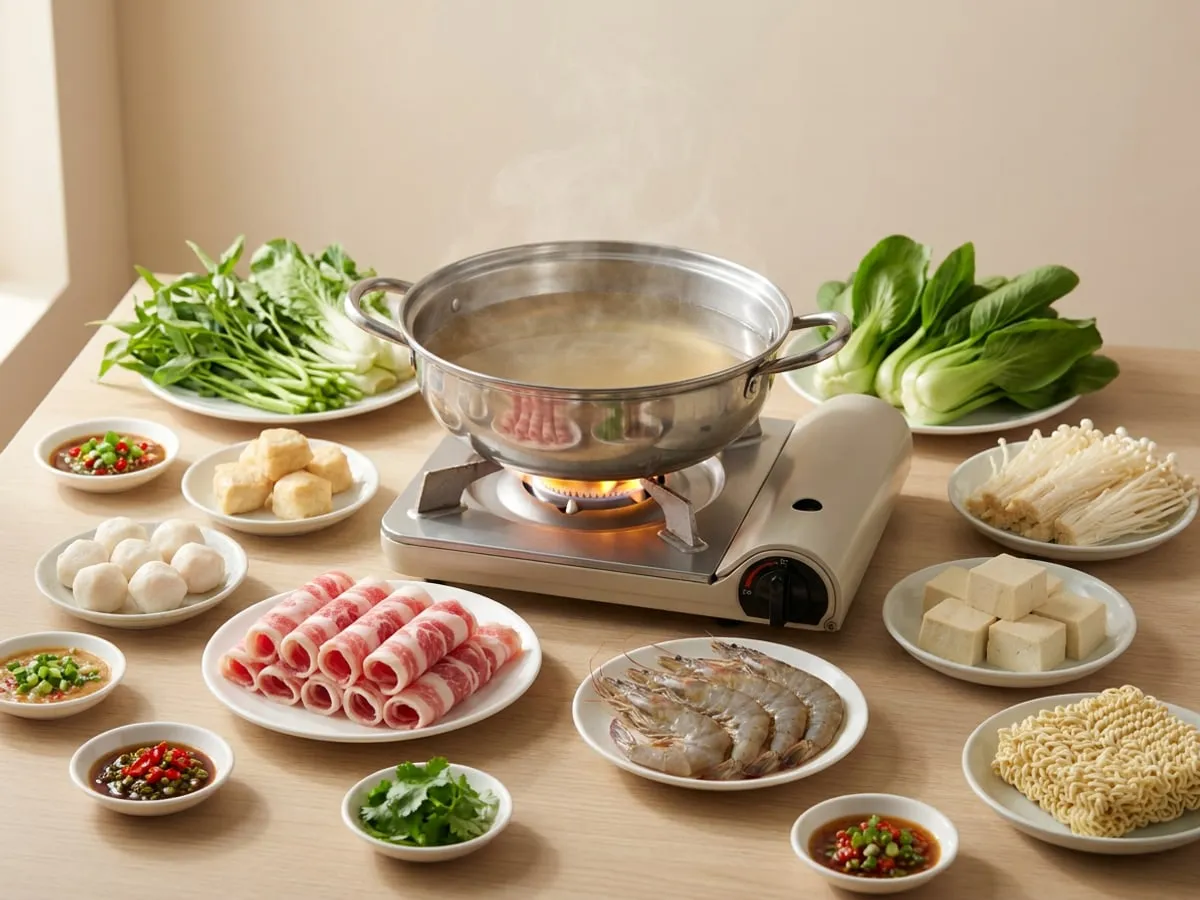
The reunion hotpot
團年火鍋
“You eat after the offering. These few dishes are what the year waits for.”
Ingredientsserves 8
Equipment
- A table burner: indoors, a portable induction plate is the safe choice. Australia's regulators say butane stoves are for outdoor use only; if you do use one indoors, keep it well ventilated, and the pot must never be wider than the pot stand or reach over the canister compartment
- A wide pot, ideally a divided 鴛鴦鍋, clear broth one side and a richer one the other
- A ladle and a slotted spoon for each side; two sets of chopsticks, one for raw food and one for eating; a saucer for everyone
- No table burner: use the kitchen stove and eat standing round it, which is how plenty of small Hong Kong flats did it
How the time splits
- 10 minBlanch the pork bones and hen and start the stockhands on
- 1 hr 30 minThe stock simmershands off
- 45 minSlice, wash, lay out the plates and the sauceshands on
- 15 minThe pot on at the table, chicken and clams in firsthands on
Method
- For the broth, blanch the pork bones and the hen, rinse them, add 3 litres of water and the ginger, and simmer for an hour and a half. Strain and salt it. In a hurry, make a coriander and century-egg broth instead: two century eggs diced, a bunch of coriander and a block of tofu, simmered fifteen minutes in water or boxed stock. Keep a kettle of boiling water or extra stock by the table to top the pot up.
- Lay out the plates: the beef, the pork, the chicken, the fish, the prawns and the clams each on their own. Keep the raw meat and seafood in the fridge until the pot goes on. Fish balls, beef balls, cuttlefish balls, fish-skin dumplings, fried tofu puffs, enoki and tong ho go on the table if you have them; the Chinese grocer's freezer and vegetable shelf carry them all. Wash and drain the greens.
- Set the sauces out in a row and let everyone mix their own: light soy, garlic, chilli, spring onion, coriander, sesame oil, sa cha and chilli oil. The sauces stay in the saucers and never go into the pot; tip them in and by the end the broth is too salty to drink.
- At the table, bring the broth to a rolling boil and put in the chicken, clams, mushrooms and tofu first, to flavour the pot. The chicken needs at least five minutes; cut a piece open and eat it only when there is no pink. Clams boil until they open and then three to five minutes more, and any that stay shut are thrown away.
- From then on, a little at a time: put too much in at once and the pot stops boiling and the meat does not cook through. A slice of beef is ten seconds, eaten when it changes colour; pork must be cooked right through with no pink; fish slices are done when white, prawns when red and curled, and the balls when they float.
- Raw and cooked stay apart. Raw meat and seafood go in with the raw chopsticks and you eat with your own, and chopsticks that have held raw meat never go into your mouth. Raw plates should not sit on the table for more than two hours, so if the meal is slow, bring them out in batches.
- Fill the gaps with greens as you go. The broth is richest at the end: finish with instant noodles or udon.
Take care
- Nearly every common allergen is on this table: beef, pork, chicken, fish, crustacean, mollusc, soy, wheat, sesame and egg, and some sa cha sauces contain peanut. Keep saucers separate, and anyone with an allergy should say so before the pot goes on.
- Chicken and pork must be cooked until no pink remains; throw away clams that stay shut; keep raw and eating chopsticks apart; raw plates out for no more than two hours. Seafood is best given at least five minutes at a full boil, and clams three to five minutes more once open. Indoors an induction plate is safest; with a butane stove, keep the room well ventilated, never use a pot wider than the pot stand or reaching over the canister compartment, and take the canister out when you finish. A boiling pot at a child's height needs watching.
The story
打邊爐, cooking round the edge of the stove, is what Hong Kong calls the winter's great shared meal, and the reunion night is the family's own version of it: everyone round one pot and nobody stuck in the kitchen, which is exactly what 團圓, being together, means. It has no recipe, and it needs a page all the same, because a child born in Australia needs someone to tell them that the beef takes ten seconds and the chicken does not.
Same kind
Lo Fo Tong is cultural food-heritage reference, not medical advice. If you are pregnant, unwell or on medication, talk to your doctor or registered practitioner before changing what is in the pot.