All Sunday dishes › The counter at home
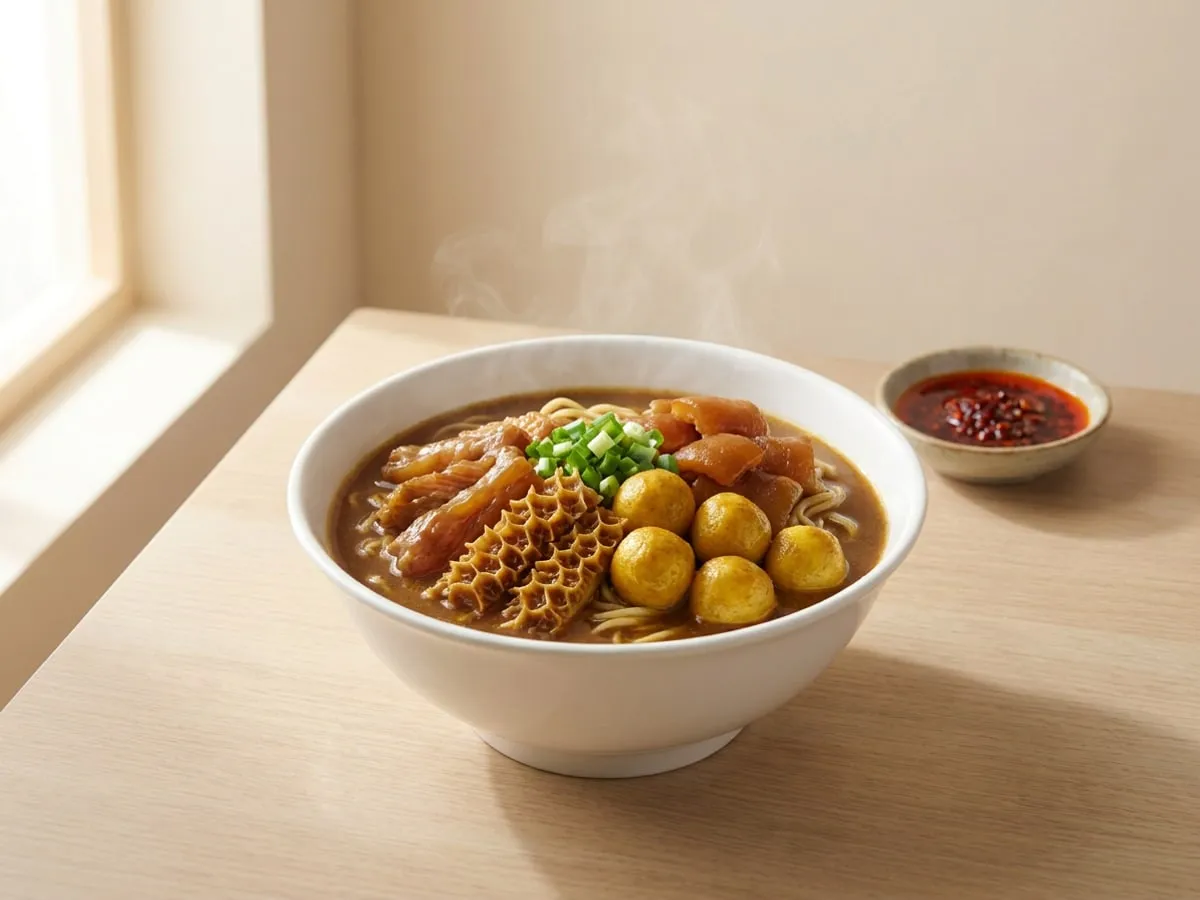
Cart noodles, the pick-your-own bowl
“Congee wants its full time on the boil before the rice opens.”
Ingredientsserves 6
Equipment
- A big pot for the braise and a few small pans, one for each topping. The cart kept them hot in a metal case of compartments; at home it is saucepans along the stove.
- With a pressure cooker the tendon is soft in about thirty-five minutes
- A noodle basket; a large sieve does the same.
How the time splits
- 12 hrFrozen tendon and tripe thaw overnight in the fridgehands off
- 20 minBlanch the tendon and tripe, soak the pork rind, make the braising saucehands on
- 30 minThe tendon braises alonehands off
- 30 minThe tripe goes inhands off
- 30 minThe radish and the rind go inhands off
- 20 minFish balls, blood curd, lettuce, the souphands on
- 15 minNoodles bowl by bowl, everyone choosinghands on
Method
- Thaw frozen tendon and tripe overnight in the fridge. Blanch them separately from cold water with a slice of ginger each for ten minutes, then rinse. Put the pork rind to soak in warm water.
- Heat the oil in the big pot and fry the rest of the ginger, the shallots, garlic and star anise, then the chu hou paste until it smells good. Splash in the wine, add the soy, rock sugar and 2 litres of water, and bring it to the boil.
- The tendon goes in first, lid on, low heat, thirty minutes; then the tripe for another thirty; then the radish and the squeezed-out pork rind for thirty more. The radish goes in last: put it in with the tendon and it has turned to mush by the time the tendon is soft.
- The tendon is what goes wrong here. After ninety minutes push a chopstick in; it should go in with no resistance. If it is still tough, keep braising; frozen tendon often wants two hours, so do not turn it off because the clock says so. Lift out the tripe, cut it into strips and return it to the sauce.
- Ladle half the sauce into another pan and cook the fish balls in it until they float and are hot through. Blanch the blood curd separately from cold water, then warm it gently in sauce without boiling, which toughens it. Each topping has its own pan, so a guest with an allergy can choose cleanly. Thicken the sauce left in the big pot with the cornflour slurry.
- Bring the stock to the boil in its own pot and stir in a ladle or two of the braising sauce to make the soup. The braise has reduced, and poured into a bowl neat it is too salty to eat, so it always goes in thinned. Blanch the lettuce in the noodle water.
- Everyone chooses: one noodle and three toppings, the cart's 三餸一麵. Cook the noodles a bowl at a time and put each into its bowl the moment it is done, add the toppings and ladle the soup over; chilli oil and the sweet sauce are on the table.
Take care
- Beef and beef offal, pork, pig's blood, fish (fish balls usually contain wheat and soy as well), soy and wheat (the chu hou paste, soy sauce and noodles), egg (the noodles). Keeping each topping in its own pan is what lets an allergic guest choose safely. Braise the tendon and tripe through, and heat the blood curd right through.
The story
Cart noodles were the wooden street carts of the 1950s, a metal case of compartments on top, one topping to each, and a bowl cost whatever you chose. Through the sixties and seventies the unlicensed hawkers ran from the inspectors, and in time the carts moved into shops and gained a menu, but the choosing stayed. It was never a home dish, and this page is written for home anyway: a Hong Kong child growing up in Australia may never have stood at a cart, but every one of them remembers choosing. A few saucepans along the stove are a cart.
Same kind
Lo Fo Tong is cultural food-heritage reference, not medical advice. If you are pregnant, unwell or on medication, talk to your doctor or registered practitioner before changing what is in the pot.